Featured Publications
All Publications

TRI Author: Kuan-Hui Lee
All Authors: Zheng Tang, Yen-Shuo Lin, Kuan-Hui Lee, Jenq-Neng Hwang, Jen-Hui Chuang
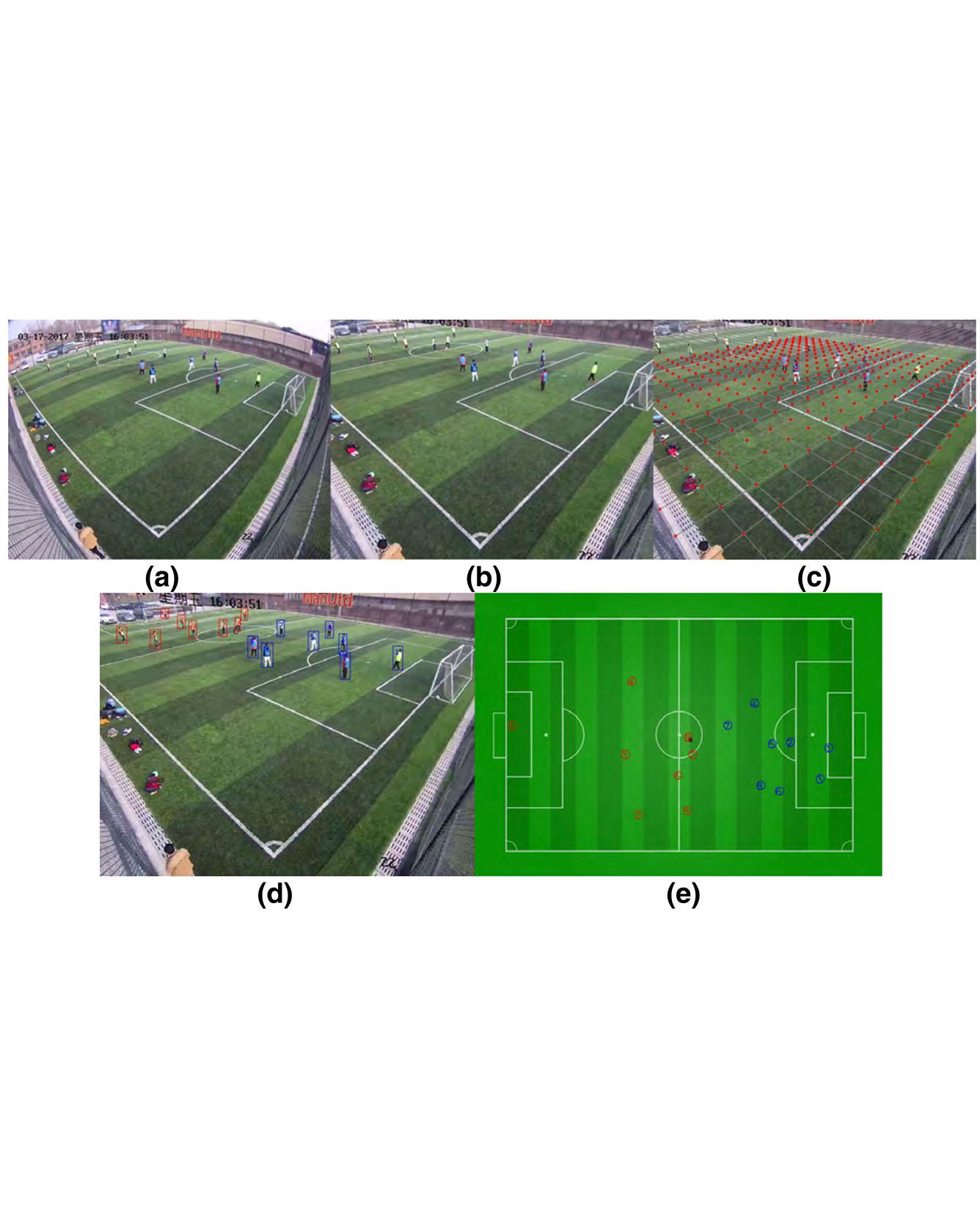
Camera calibration and radial distortion correction are the crucial prerequisites for many applications in image big data and computer vision. Many existing works rely on the Manhattan world assumption to estimate the camera parameters automatically; however, they may perform poorly when there was lack of man-made structure in the scene. As walking humans are the common objects in video surveillance, they have also been used for camera self-calibration, but the main challenges include the noise reduction for the estimation of vanishing points, the relaxation of assumptions on unknown camera parameters, and the radial distortion correction. In this paper, we present a novel framework for camera self-calibration and automatic radial distortion correction. Our approach starts with the reliable human body segmentation that is facilitated by robust object tracking. Mean shift clustering and Laplace linear regression are, respectively, introduced in the estimation of the vertical vanishing point and the horizon line. The estimation of distribution algorithm, an evolutionary optimization scheme, is then utilized to optimize the camera parameters and the distortion coefficients, in which all the unknowns in camera projection can be fine-tuned simultaneously. Experiments on the three public benchmarks and our own captured dataset demonstrate the robustness of the proposed method. The superiority of this algorithm is also verified by the capability of reliably converting 2D object tracking into 3D space. Read more
Citation: Tang, Zheng, Yen-Shuo Lin, Kuan-Hui Lee, Jenq-Neng Hwang, and Jen-Hui Chuang. "ESTHER: Joint camera self-calibration and automatic radial distortion correction from tracking of walking humans." IEEE Access 7 (2019): 10754-10766.
TRI Author: Simon Stent
All Authors: Xishuai Peng, YiLu Murphey, Simon Stent, Yuanxiang Li, Zihao Zhao
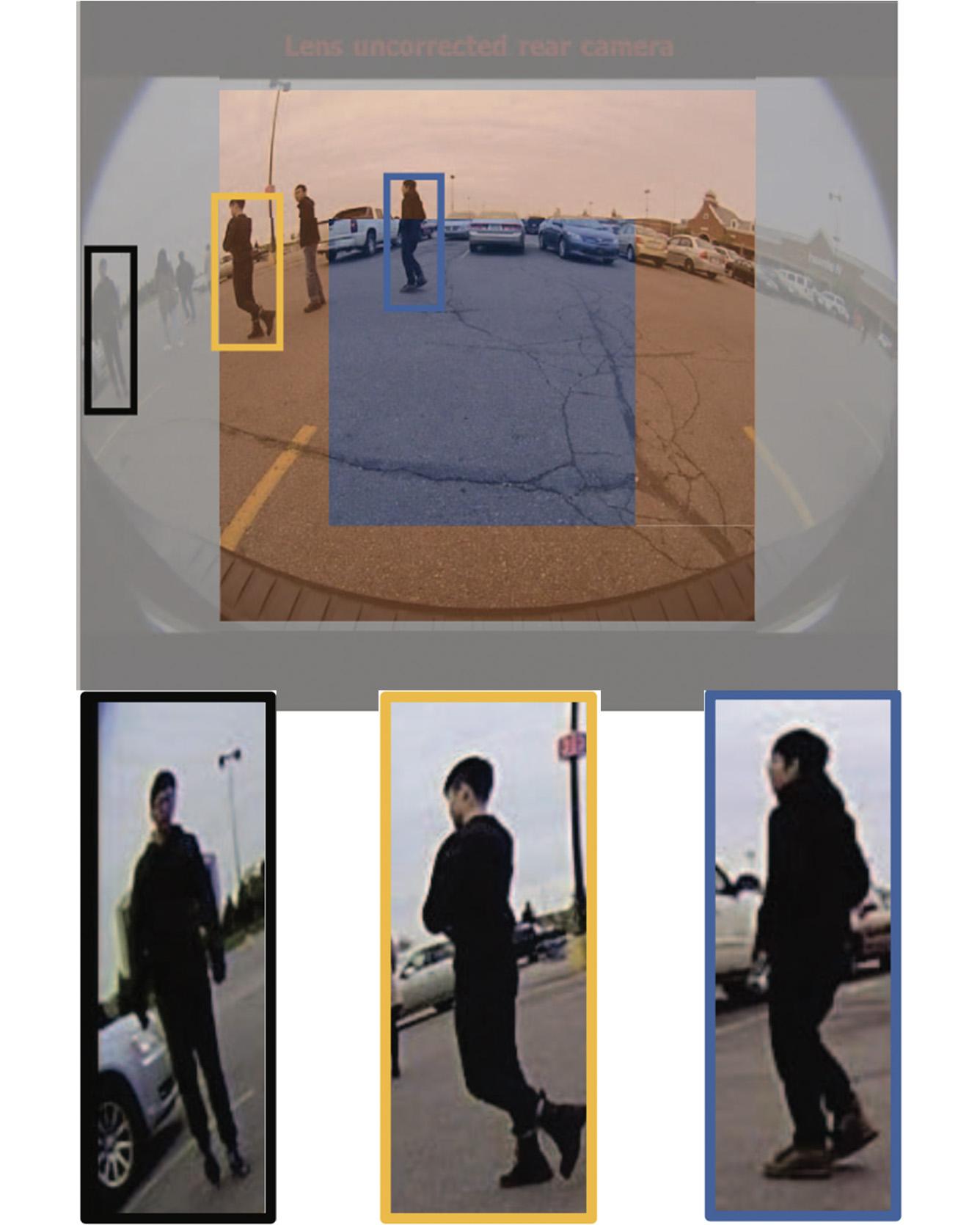
Objects in the periphery of fisheye images can become extremely distorted. This distortion can cause false positives and missed detections for automated object detection systems. This is problematic, not only for systems which have been trained on perspective images, but also for those that have been explicitly trained on fisheye data. In this paper we propose a new cost function for training object detectors on fisheye images. We model fisheye image distortion as an imbalanced domain problem and develop a domain association loss function to approach it with deep learning. We define separate domains based on the level of distortion within the image plane and propose a new objective function, inspired by the recently introduced focal loss for object detection, which we call a spatial focal loss. Our proposed loss incorporates a domain-modulating term which re-weights samples from different domains to encourage the learning of domain-invariant features. We implement spatial focal loss function in the YOLOv2 architecture and evaluate it on the task of pedestrian detection in a fisheye dataset captured by a 360 camera system mounted on a moving vehicle and labeled with over 11,000 pedestrian instances. Our experiments demonstrate that spatial focal loss can improve model performance in the highly distorted image periphery versus existing loss functions, including focal loss, without sacrificing performance in the less distorted image center, with no adaptations to network architectures required. By analyzing the locations of missed detections, we show further evidence that our loss function can improve the learning of domain-invariant features. Read More
Citation: Peng, Xishuai, Yi Murphey, Simon Stent, Yuanxiang Li, and Zihao Zhao. "Spatial focal loss for pedestrian detection in fisheye imagery." In 2019 IEEE Winter Conference on Applications of Computer Vision (WACV), pp. 561-569. IEEE, 2019.
TRI Author: Jens Hummelshøj
All Authors: Steen Lysgaard, Paul C Jennings, Jens Strabo Hummelshøj, Thomas Bligaard, Tejs Vegge
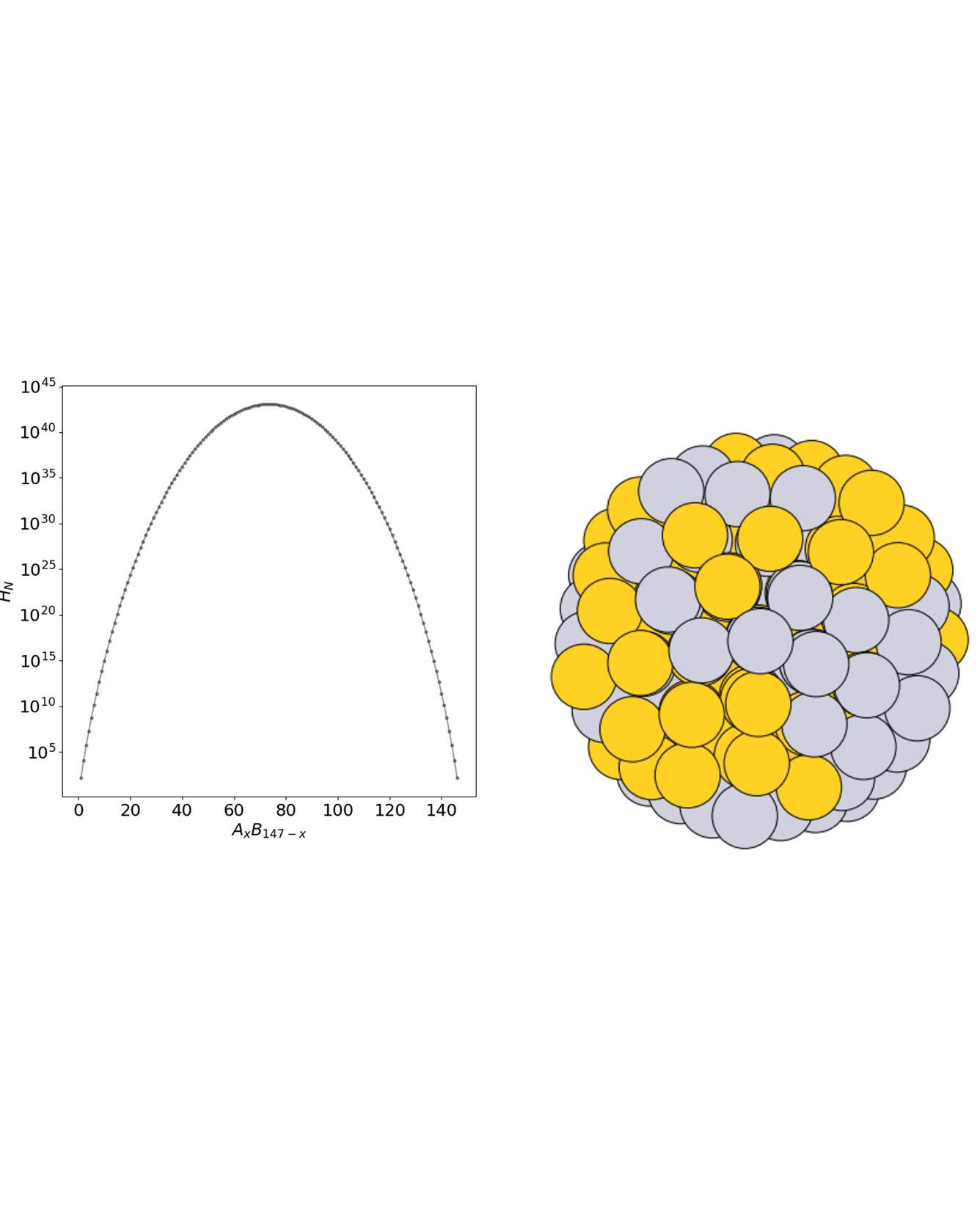
A machine learning model is used as a surrogate fitness evaluator in a genetic algorithm (GA) optimization of the atomic distribution of Pt-Au nanoparticles. The machine learning accelerated genetic algorithm (MLaGA) yields a 50-fold reduction of required energy calculations compared to a traditional GA. Read More
Citation: Lysgaard, Steen, Paul C. Jennings, Jens Strabo Hummelshøj, Thomas Bligaard, and Tejs Vegge. "Machine Learning Accelerated Genetic Algorithms for Computational Materials Search." In ChemRxiv(2018).
TRI Authors: Jonathan DeCastro, Russ Tedrake
All Authors: J. DeCastro, L. Liebenwein, C.-I. Vasile, R. Tedrake, S. Karaman and D. Rus
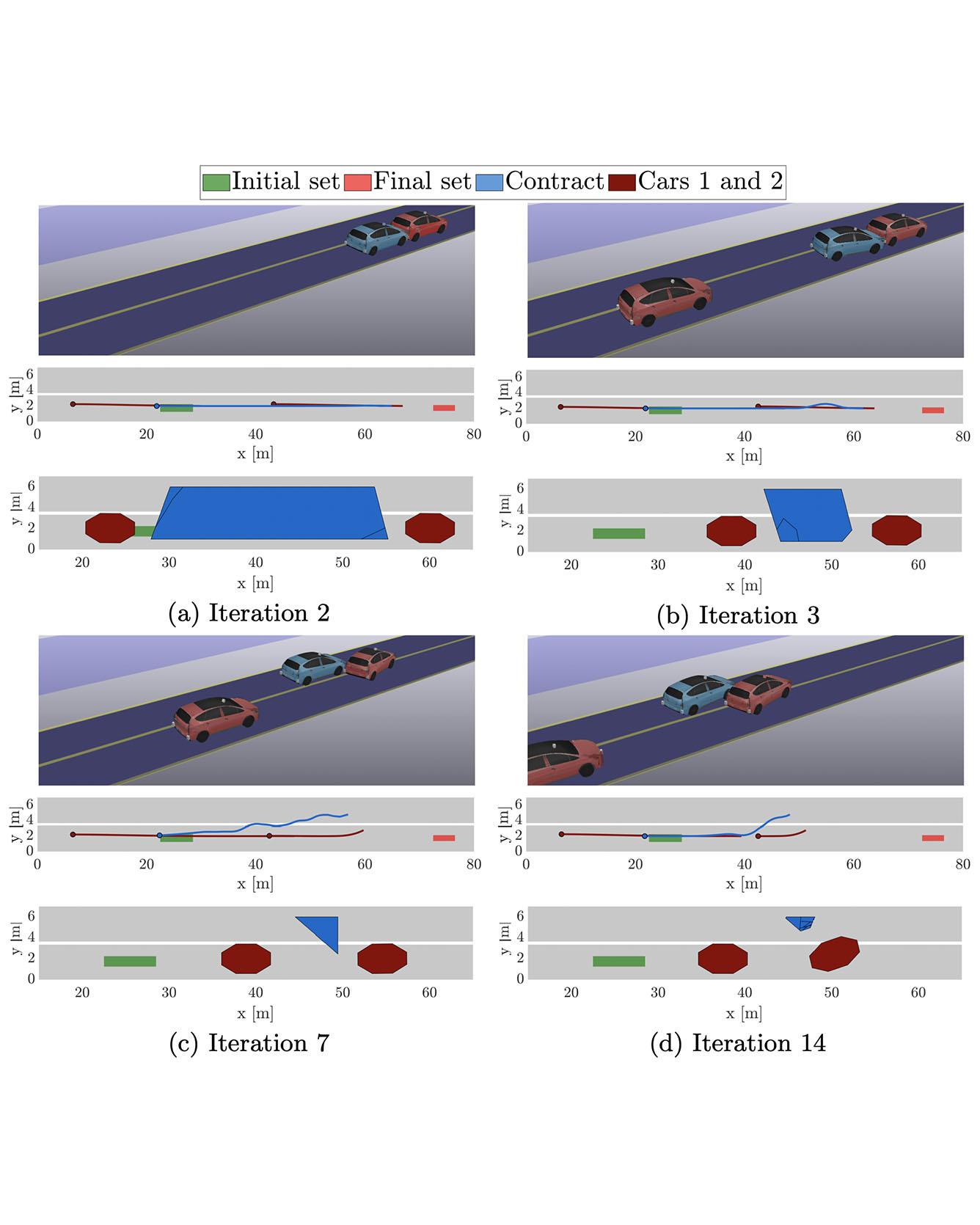
Ensuring the safety of autonomous vehicles is paramount for their successful deployment. However, formally verifying autonomous driving decisions systems is difficult. In this paper, we propose a framework for constructing a set of safety contracts that serve as design requirements for controller synthesis for a given scenario. The contracts guarantee that the controlled system will remain safe with respect to probabilistic models of traffic behavior, and, furthermore, that it will follow rules of the road. We create contracts using an iterative approach that alternates between falsification and reachable set computation. Counterexamples to collision-free behavior are found by solving a gradientbased trajectory optimization problem. We treat these counterexamples as obstacles in a reach-avoid problem that quantifies the set of behaviors an ego vehicle can make while avoiding the counterexample. Contracts are then derived directly from the reachable set. We demonstrate that the resulting design requirements are able to separate safe from unsafe behaviors in an interacting multi-car traffic scenario, and further illustrate their utility in analyzing the safety impact of relaxing traffic rules. Read More
Citation: DeCastro, Jonathan, Lucas Liebenwein, Cristian-Ioan Vasile, Russ Tedrake, Sertac Karaman, and Daniela Rus. "Counterexample-guided safety contracts for autonomous driving." In International Workshop on the Algorithmic Foundations of Robotics, 2018.
TRI Authors: Jie Li, Allan Raventos, Arjun Bhargava, Takaaki Tagawa, Adrien Gaidon
All Authors: Jie Li, Allan Raventos, Arjun Bhargava, Takaaki Tagawa, Adrien Gaidon
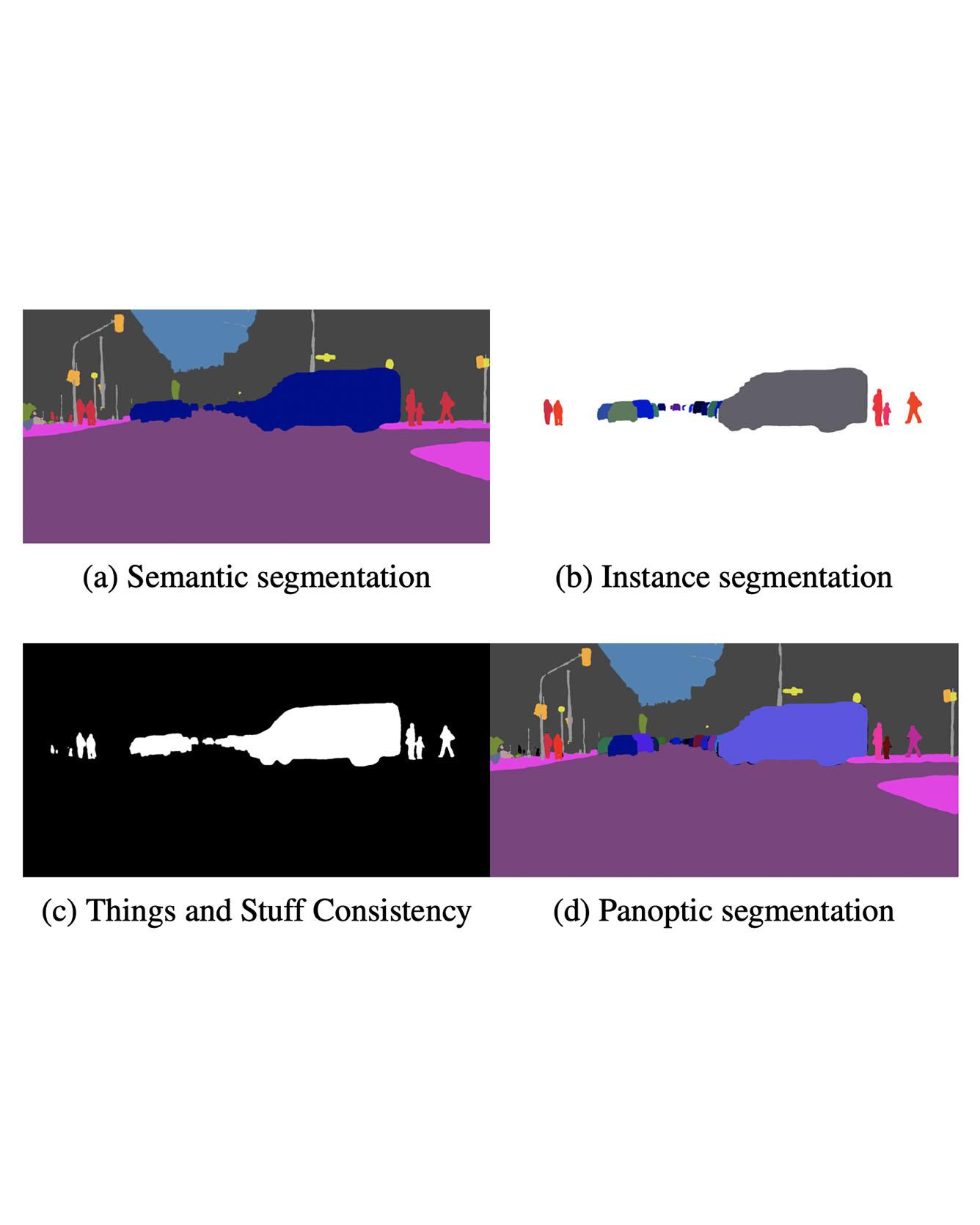
We propose an end-to-end learning approach for panoptic segmentation, a novel task unifying instance (things) and semantic (stuff) segmentation. Our model, TASCNet, uses feature maps from a shared backbone network to predict in a single feed-forward pass both things and stuff segmentations. We explicitly constrain these two output distributions through a global things and stuff binary mask to enforce cross-task consistency. Our proposed unified network is competitive with the state of the art on several benchmarks for panoptic segmentation as well as on the individual semantic and instance segmentation tasks. Read more
Citation: Li, Jie, Allan Raventos, Arjun Bhargava, Takaaki Tagawa, and Adrien Gaidon. "Learning to fuse things and stuff." arXiv preprint arXiv:1812.01192 (2018).
TRI Author: Rares Ambrus
All Authors: Cristiano Premebida, Rares Ambrus, Zoltan-Csaba Marton
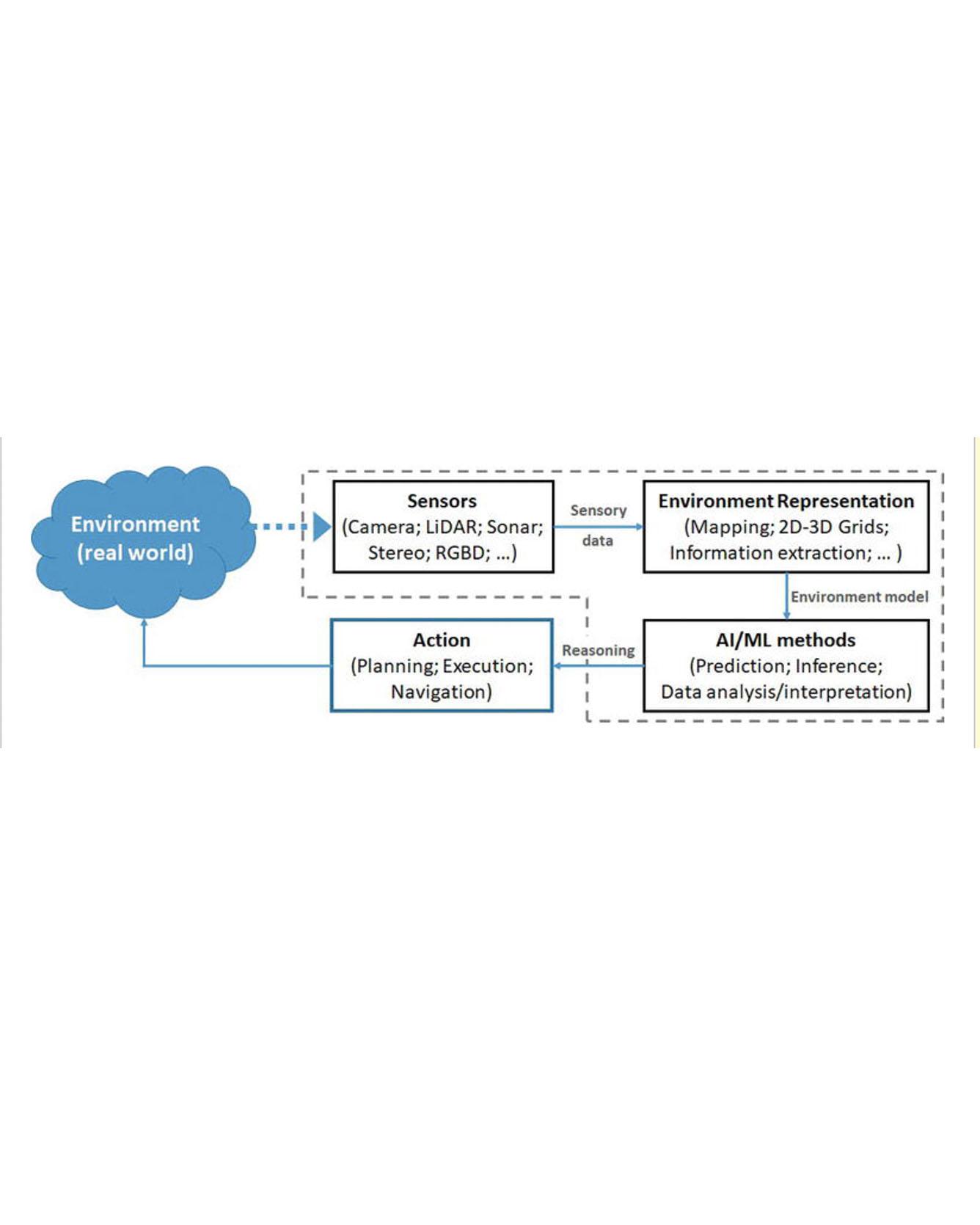
Robotic perception is related to many applications in robotics where sensory data and artificial intelligence/machine learning (AI/ML) techniques are involved. Examples of such applications are object detection, environment representation, scene understanding, human/pedestrian detection, activity recognition, semantic place classification, object modeling, among others. Robotic perception, in the scope of this chapter, encompasses the ML algorithms and techniques that empower robots to learn from sensory data and, based on learned models, to react and take decisions accordingly. The recent developments in machine learning, namely deep-learning approaches, are evident and, consequently, robotic perception systems are evolving in a way that new applications and tasks are becoming a reality. Recent advances in human-robot interaction, complex robotic tasks, intelligent reasoning, and decision-making are, at some extent, the results of the notorious evolution and success of ML algorithms. This chapter will cover recent and emerging topics and use-cases related to intelligent perception systems in robotics. Read More
Citation:Premebida, Cristiano, Rares Ambrus, and Zoltan-Csaba Marton. "Intelligent Robotic Perception Systems." In Applications of Mobile Robots. IntechOpen, 2018.
TRI Authors: Guy Rosman
All Authors: F. Naser, I. Gilitschenski, G. Rosman, A. Amini, F. Durand, A. Torralba, G. W. Wornell, W. T. Freeman, S. Karaman, and D. Rus
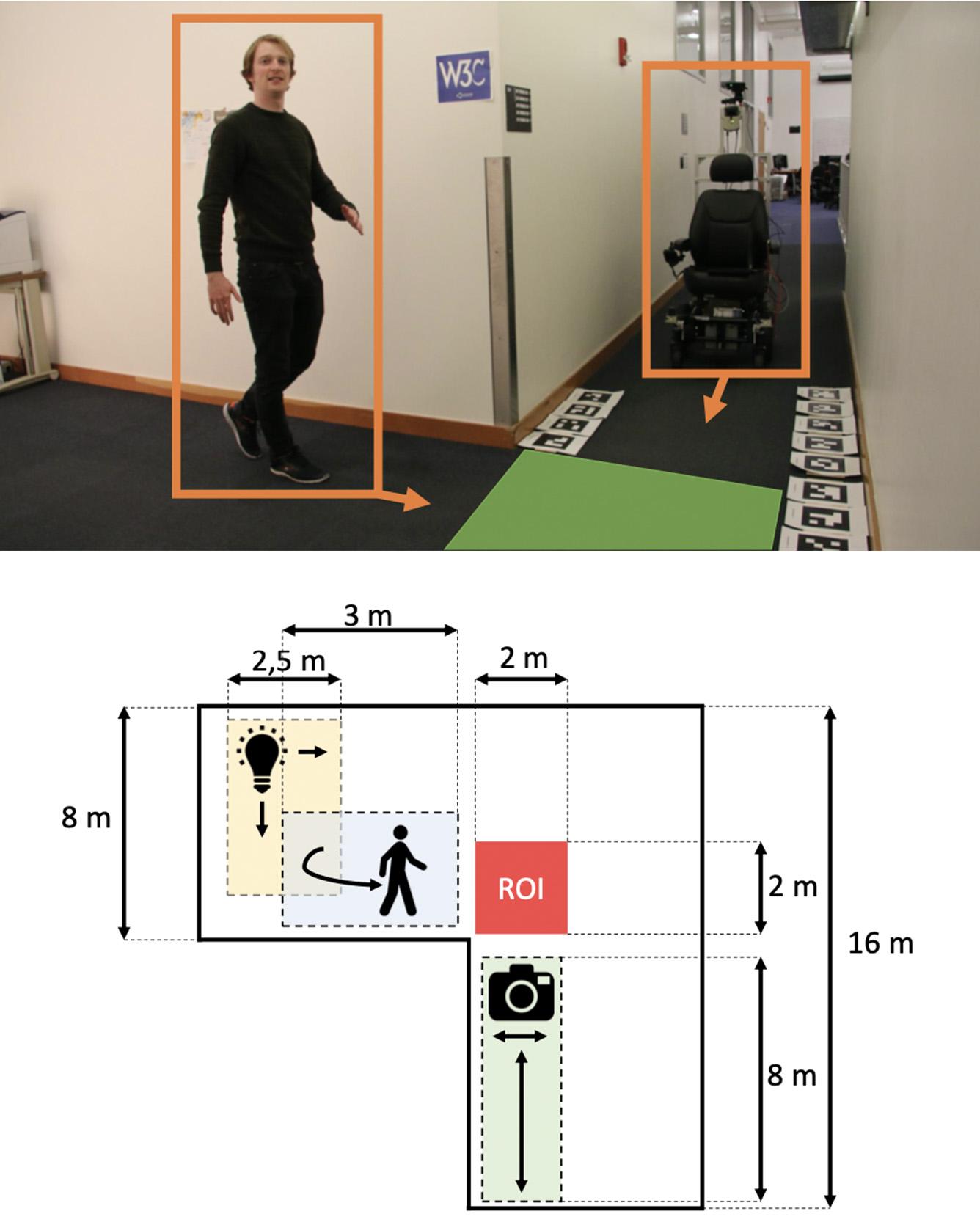
Moving obstacles occluded by corners are a potential source for collisions in mobile robotics applications such as autonomous vehicles. In this paper, we address the problem of anticipating such collisions by proposing a vision-based detection algorithm for obstacles which are outside of a vehicle's direct line of sight. Our method detects shadows of obstacles hidden around corners and automatically classifies these unseen obstacles as “dynamic” or “static”. We evaluate our proposed detection algorithm on real-world corners and a large variety of simulated environments to assess generalizability in different challenging surface and lighting conditions. The mean classification accuracy on simulated data is around 80% and on real-world corners approximately 70%. Additionally, we integrate our detection system on a full-scale autonomous wheelchair and demonstrate its feasibility as an additional safety mechanism through real-world experiments. We release our real-time-capable implementation of the proposed ShadowCam algorithm and the dataset containing simulated and real-world data under an open-source license. Read more
Citation: Naser, Felix, Igor Gilitschenski, Guy Rosman, Alexander Amini, Fredo Durand, Antonio Torralba, Gregory W. Wornell, William T. Freeman, Sertac Karaman, and Daniela Rus. "Shadowcam: Real-time detection of moving obstacles behind A corner for autonomous vehicles." In 2018 21st International Conference on Intelligent Transportation Systems (ITSC), pp. 560-567. IEEE, 2018.
TRI Authors: Kuan-Hui Lee, Jie Li, Adrien Gaidon
All Authors: Kuan-Hui Lee, German Ros, Jie Li, Adrien Gaidon
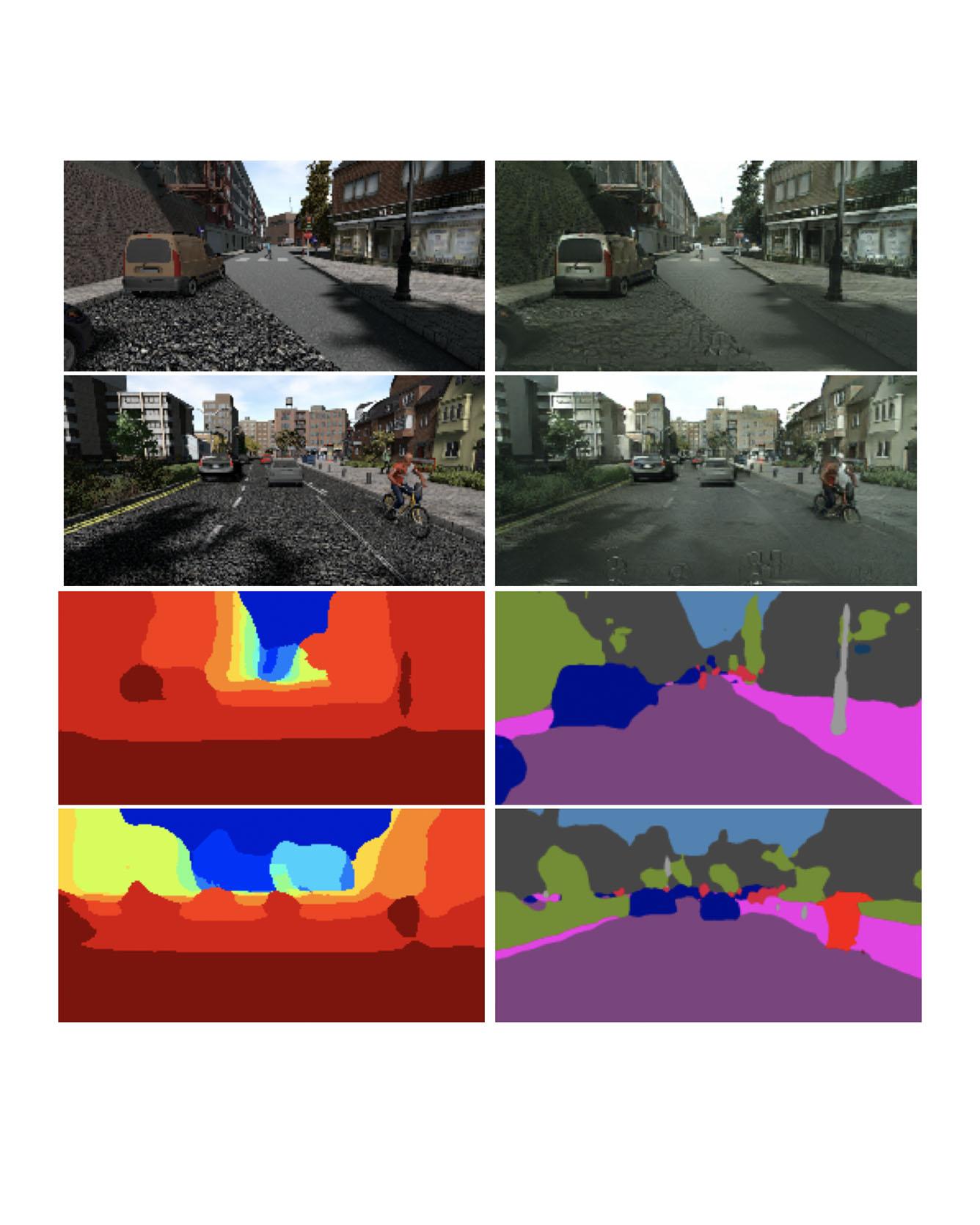
Deep Learning for Computer Vision depends mainly on the source of supervision.Photo-realistic simulators can generate large-scale automatically labeled syntheticdata, but introduce a domain gap negatively impacting performance. We propose anew unsupervised domain adaptation algorithm, called SPIGAN, relying on Sim-ulator Privileged Information (PI) and Generative Adversarial Networks (GAN).We use internal data from the simulator as PI during the training of a target tasknetwork. We experimentally evaluate our approach on semantic segmentation. Wetrain the networks on real-world Cityscapes and Vistas datasets, using only unla-beled real-world images and synthetic labeled data with z-buffer (depth) PI fromthe SYNTHIA dataset. Our method improves over no adaptation and state-of-the-art unsupervised domain adaptation techniques. Read More
Citation: Lee, Kuan-Hui, German Ros, Jie Li, and Adrien Gaidon. "SPIGAN: Privileged adversarial learning from simulation." In International Conference on Learning Representations, 2019.
TRI Authors: Sudeep Pillai, Rares Ambrus, Adrien Gaidon
All Authors: Sudeep Pillai, Rares Ambrus, Adrien Gaidon
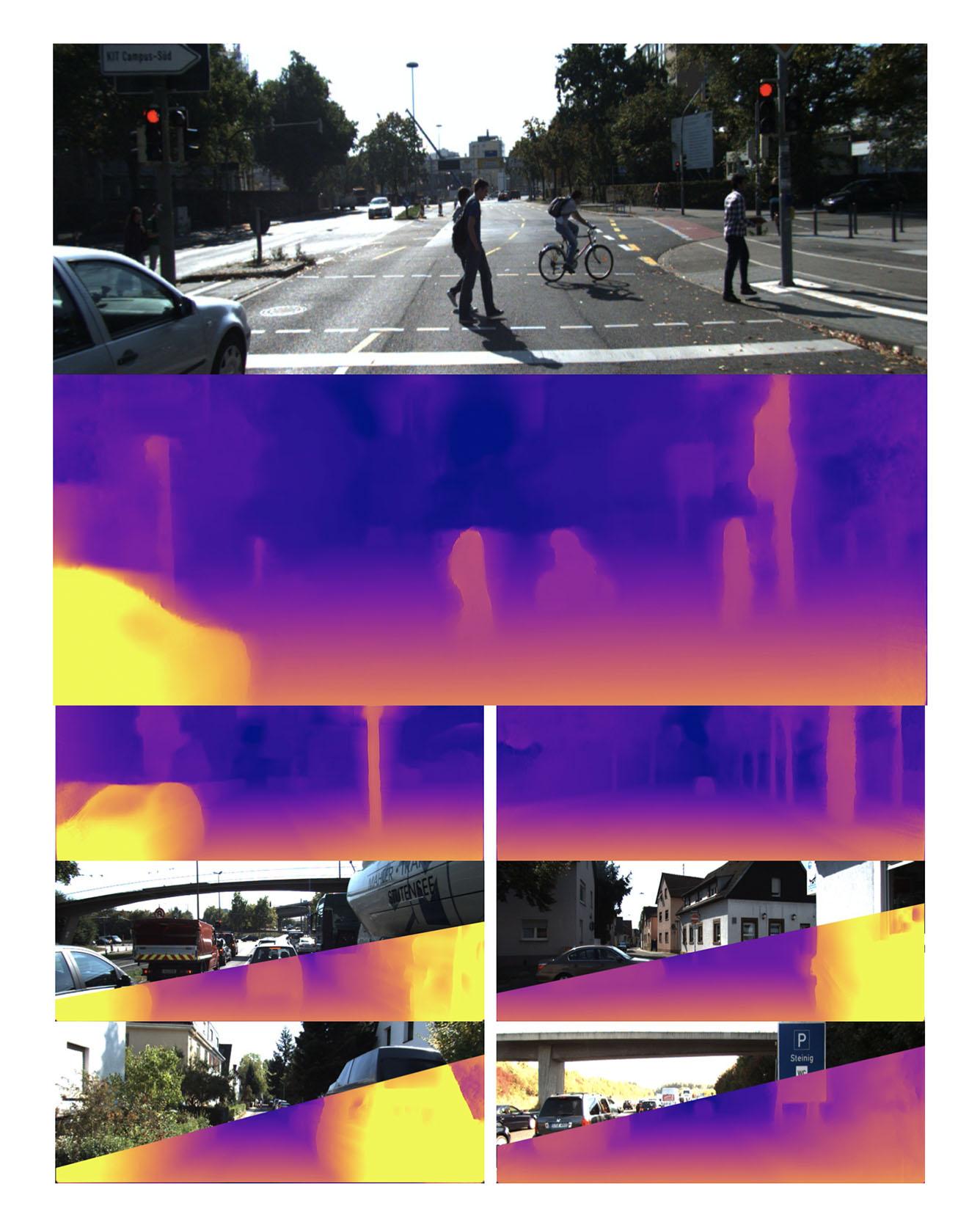
Recent techniques in self-supervised monocular depth estimation are approaching the performance of supervised methods, but operate in low resolution only. We show that high resolution is key towards high-fidelity self-supervised monocular depth prediction. Inspired by recent deep learning methods for Single-Image Super-Resolution, we propose a sub-pixel convolutional layer extension for depth super-resolution that accurately synthesizes high-resolution disparities from their corresponding low-resolution convolutional features. In addition, we introduce a differentiable flip-augmentation layer that accurately fuses predictions from the image and its horizontally flipped version, reducing the effect of left and right shadow regions generated in the disparity map due to occlusions. Both contributions provide significant performance gains over the state-of-the-art in self-supervised depth and pose estimation on the public KITTI benchmark. A video of our approach can be found at this https URL. Read More
Citation: Pillai, Sudeep, Rareş Ambruş, and Adrien Gaidon. "Superdepth: Self-supervised, super-resolved monocular depth estimation." In 2019 International Conference on Robotics and Automation (ICRA), pp. 9250-9256. IEEE, 2019.
TRI Author: Guy Rosman
All Authors: Alexander Amini, Wilko Schwarting, Guy Rosman, Brandon Araki, Sertac Karaman, Daniela Rus
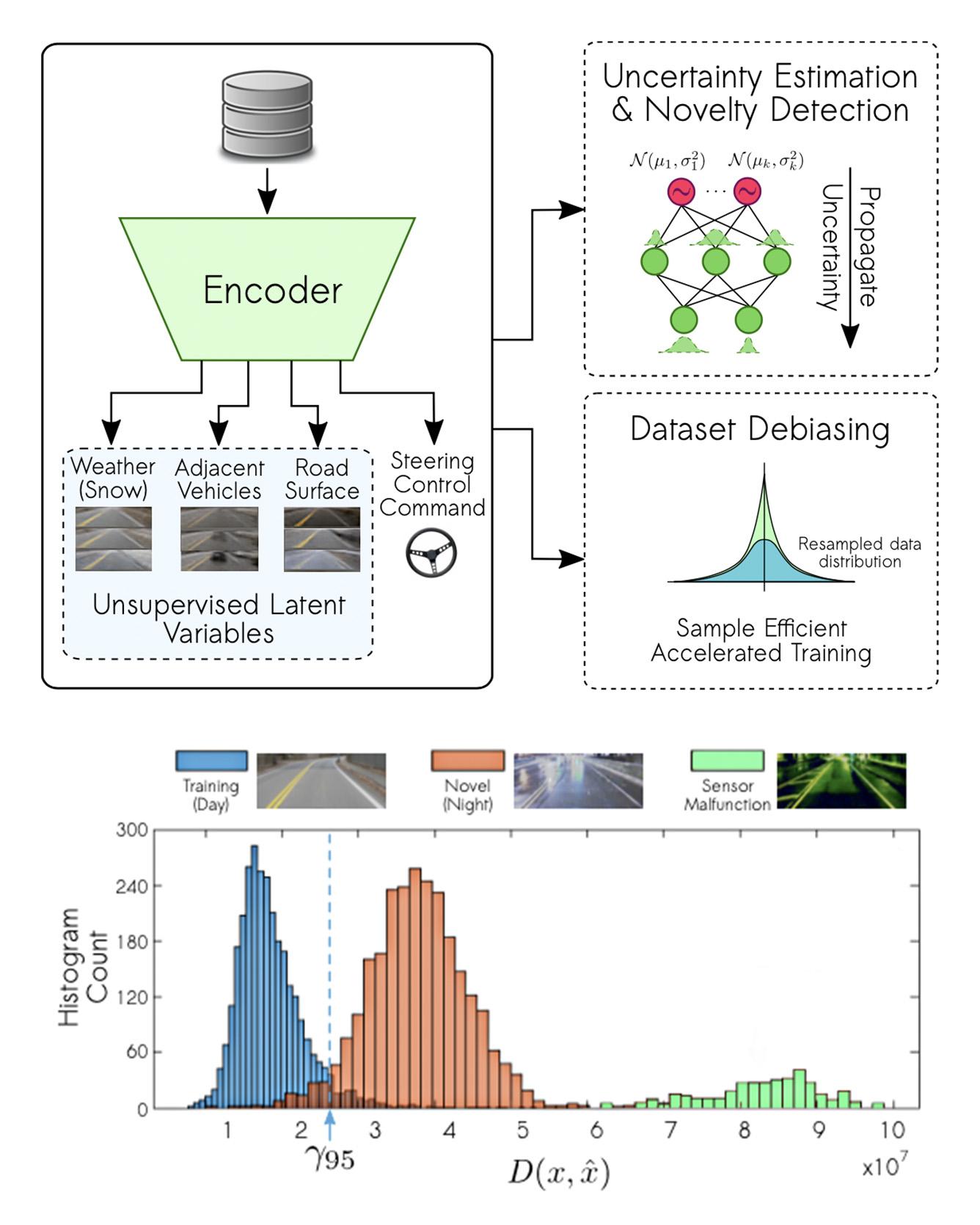
This paper introduces a new method for end-to-end training of deep neural networks (DNNs) and evaluates it in the context of autonomous driving. DNN training has been shown to result in high accuracy for perception to action learning given sufficient training data. However, the trained models may fail without warning in situations with insufficient or biased training data. In this paper, we propose and evaluate a novel architecture for self-supervised learning of latent variables to detect the insufficiently trained situations. Our method also addresses training data imbalance, by learning a set of underlying latent variables that characterize the training data and evaluate potential biases. We show how these latent distributions can be leveraged to adapt and accelerate the training pipeline by training on only a fraction of the total dataset. We evaluate our approach on a challenging dataset for driving. The data is collected from a full-scale autonomous vehicle. Our method provides qualitative explanation for the latent variables learned in the model. Finally, we show how our model can be additionally trained as an end-to-end controller, directly outputting a steering control command for an autonomous vehicle. Read more
Citation: Amini, Alexander, Wilko Schwarting, Guy Rosman, Brandon Araki, Sertac Karaman, and Daniela Rus. "Variational autoencoder for end-to-end control of autonomous driving with novelty detection and training de-biasing." In 2018 IEEE/RSJ International Conference on Intelligent Robots and Systems (IROS), pp. 568-575. IEEE, 2018.