Featured Publications
All Publications

TRI Authors: Muratahan Aykol, Santosh Suram
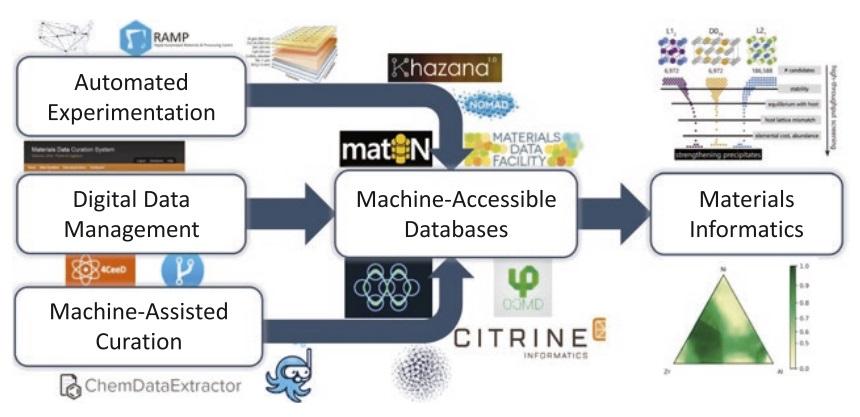
All Authors: Logan Ward, Muratahan Aykol, Ben Blaiszik, Ian Foster, Bryce Meredig, James Saal, Santosh Suram Ongoing, rapid innovations in fields ranging from microelectronics, aerospace, and automotive to defense, energy, and health demand new advanced materials at even greater rates and lower costs. Traditional materials R&D methods offer few paths to achieve both outcomes simultaneously. Materials informatics, while a nascent field, offers such a promise through screening, growing databases of materials for new applications, learning new relationships from existing data resources, and building fast predictive models. We highlight key materials informatics successes from the atomic-scale modeling community, and discuss the ecosystem of open data, software, services, and infrastructure that have led to broad adoption of materials informatics approaches. We then examine emerging opportunities for informatics in materials science and describe an ideal data ecosystem capable of supporting similar widespread adoption of materials informatics, which we believe will enable the faster design of materials. Read More
Citation: Ward, Logan, Muratahan Aykol, Ben Blaiszik, Ian Foster, Bryce Meredig, James Saal, and Santosh Suram. "Strategies for accelerating the adoption of materials informatics." MRS Bulletin 43, no. 9 (2018): 683-689.
TRI Author: Muratahan Aykol
All Authors: Vinay I Hegde, Muratahan Aykol, Scott Kirklin, Chris Wolverton
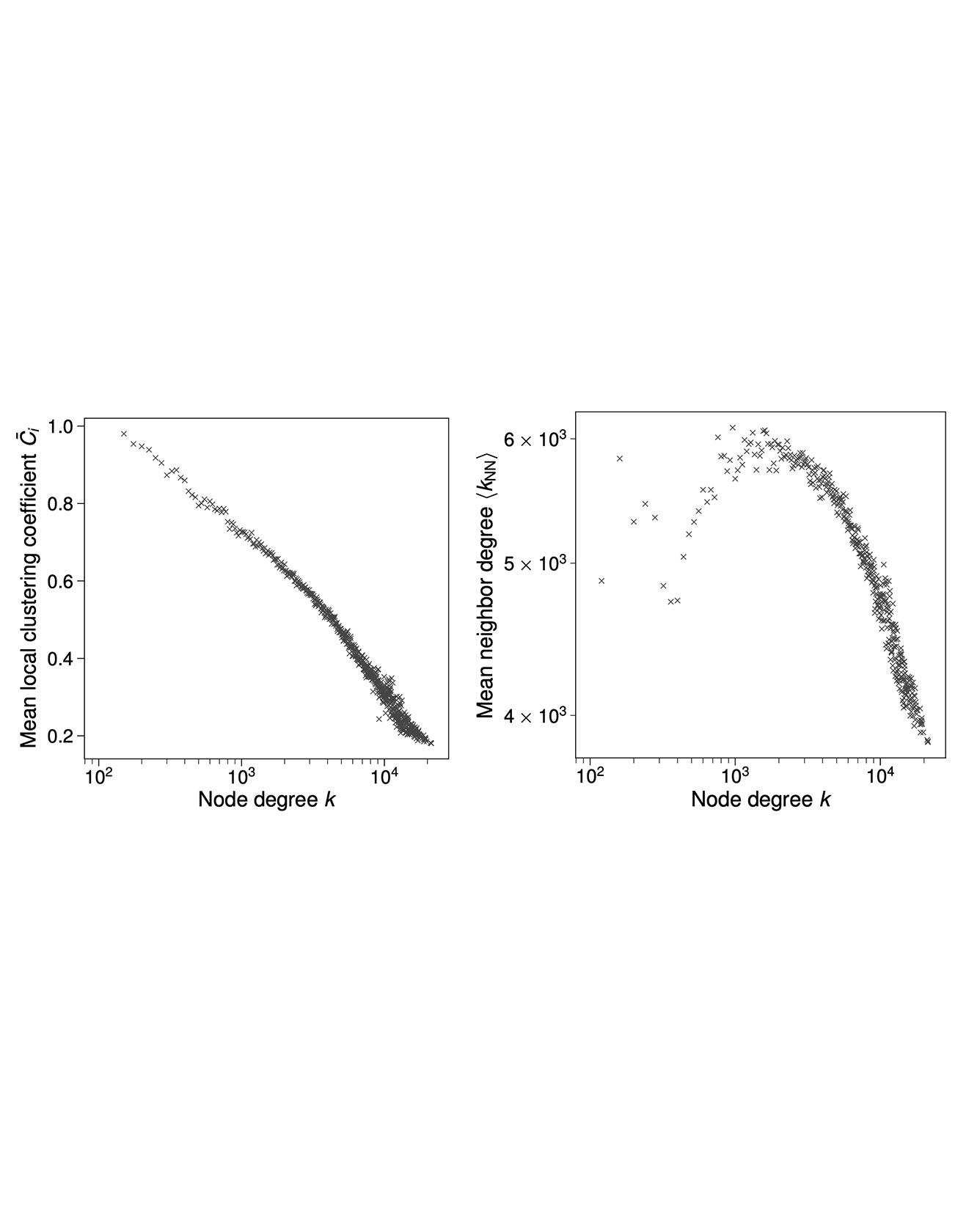
Understanding how the arrangement of atoms and their interactions determine material behavior has been the dominant paradigm in materials science. A complementary approach is studying the organizational structure of networks of materials, defined on the basis of interactions between materials themselves. In this work, we present the "phase diagram of all known inorganic materials", an extremely-dense complex network of nearly 2.1×10⁴ stable inorganic materials (nodes) connected with 41×106 tie-lines (edges) defining their two-phase equilibria, as computed via high-throughput density functional theory. We show that the degree distribution of this network follows a lognormal form, with each material connected to on average 18% of the other materials in the network via tie-lines. Analyzing the structure and topology of this network has potential to uncover new materials knowledge inaccessible from the traditional bottom-up (atoms to materials) approaches. As an example, we derive a data-driven metric for the reactivity of a material as characterized by its connectedness in the network, and quantitatively identify the noblest materials in nature. Read more
Citation: Hegde, Vinay I., Muratahan Aykol, Scott Kirklin, and Chris Wolverton. "The phase diagram of all inorganic materials." In Science Advances, arXiv preprint arXiv:1808.10869 (2018).
TRI Author: Muratahan Aykol
All Authors: Daniel P Tabor, Loïc M Roch, Semion K Saikin, Christoph Kreisbeck, Dennis Sheberla, Joseph H Montoya, Shyam Dwaraknath, Muratahan Aykol, Carlos Ortiz, Hermann Tribukait, Carlos Amador-Bedolla, Christoph J Brabec, Benji Maruyama, Kristin A Persson, Alán Aspuru-Guzik
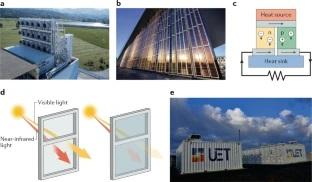
The discovery and development of novel materials in the field of energy are essential to accelerate the transition to a low-carbon economy. Bringing recent technological innovations in automation, robotics and computer science together with current approaches in chemistry, materials synthesis and characterization will act as a catalyst for revolutionizing traditional research and development in both industry and academia. This Perspective provides a vision for an integrated artificial intelligence approach towards autonomous materials discovery, which, in our opinion, will emerge within the next 5 to 10 years. The approach we discuss requires the integration of the following tools, which have already seen substantial development to date: high-throughput virtual screening, automated synthesis planning, automated laboratories and machine learning algorithms. In addition to reducing the time to deployment of new materials by an order of magnitude, this integrated approach is expected to lower the cost associated with the initial discovery. Thus, the price of the final products (for example, solar panels, batteries and electric vehicles) will also decrease. This in turn will enable industries and governments to meet more ambitious targets in terms of reducing greenhouse gas emissions at a faster pace. Read More
Citation: Tabor, Daniel P., Loïc M. Roch, Semion K. Saikin, Christoph Kreisbeck, Dennis Sheberla, Joseph H. Montoya, Shyam Dwaraknath et al. "Accelerating the discovery of materials for clean energy in the era of smart automation." Nature Reviews Materials 3, no. 5 (2018): 5-20.
TRI Authors: Patrick H. Herring, Muratahan Aykol
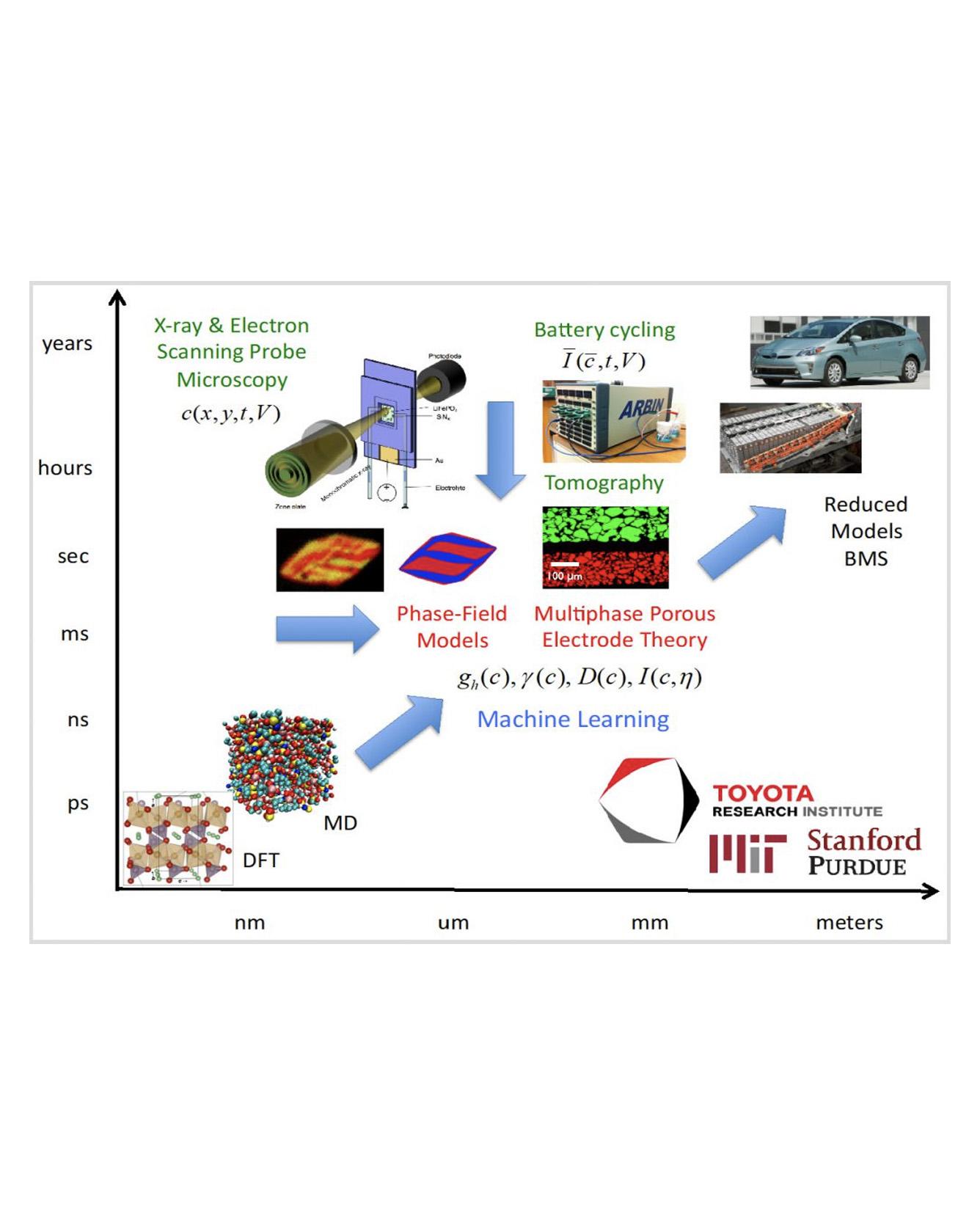
All Authors: Peter Attia, Aditya Grover, Norman Jin, Kristen Severson, Bryan Cheong, Jerry Liao, Michael H Chen, Nicholas Perkins, Zi Yang, Patrick H Herring, Muratahan Aykol, Stephen J Harris, Richard D Braatz, Stefano Ermon, William C Chueh Lithium-ion batteries are complex electrochemical devices that spans multiple time and length scales. Such complexity presents challenges when engineering batteries. On a scientific level, establishing a physical picture that spans atomic, particle and device scales require integration of many types of data, physics/chemistry, and equations. On an engineering level, given the degrees of freedom, design of experiments can involve daunting number of permutations. The Center for Data-Driven Design of Li-Ion Batteries (D3BATT) at MIT, Stanford and Purdue aims to address these challenges by integrating a wide range of experiments, modeling, and data analytic approaches. In this talk, I will highlight the example of optimizing extreme fast charging, that is, charging batteries under ten minutes. We combined machine-learning and optimal experimental design methods to rapidly identify an effective extreme fast charging method on a time scale that is otherwise not possible. Read More
Citation: Attia, Peter, Aditya Grover, Norman Jin, Kristen Severson, Bryan Cheong, Jerry Liao, Michael H. Chen et al. "Closed-Loop Optimization of Battery Fast Charging Procedures." In Meeting Abstracts, no. 2, pp. 227-227. The Electrochemical Society, 2019.