Featured Publications
All Publications

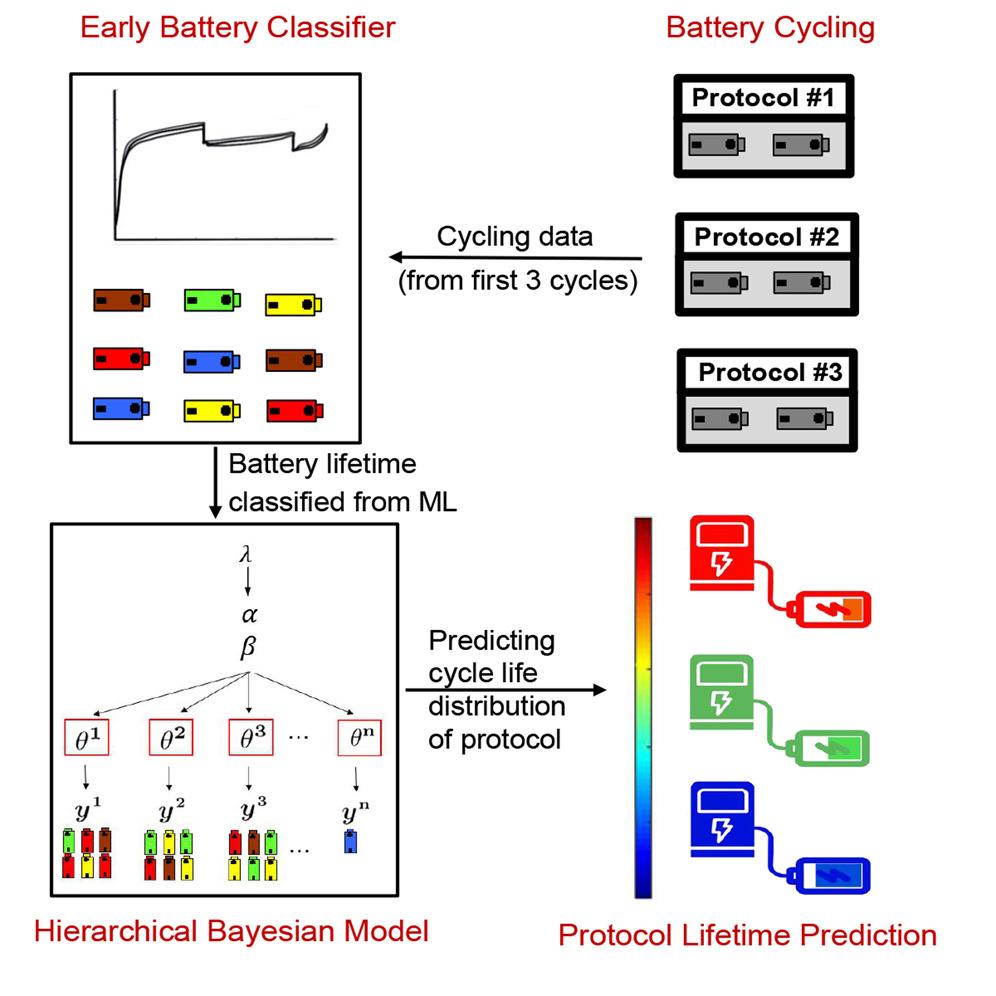
Advancing lithium-ion battery technology requires the optimization of cycling protocols. A new data-driven methodology is demonstrated for rapid, accurate prediction of the cycle life obtained by new cycling protocols using a single test lasting only 3 cycles, enabling rapid exploration of cycling protocol design spaces with orders of magnitude reduction in testing time. We achieve this by combining lifetime early prediction with a hierarchical Bayesian model (HBM) to rapidly predict performance distributions without the need for extensive repetitive testing. The methodology is applied to a comprehensive dataset of lithium-iron-phosphate/graphite comprising 29 different fast-charging protocols. HBM alone provides high protocol-lifetime prediction performance, with 6.5% of overall test average percent error, after cycling only one battery to failure. By combining HBM with a battery lifetime prediction model, we achieve a test error of 8.8% using a single 3-cycle test. In addition, the generalizability of the HBM approach is demonstrated for lithium-manganese-cobalt-oxide/graphite cells. READ MORE
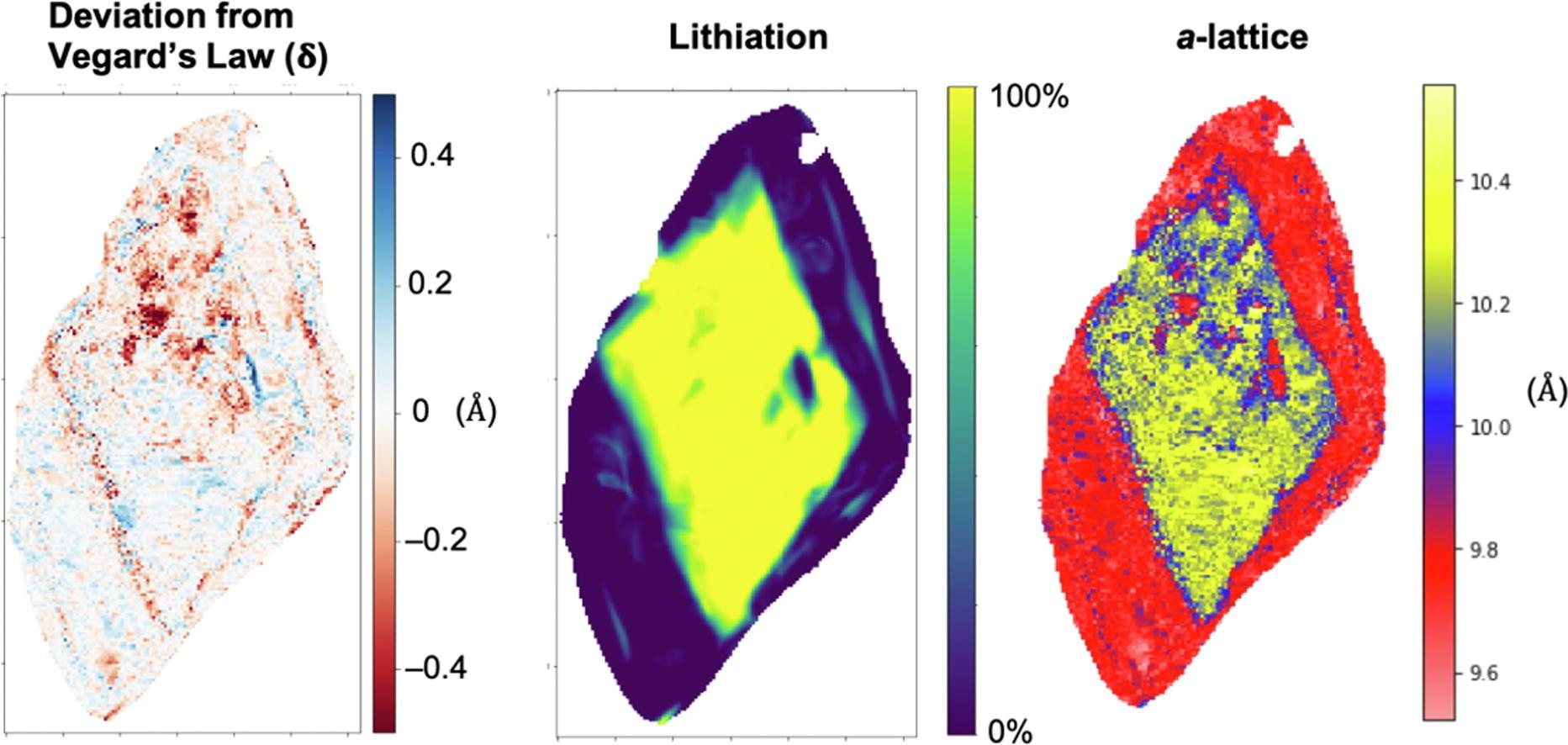
Lithium iron phosphate (LixFePO4), a cathode material used in rechargeable Li-ion batteries, phase separates upon de/lithiation under equilibrium. The interfacial structure and chemistry within these cathode materials affects Li-ion transport, and therefore battery performance. Correlative imaging of LixFePO4 was performed using four-dimensional scanning transmission electron microscopy (4D-STEM), scanning transmission X-ray microscopy (STXM), and X-ray ptychography in order to analyze the local structure and chemistry of the same particle set. Over 50,000 diffraction patterns from 10 particles provided measurements of both structure and chemistry at a nanoscale spatial resolution (16.6–49.5 nm) over wide (several micron) fields-of-view with statistical robustness. LixFePO4 particles at varying stages of delithiation were measured to examine the evolution of structure and chemistry as a function of delithiation. In lithiated and delithiated particles, local variations were observed in the degree of lithiation even while local lattice structures remained comparatively constant, and calculation of linear coefficients of chemical expansion suggest pinning of the lattice structures in these populations. Partially delithiated particles displayed broadly core–shell-like structures, however, with highly variable behavior both locally and per individual particle that exhibited distinctive intermediate regions at the interface between phases, and pockets within the lithiated core that correspond to FePO4 in structure and chemistry. The results provide insight into the LixFePO4 system, subtleties in the scope and applicability of Vegard’s law (linear lattice parameter-composition behavior) under local versus global measurements, and demonstrate a powerful new combination of experimental and analytical modalities for bridging the crucial gap between local and statistical characterization. READ MORE
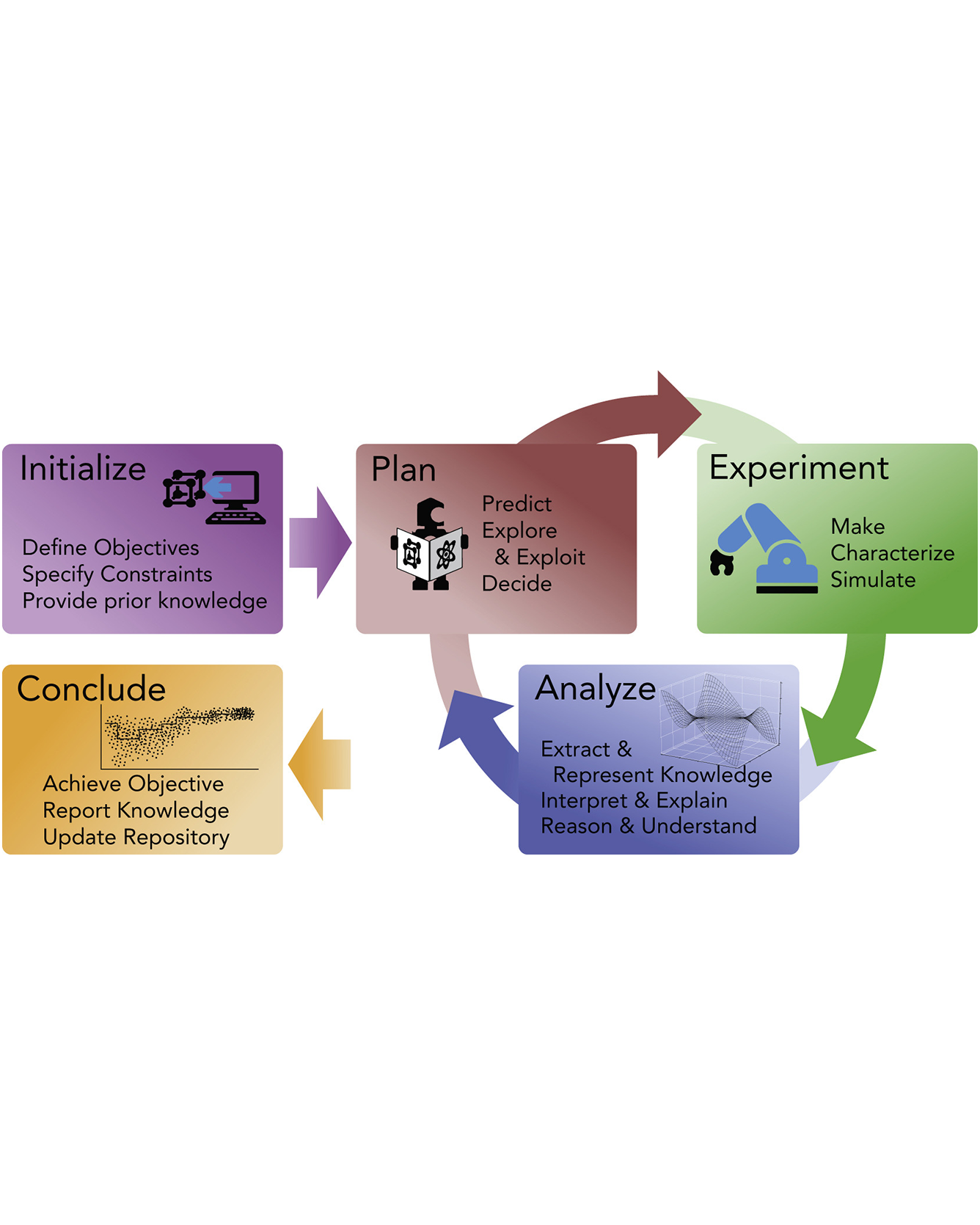
Solutions to many of the world's problems depend upon materials research and development. However, advanced materials can take decades to discover and decades more to fully deploy. Humans and robots have begun to partner to advance science and technology orders of magnitude faster than humans do today through the development and exploitation of closed-loop, autonomous experimentation systems. This review discusses the specific challenges and opportunities related to materials discovery and development that will emerge from this new paradigm. Our perspective incorporates input from stakeholders in academia, industry, government laboratories, and funding agencies. We outline the current status, barriers, and needed investments, culminating with a vision for the path forward. We intend the article to spark interest in this emerging research area and to motivate potential practitioners by illustrating early successes. We also aspire to encourage a creative reimagining of the next generation of materials science infrastructure. To this end, we frame future investments in materials science and technology, hardware and software infrastructure, artificial intelligence and autonomy methods, and critical workforce development for autonomous research. READ MORE
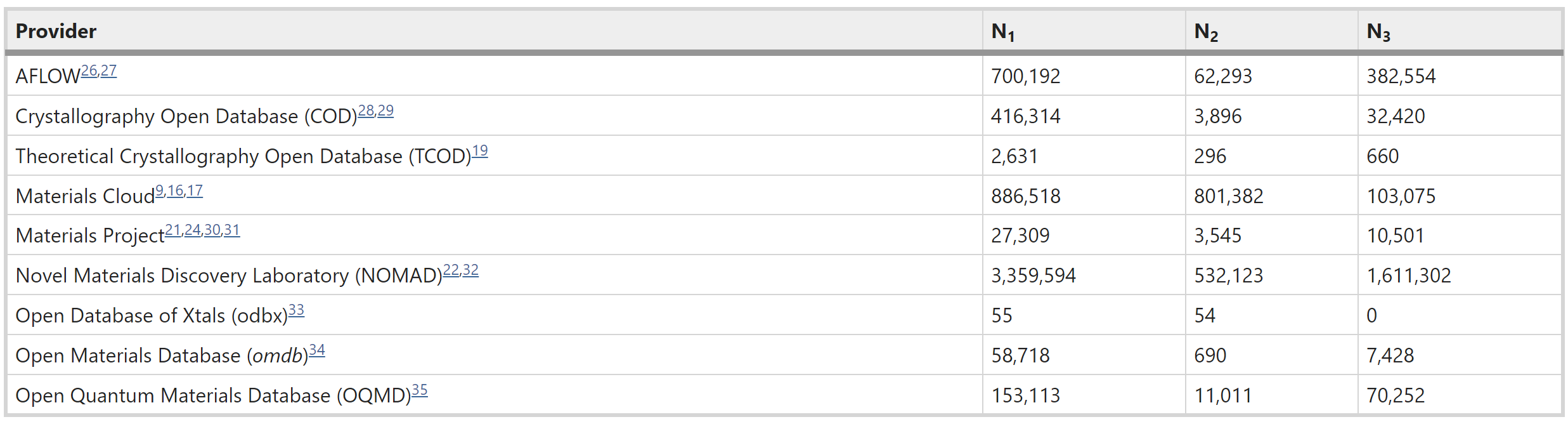
The Open Databases Integration for Materials Design (OPTIMADE) consortium has designed a universal application programming interface (API) to make materials databases accessible and interoperable. We outline the first stable release of the specification, v1.0, which is already supported by many leading databases and several software packages. We illustrate the advantages of the OPTIMADE API through worked examples on each of the public materials databases that support the full API specification. READ MORE
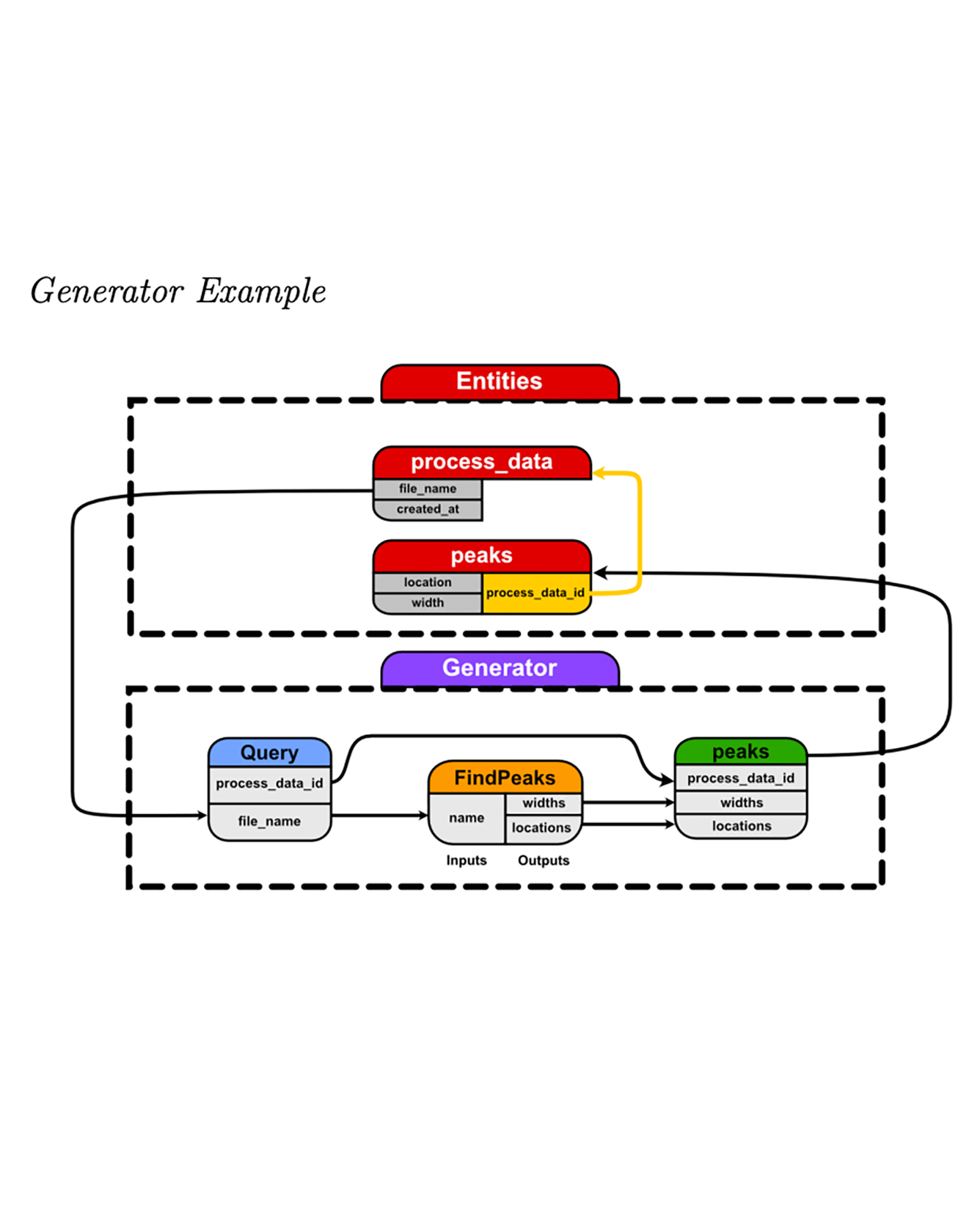
In this work, we present DBgen, a Python library that provides a framework for defining extract-transform-load (ETL) pipelines to create and populate SQL databases. DBgen is most useful when the underlying data has complex relationships, requires multi-step analysis, is large-scale, and the type of data being collected changes frequently. Scientific data often fits this description. With current tooling, defining ETL pipelines for this particularly difficult- to-manage data is so onerous that a great deal of it does not end up being stored in a database and is opaque. DBgen is designed to fill the gap in the current tooling and reduce the barrier to defining ETL pipelines such data. READ MORE
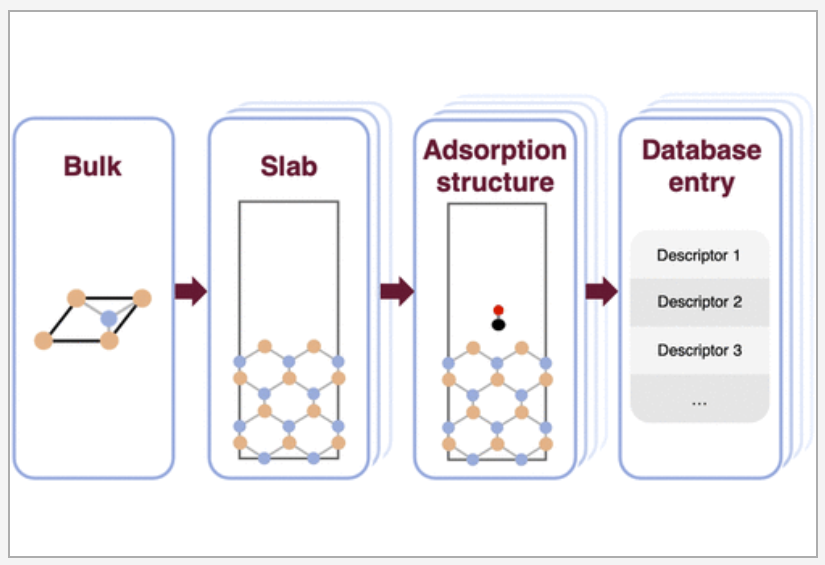
Surface adsorption is a crucial step in numerous processes, including heterogeneous catalysis, where the adsorption of key species is often used as a descriptor of efficiency. We present here an automated adsorption workflow for semiconductors which employs density functional theory calculations to generate adsorption data in a high-throughput manner. Starting from a bulk structure, the workflow performs an exhaustive surface search, followed by an adsorption structure construction step, which generates a minimal energy landscape to determine the optimal adsorbate–surface distance. An extensive set of energy-based, charge-based, geometric, and electronic descriptors tailored toward catalysis research are computed and saved to a personal user database. The application of the workflow to zinc telluride, a promising CO2 reduction photocatalyst, is presented as a case study to illustrate the capabilities of this method and its potential as a material discovery tool. READ MORE
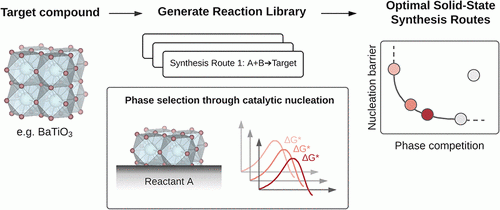
The rational solid-state synthesis of inorganic compounds is formulated as catalytic nucleation on crystalline reactants, where contributions of reaction and interfacial energies to the nucleation barriers are approximated from high-throughput thermochemical data and structural and interfacial features of crystals, respectively. Favorable synthesis reactions are then identified by a Pareto analysis of relative nucleation barriers and phase selectivities of reactions leading to the target. We demonstrate the application of this approach in reaction planning for the solid-state synthesis of a range of compounds, including the widely studied oxides LiCoO2, BaTiO3, and YBa2Cu3O7, as well as other metal oxide, oxyfluoride, phosphate, and nitride targets. Pathways for enabling the retrosynthesis of inorganics are also discussed. READ MORE
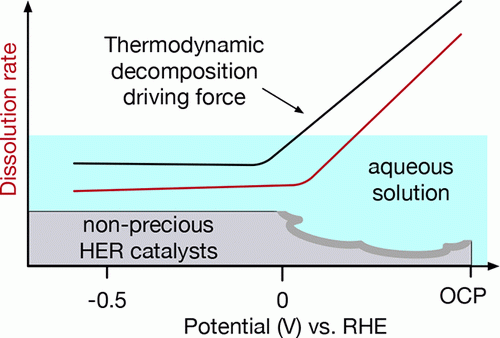
Nonprecious hydrogen evolution reaction (HER) catalysts commonly suffer from severe dissolution under open-circuit potential (OCP). In this work, using calculated Pourbaix diagrams, we quantitatively analyze the stability of a set of well-known active HER catalysts (MoS2, MoP, CoP, Pt in acid, and Ni3Mo in base) under working conditions. We determine that the large thermodynamic driving force toward decomposition created by the electrode/electrolyte interface potential is responsible for the substantial dissolution of nonprecious HER catalysts at OCP. Our analysis further shows the stability of HER catalysts in acidic solution is ordered as Pt ≈ MoS2 > MoP > CoP, which is confirmed by the measured dissolution rates using an inductively coupled plasma mass spectrometer. On the basis of the gained insights, we suggest strategies to circumvent the catalyst dissolution in aqueous solution. READ MORE
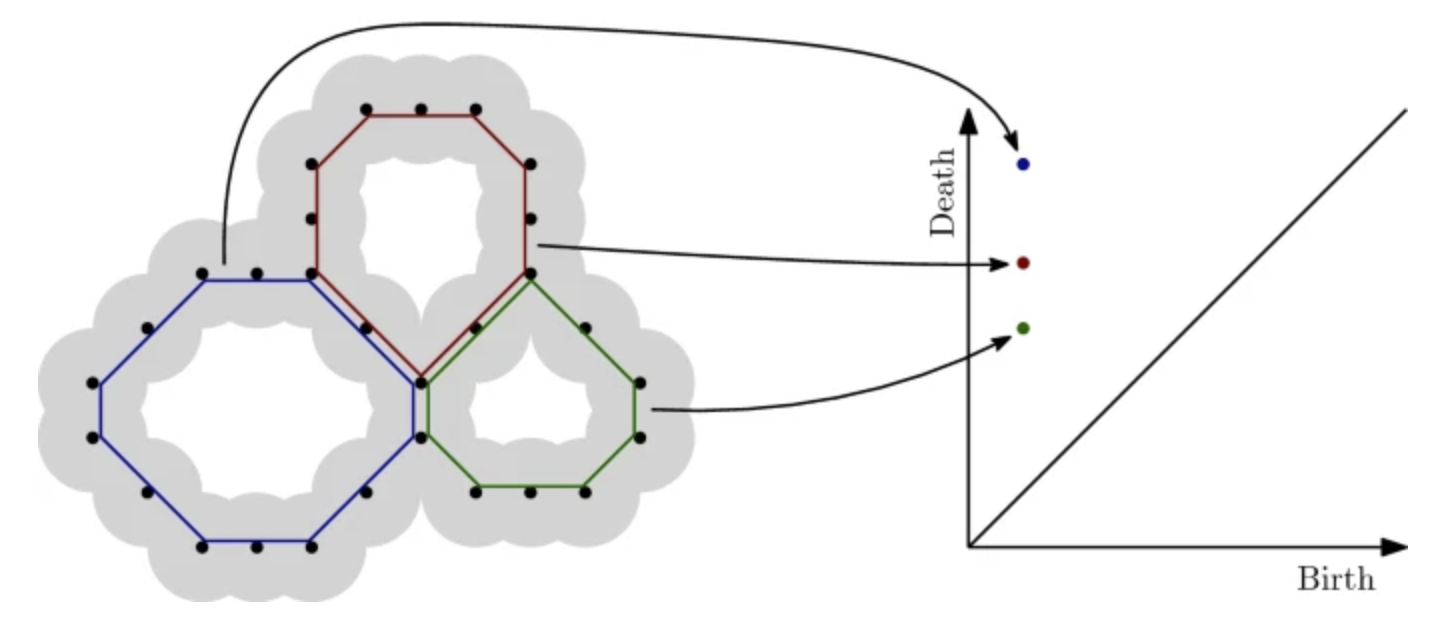
Machine learning has emerged as a powerful approach in materials discovery. Its major challenge is selecting features that create interpretable representations of materials, useful across multiple prediction tasks. We introduce an end-to-end machine learning model that automatically generates descriptors that capture a complex representation of a material’s structure and chemistry. This approach builds on computational topology techniques (namely, persistent homology) and word embeddings from natural language processing. It automatically encapsulates geometric and chemical information directly from the material system. We demonstrate our approach on multiple nanoporous metal–organic framework datasets by predicting methane and carbon dioxide adsorption across different conditions. Our results show considerable improvement in both accuracy and transferability across targets compared to models constructed from the commonly-used, manually-curated features, consistently achieving an average 25–30% decrease in root-mean-squared-deviation and an average increase of 40–50% in R2 scores. A key advantage of our approach is interpretability: Our model identifies the pores that correlate best to adsorption at different pressures, which contributes to understanding atomic-level structure–property relationships for materials design. READ MORE
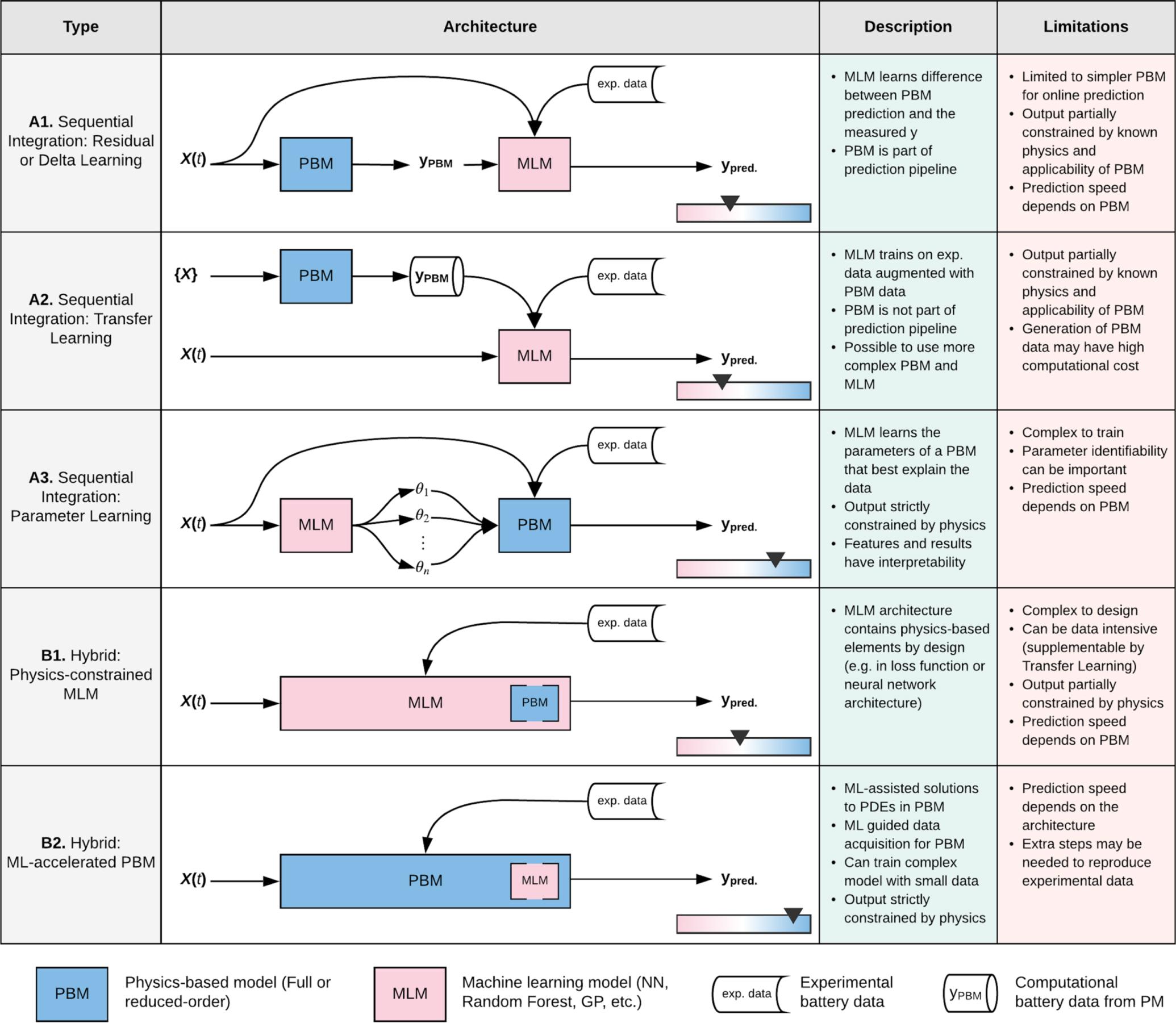
Forecasting the health of a battery is a modeling effort that is critical to driving improvements in and adoption of electric vehicles. Purely physics-based models and purely data-driven models have advantages and limitations of their own. Considering the nature of battery data and end-user applications, we outline several architectures for integrating physics-based and machine learning models that can improve our ability to forecast battery lifetime. We discuss the ease of implementation, advantages, limitations, and viability of each architecture, given the state of the art in the battery and machine learning fields. READ MORE