
Featured Publications
All Publications

In this work, we present a computational framework for coupled electro-chemo-(nonlinear) mechanics at the particle scale for solid-state batteries. The framework accounts for interfacial fracture between the active particles and solid electrolyte due to intercalation stresses. We extend discontinuous finite element methods for a sharp interface treatment of discontinuities in concentrations, fluxes, electric fields and in displacements, the latter arising from active particle–solid electrolyte interface fracture. We model the degradation in the charge transfer process that results from the loss of contact due to fracture at the electrolyte–active particle interfaces. Additionally, we account for the stress-dependent kinetics that can influence the charge transfer reactions and solid state diffusion. The discontinuous finite element approach does not require a conformal mesh. This offers the flexibility to construct arbitrary particle shapes and geometries that are based on design, or are obtained from microscopy images. The finite element mesh, however, can remain Cartesian, and independent of the particle goemetries. We demonstrate this computational framework on micro-structures that are representative of solid-state batteries with single and multiple anode and cathode particles. READ MORE
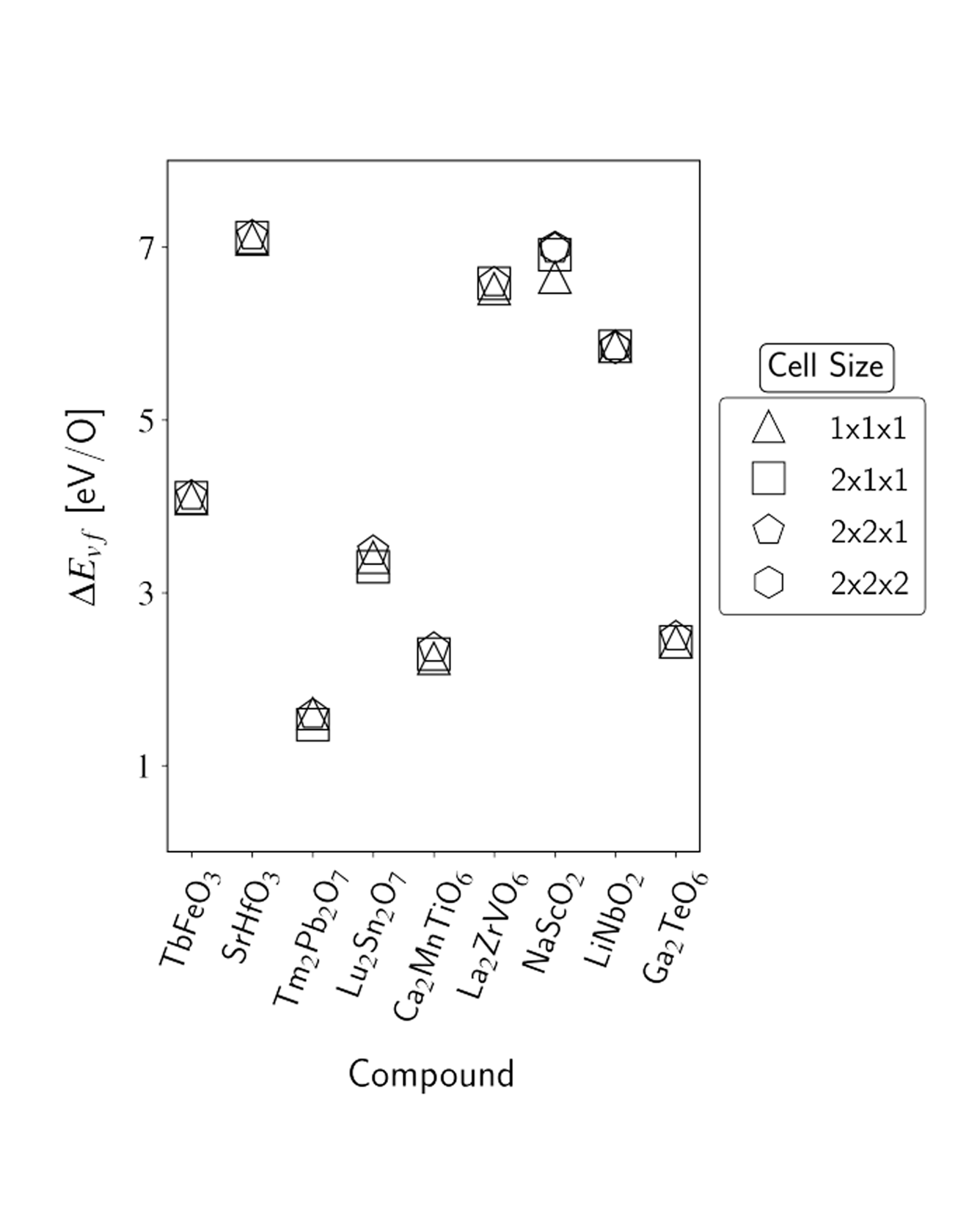
The oxygen vacancy formation energy (ΔEvf) governs defect concentrations alongside the entropy and is a useful metric to perform materials selection for a variety of applications. However, density functional theory (DFT) calculations of ΔEvf come at a greater computational cost than the typical bulk calculations available in materials databases due to the involvement of multiple vacancy-containing supercells. As a result, available repositories of direct calculations of ΔEvf remain relatively scarce, and the development of machine-learning models capable of delivering accurate predictions is of interest. In the present work, we address both such points. We first report the results of new high-throughput DFT calculations of oxygen vacancy formation energies of the different unique oxygen sites in over 1000 different oxide materials, with a large portion of the calculations, and of the discussion, focusing on perovskite-type and pyrochlore-type oxides. Together, the over 2500 ΔEvf calculations form the largest data set of directly computed oxygen vacancy formation energies to date, to our knowledge. We then utilize such a data set to train random forest models with different sets of features, examining both novel features introduced in this work and ones previously employed in the literature. We demonstrate the benefits of including features that contain information specific to the vacancy site and account for both cation identity and oxidation state and achieve a mean absolute error upon prediction of ∼0.3 eV/O, which is comparable to the accuracy observed upon comparison of DFT computations of oxygen vacancy formation energy and experimental results. Finally, we exemplify the predictive power of the developed models in the search for new compounds for solar-thermochemical water-splitting applications, finding over 250 new AA′BB′O6 double perovskite candidates. READ MORE
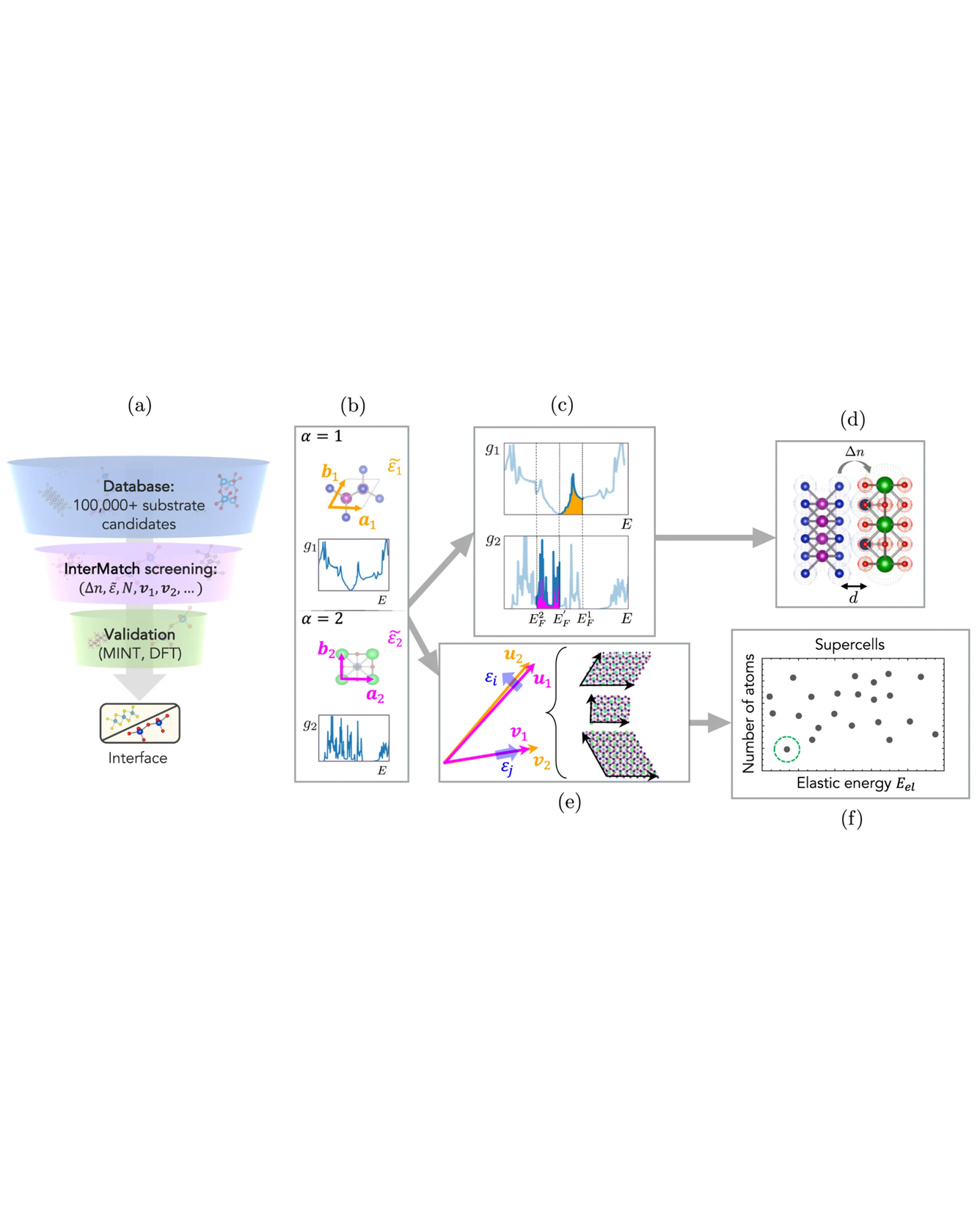
Forming a hetero-interface is a materials-design strategy that can access an astronomically large phase space. However, the immense phase space necessitates a high-throughput approach for an optimal interface design. Here we introduce a high-throughput computational framework, InterMatch, for efficiently predicting charge transfer, strain, and superlattice structure of an interface by leveraging the databases of individual bulk materials. Specifically, the algorithm reads in the lattice vectors, density of states, and the stiffness tensors for each material in their isolated form from the Materials Project. From these bulk properties, InterMatch estimates the interfacial properties. We benchmark InterMatch predictions for the charge transfer against experimental measurements and supercell density-functional theory calculations. We then use InterMatch to predict promising interface candidates for doping transition metal dichalcogenide MoSe2. Finally, we explain experimental observation of factor of 10 variation in the supercell periodicity within a few microns in graphene/α-RuCl3 by exploring low energy superlattice structures as a function of twist angle using InterMatch. We anticipate our open-source InterMatch algorithm accelerating and guiding ever-growing interfacial design efforts. Moreover, the interface database resulting from the InterMatch searches presented in this paper can be readily accessed online. READ MORE
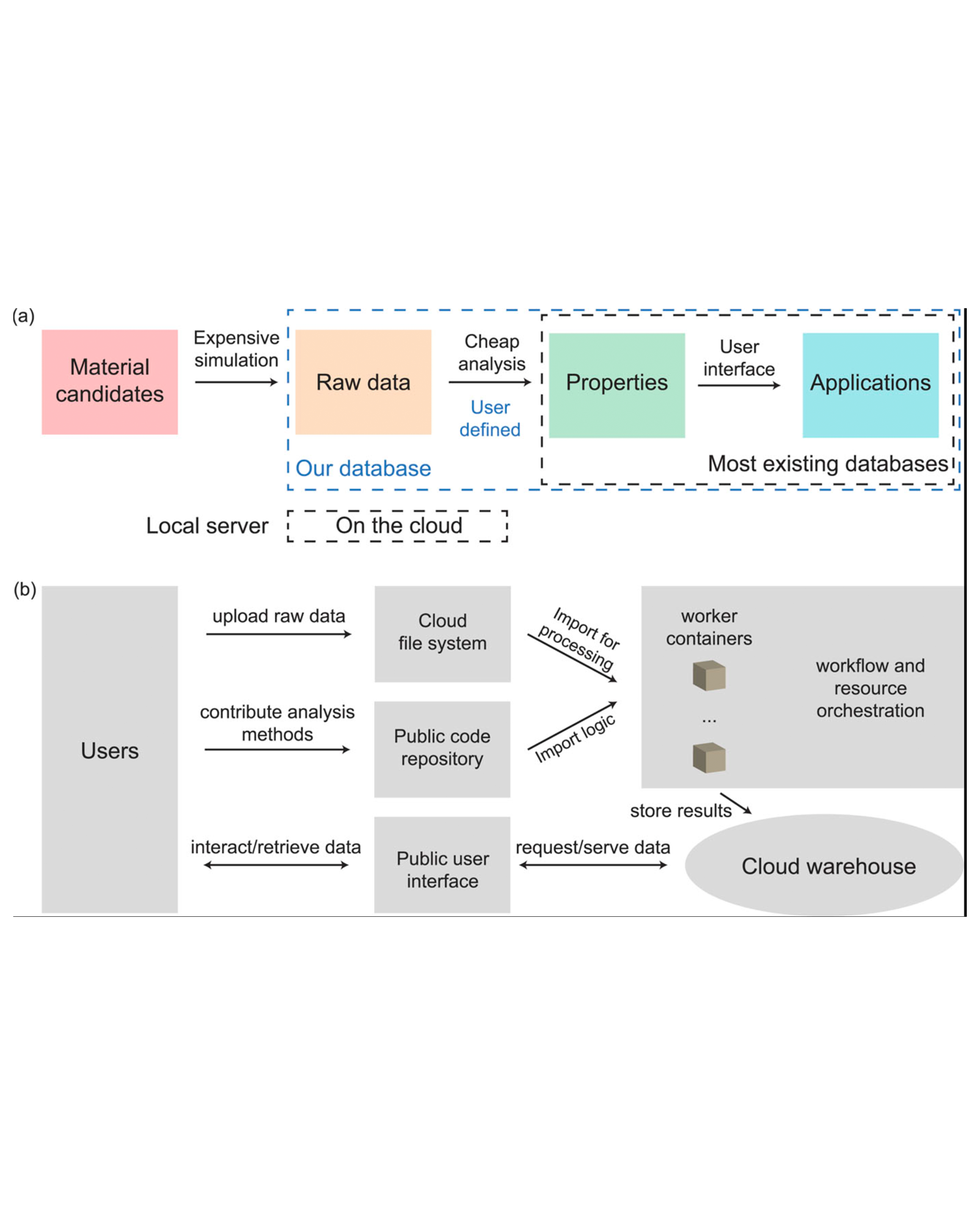
Open material databases storing thousands of material structures and their properties have become the cornerstone of modern computational materials science. Yet, the raw simulation outputs are generally not shared due to their huge size. In this work, we describe a cloud-based platform to enable fast post-processing of the trajectories and to facilitate sharing of the raw data. As an initial demonstration, our database includes 6286 molecular dynamics trajectories for amorphous polymer electrolytes (5.7 terabytes of data). We create a public analysis library at https://github.com/TRI-AMDD/htp_md to extract ion transport properties from the raw data using expert-designed functions and machine learning models. The analysis is run automatically on the cloud, and the results are uploaded onto an open database. Our platform encourages users to contribute both new trajectory data and analysis functions via public interfaces. Finally, we create a front-end user interface at https://www.htpmd.matr.io/ for browsing and visualization of our data. We envision the platform to be a new way of sharing raw data and new insights for the materials science community. READ MORE
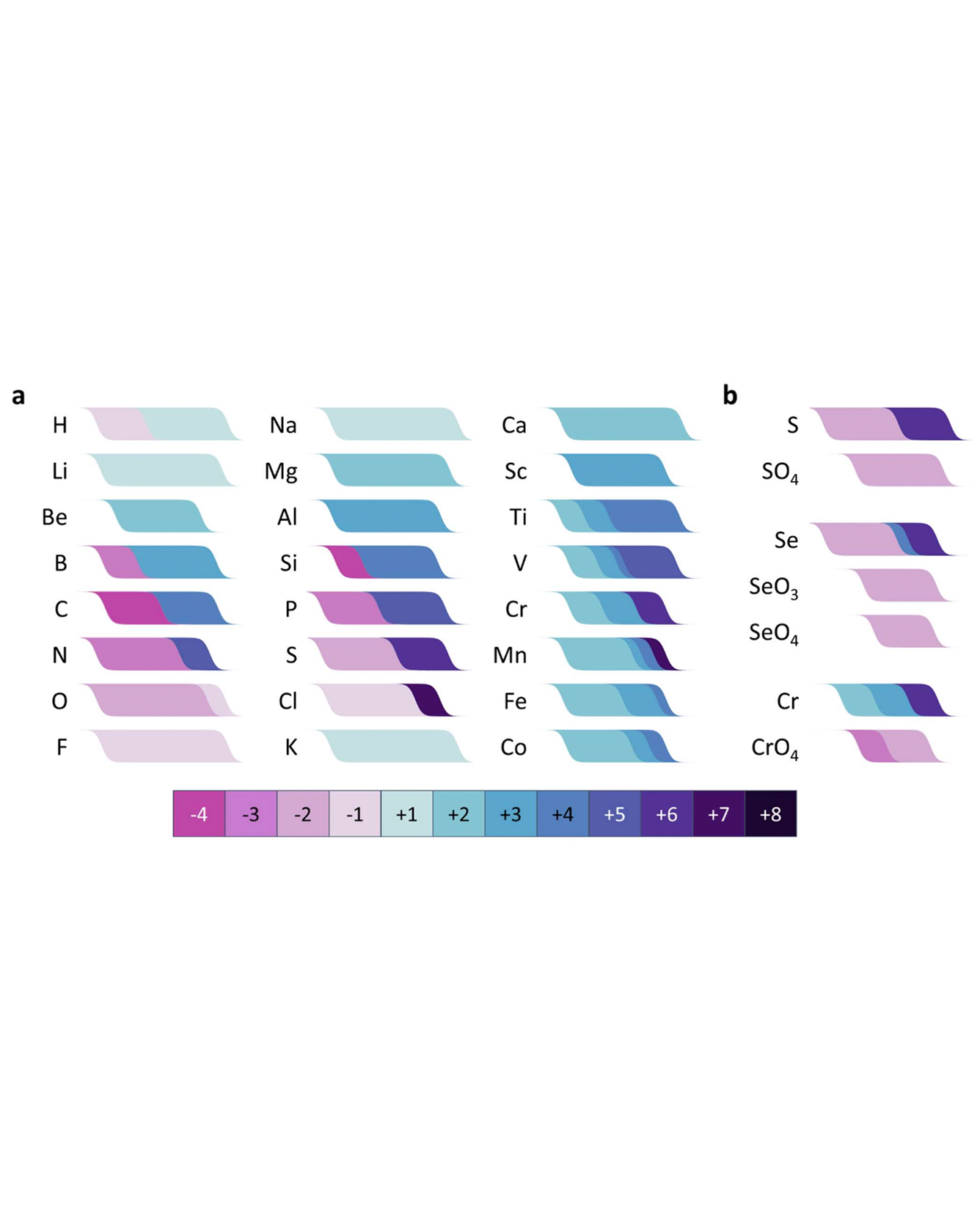
The electrochemical series is a useful tool in electrochemistry, but its effectiveness in materials chemistry is limited by the fact that the standard electrochemical series is based on a relatively small set of reactions, many of which are measured in aqueous solutions. We have used machine learning to create an electrochemical series for inorganic materials from tens of thousands of entries in the Inorganic Crystal Structure Database. We demonstrate that this approach enables the prediction of oxidation states directly from composition in a way that is physically justified, human-interpretable, and more accurate than a state-of-the-art transformer-based neural network model. We present applications of our model to structure prediction, materials discovery, and materials electrochemistry, and we discuss possible additional applications and areas for improvement. To facilitate the use of our approach, we introduce a freely available web site and API. READ MORE
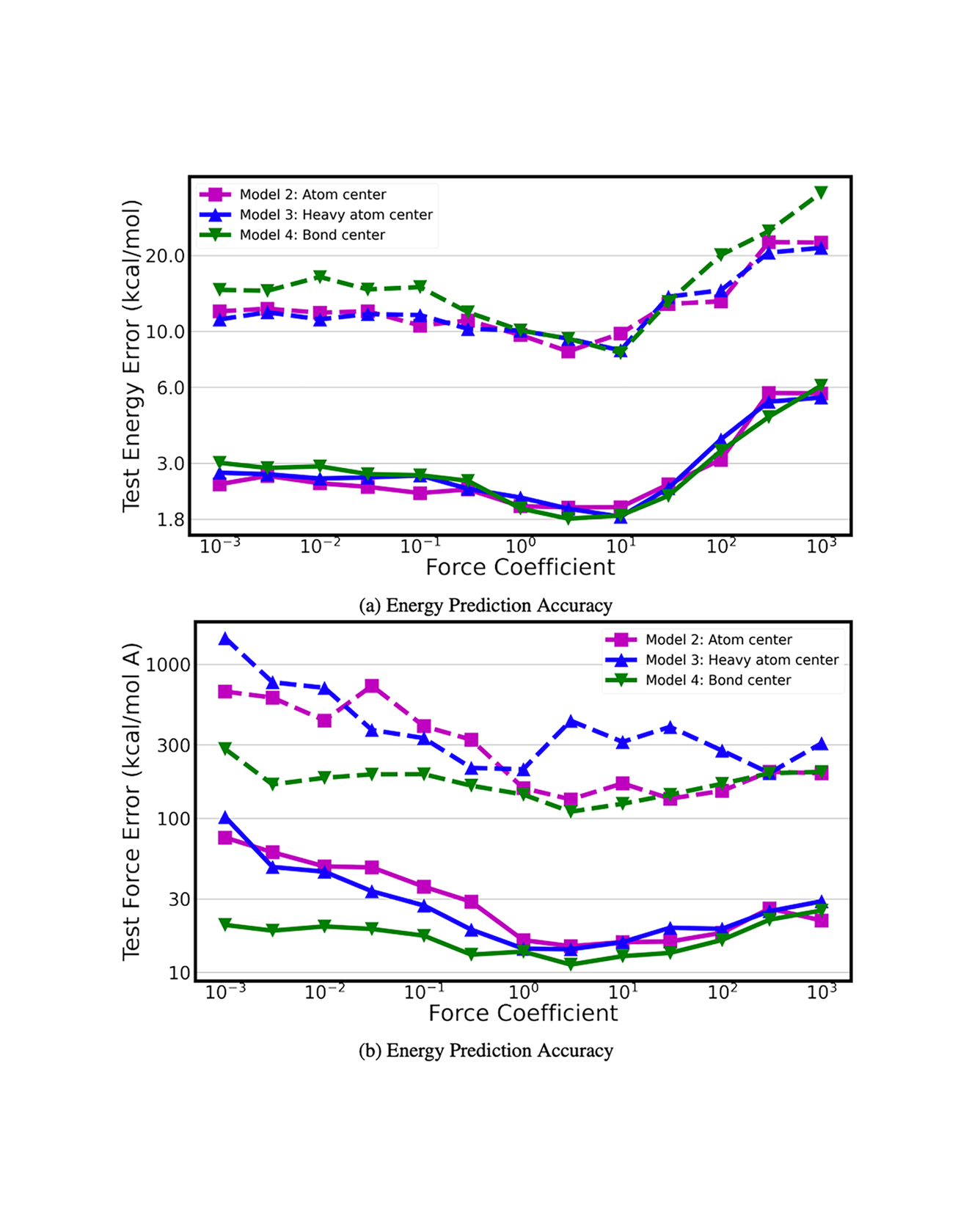
This paper introduces the Chemical Environment Modeling Theory (CEMT), a novel, generalized framework designed to overcome the limitations inherent in traditional atom-centered Machine Learning Force Field (MLFF) models, widely used in atomistic simulations of chemical systems. CEMT demonstrated enhanced flexibility and adaptability by allowing reference points to exist anywhere within the modeled domain and thus, enabling the study of various model architectures. Utilizing Gaussian Multipole (GMP) featurization functions, several models with different reference point sets, including finite difference grid-centered and bond-centered models, were tested to analyze the variance in capabilities intrinsic to models built on distinct reference points. The results underscore the potential of non-atom-centered reference points in force training, revealing variations in prediction accuracy, inference speed and learning efficiency. Finally, a unique connection between CEMT and real-space orbital-free finite element Density Functional Theory (FE-DFT) is established, and the implications include the enhancement of data efficiency and robustness. It allows the leveraging of spatially-resolved energy densities and charge densities from FE-DFT calculations, as well as serving as a pivotal step towards integrating known quantum-mechanical laws into the architecture of ML models. READ MORE
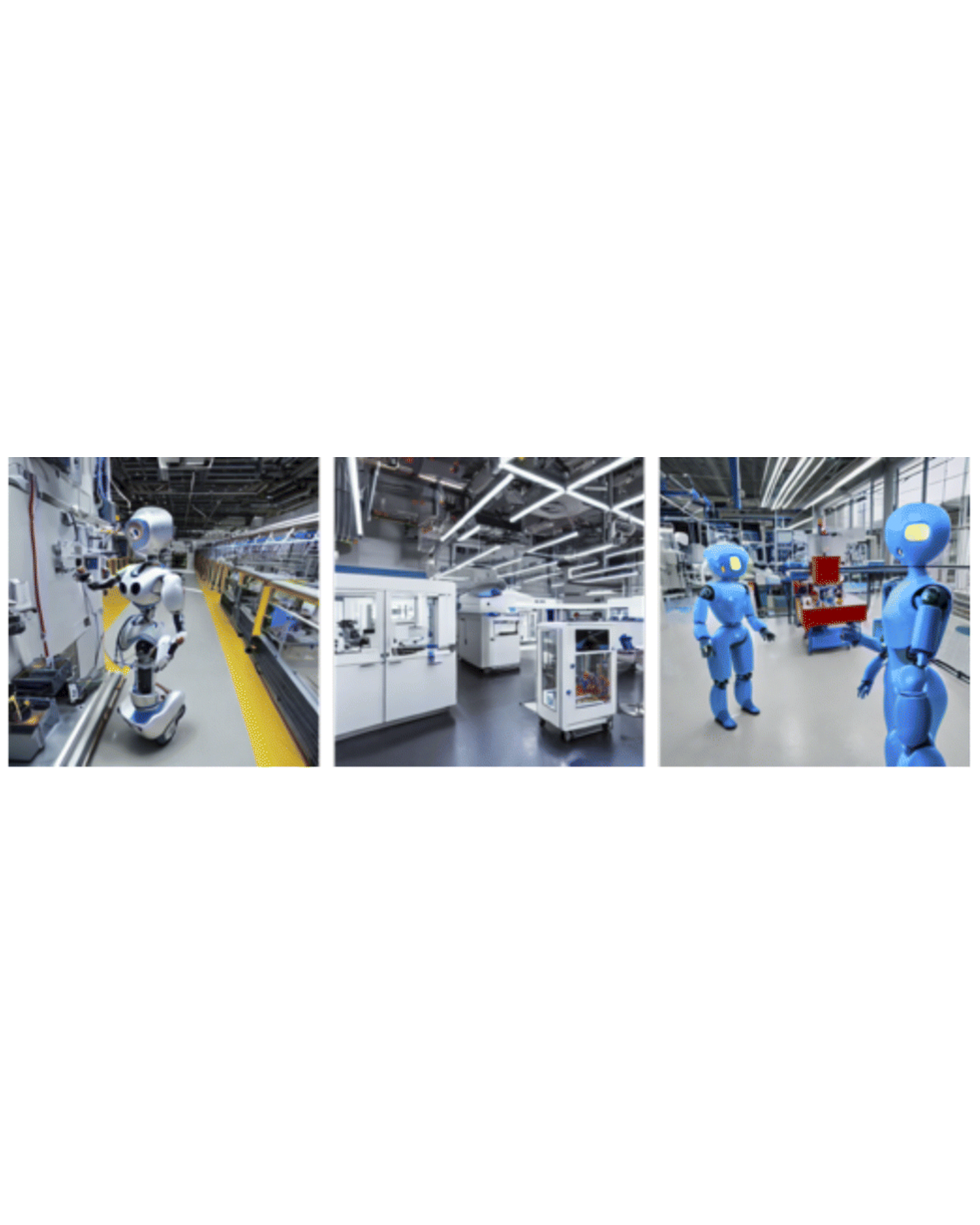
Self-driving labs (SDLs) leverage combinations of artificial intelligence, automation, and advanced computing to accelerate scientific discovery. The promise of this field has given rise to a rich community of passionate scientists, engineers, and social scientists, as evidenced by the development of the Acceleration Consortium and recent Accelerate Conference. Despite its strengths, this rapidly developing field presents numerous opportunities for growth, challenges to overcome, and potential risks of which to remain aware. This community perspective builds on a discourse instantiated during the first Accelerate Conference, and looks to the future of self-driving labs with a tempered optimism. Incorporating input from academia, government, and industry, we briefly describe the current status of self-driving labs, then turn our attention to barriers, opportunities, and a vision for what is possible. Our field is delivering solutions in technology and infrastructure, artificial intelligence and knowledge generation, and education and workforce development. In the spirit of community, we intend for this work to foster discussion and drive best practices as our field grows. READ MORE
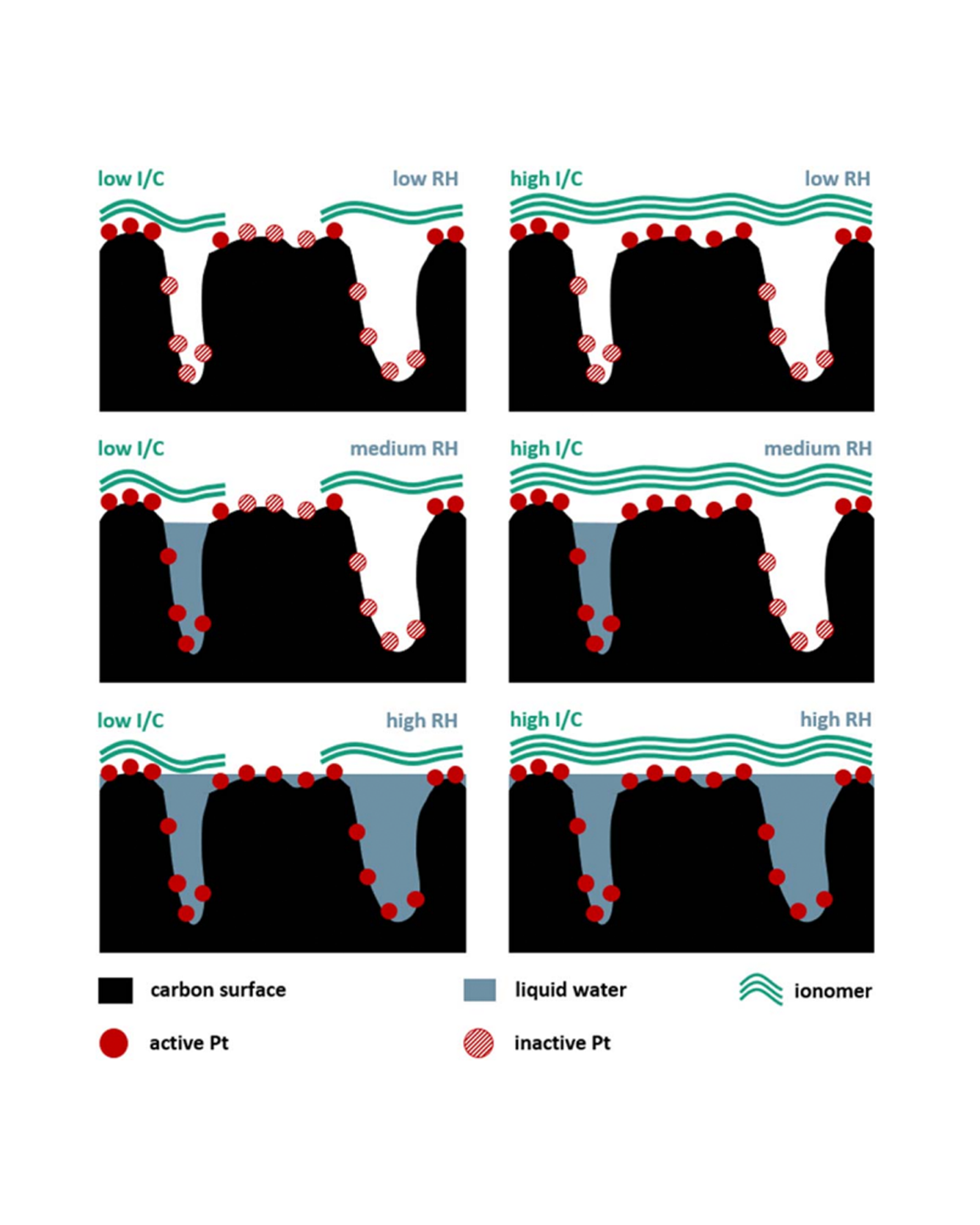
The effect of ionomer to carbon (I/C) weight ratio and relative humidity (RH) on cathode catalyst degradation was investigated by comprehensive in situ characterization. Membrane electrode assemblies (MEA) with I/C ratios of 0.5, 0.8 and 1.2 were subjected to an accelerated stress test performed at 40, 70 and 100% RH. The results show an increasing loss in electrochemical active surface area (ECSA) for both higher I/C ratios and RH during voltage cycling. To differentiate between ionomer and water connected ECSA, carbon monoxide stripping measurements were performed at varying RH. Before degradation, all MEAs show comparable total ECSA values, while higher I/C ratios lead to a larger fraction of ionomer connected ECSA. After degradation, ECSA measurements of the lowest I/C ratio showed a relatively higher loss of Pt in contact with ionomer than Pt in contact with water, while an opposite trend was observed for higher I/C ratios. H2/N2 impedance measurements showed drastically increasing protonic catalyst layer resistances for decreasing RH especially at low I/C ratios, which might hinder Pt2+ ion diffusion towards the membrane, hence decreasing the ECSA loss. Limiting current measurements show increasing molecular O2 diffusion resistances at end of test for samples with higher I/C ratios and higher ECSA loss. READ MORE
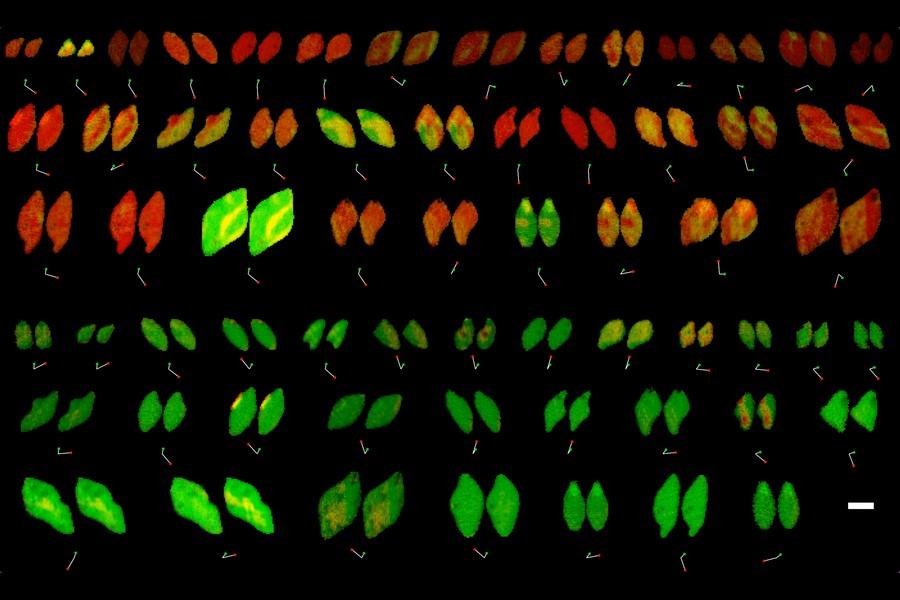
Reaction rates at spatially heterogeneous, unstable interfaces are notoriously difficult to quantify, yet are essential in engineering many chemical systems, such as batteries1 and electrocatalysts2. Experimental characterizations of such materials by operando microscopy produce rich image datasets3,4,5,6, but data-driven methods to learn physics from these images are still lacking because of the complex coupling of reaction kinetics, surface chemistry and phase separation7. Here we show that heterogeneous reaction kinetics can be learned from in situ scanning transmission X-ray microscopy (STXM) images of carbon-coated lithium iron phosphate (LFP) nanoparticles. Combining a large dataset of STXM images with a thermodynamically consistent electrochemical phase-field model, partial differential equation (PDE)-constrained optimization and uncertainty quantification, we extract the free-energy landscape and reaction kinetics and verify their consistency with theoretical models. We also simultaneously learn the spatial heterogeneity of the reaction rate, which closely matches the carbon-coating thickness profiles obtained through Auger electron microscopy (AEM). Across 180,000 image pixels, the mean discrepancy with the learned model is remarkably small (<7%) and comparable with experimental noise. Our results open the possibility of learning nonequilibrium material properties beyond the reach of traditional experimental methods and offer a new non-destructive technique for characterizing and optimizing heterogeneous reactive surfaces. READ MORE
Data-driven models are being developed to predict battery lifetime because of their ability to capture complex aging phenomena. In this perspective, we demonstrate that it is critical to consider the use cases when developing prediction models. Specifically, model features need to be classified to differentiate whether or not they encode cycling conditions, which are sometimes used to artificially increase the diversity in battery lifetime. Many use cases require the prediction of cell-to-cell variability between identically cycled cells, such as production quality control. Developing models for such prediction tasks thus requires features that do not rely on cycling conditions. Using the dataset published by Severson et al. in 2019 as an example, we show that features encoding cycling conditions boost model accuracy because they predict the protocol-to-protocol variability. However, models based on these features are less transferable when deployed on identically cycled cells. Our analysis underscores the concept of using the right features for the right prediction task. We encourage researchers to consider the usage scenarios that they are developing models for and whether or not to include cycling conditions in their models in order to avoid data leakage. Equally important, benchmarking model performance should be carried out between models developed for the same use case. READ MORE