Featured Publications
All Publications

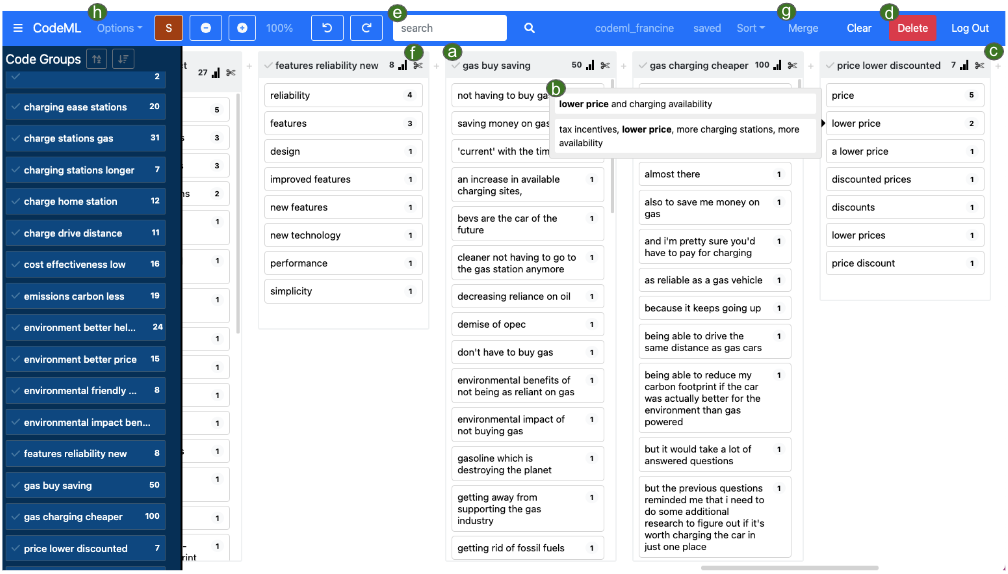
Labeling short, unstructured texts is generally performed by sequentially identifying codes and assigning them to segments of text based on viewing a small sample of data. In this greedy approach, coders risk overlooking important code ideas and must perform the tedious task of iteratively revising the initial code set, and sometimes response code assignments, as new themes emerge. To address this, we propose CodeML, a machine learning-assisted (ML) coding interface that identifies multiple ideas in a response, which are displayed to support interactive data exploration, code identification, and refinement of snippet code assignments. By surfacing themes and snippets early, coders can consider a broader range of potential codes to reduce chances of omitting codes that surface later. A comparative study against search-style coding shows the potential for CodeML to facilitate initial exploration and discovery of finer-grained code sets while not adding significant cognitive load to organize codes and underlying text snippets. READ MORE
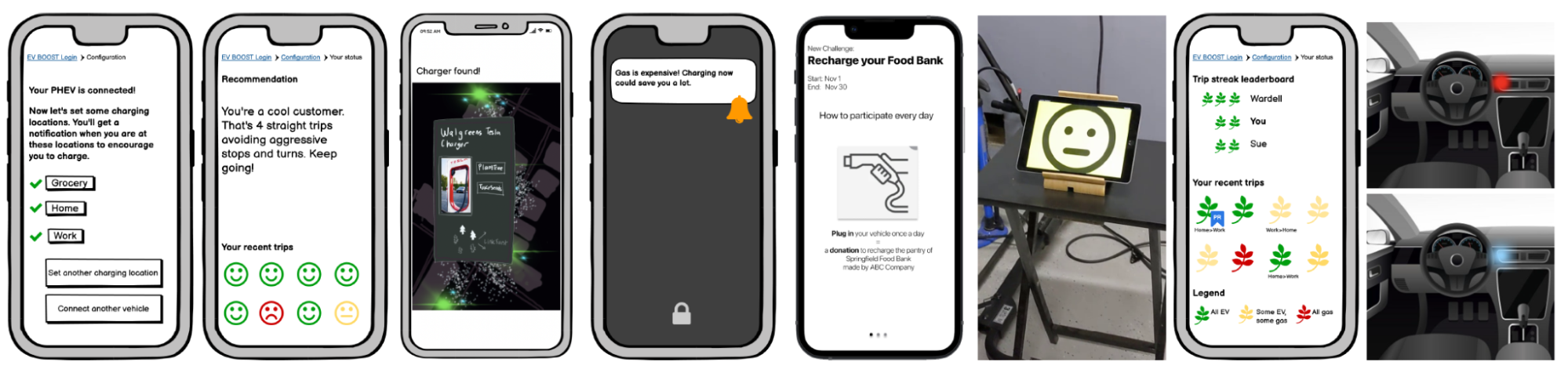
Electrification is an important first step toward reducing the greenhouse emissions of passenger vehicles. However, how drivers drive, charge, and operate their electrified vehicles can have a large impact on their emissions, particularly for Plug-in Hybrid Electric vehicles (PHEVs) that combine all-electric driving with an internal combustion engine. In this paper, we investigate how and why drivers use their PHEVs and uncover design opportunities for interfaces that can support the efficient use of PHEVs. We used a mixed-method approach combining quantitative, qualitative, and concept elicitation methods with PHEV owners in the US. While past findings indicate that PHEV drivers are not motivated to charge regularly, our work contradicts this with evidence of (1) regular charging with home infrastructure, (2) high cost sensitivity, and (3) preference for driving in all-electric mode. Our results indicate that the most critical problem is inadequate user support for navigating poor charging infrastructure. READ MORE
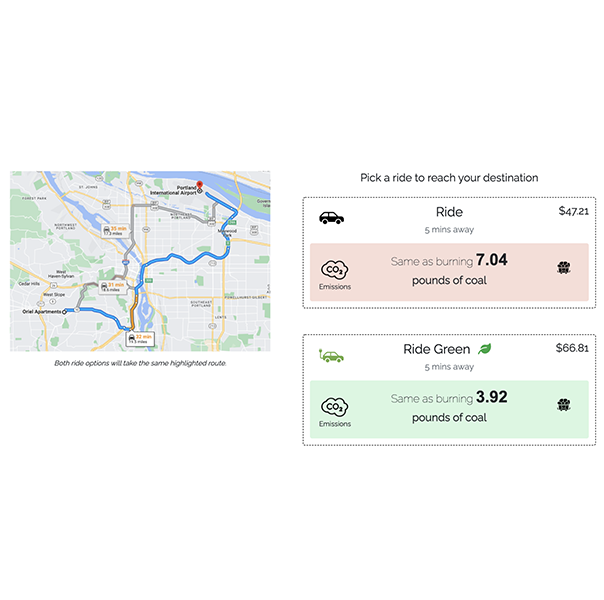
From ride-hailing to car rentals, consumers are often presented with eco-friendly options. Beyond highlighting a “green” vehicle and CO2 emissions, CO2 equivalencies have been designed to provide understandable amounts; we ask which equivalencies will lead to eco-friendly decisions. We conducted five ride-hailing scenario surveys where participants picked between regular and eco-friendly options, testing equivalencies, social features, and valence-based interventions. Further, we tested a car-rental embodiment to gauge how an individual (needing a car for several days) might behave versus the immediate ride-hailing context. We find that participants are more likely to choose green rides when presented with additional information about emissions; CO2 by weight was found to be the most effective. Further, we found that information framing—be it individual or collective footprint, positive or negative valence—had an impact on participants’ choices. Finally, we discuss how our findings inform the design of effective interventions for reducing car-based carbon-emissions. READ MORE
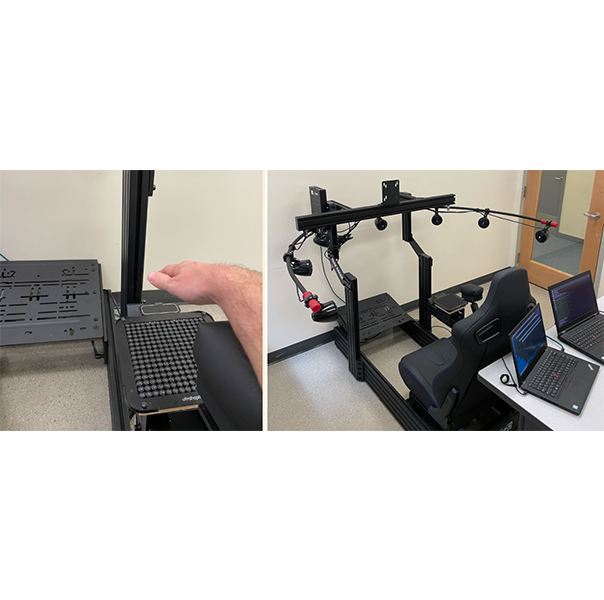
Should fully autonomous vehicles (FAVs) be designed inclusively and accessibly, independence will be transformed for millions of people experiencing transportation-limiting disabilities worldwide. Although FAVs hold promise to improve efficient transportation without intervention, a truly accessible experience must enable user input, for all people, in many driving scenarios (e.g., to alter a route or pull over during an emergency). Therefore, this paper explores desires for control in FAVs among (n=23) people who are blind and visually impaired. Results indicate strong support for control across a battery of driving tasks, as well as the need for multimodal information. These findings inspired the design and evaluation of a novel multisensory interface leveraging mid-air gestures, audio, and haptics. All participants successfully navigated driving scenarios using our gestural-audio interface, reporting high ease-of-use. Contributions include the first inclusively designed gesture set for FAV control and insight regarding supplemental haptic and audio cues. READ MORE
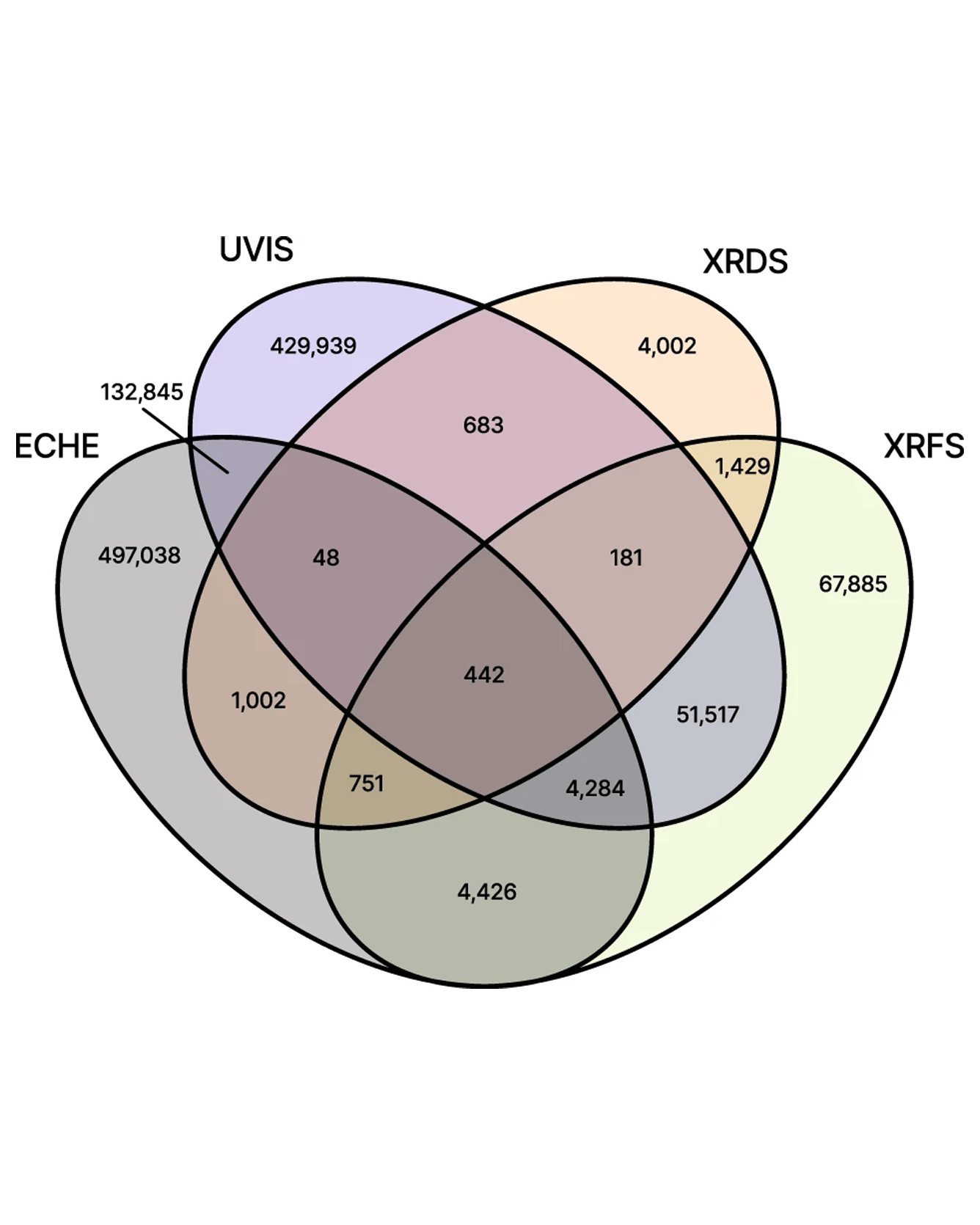
We present a database resulting from high throughput experimentation, primarily on metal oxide solid state materials. The central relational database, the Materials Provenance Store (MPS), manages the metadata and experimental provenance from acquisition of raw materials, through synthesis, to a broad range of materials characterization techniques. Given the primary research goal of materials discovery of solar fuels materials, many of the characterization experiments involve electrochemistry, along with optical, structural, and compositional characterizations. The MPS is populated with all information required for executing common data queries, which typically do not involve direct query of raw data. The result is a database file that can be distributed to users so that they can independently execute queries and subsequently download the data of interest. We propose this strategy as an approach to manage the highly heterogeneous and distributed data that arises from materials science experiments, as demonstrated by the management of over 30 million experiments run on over 12 million samples in the present MPS release. READ MORE
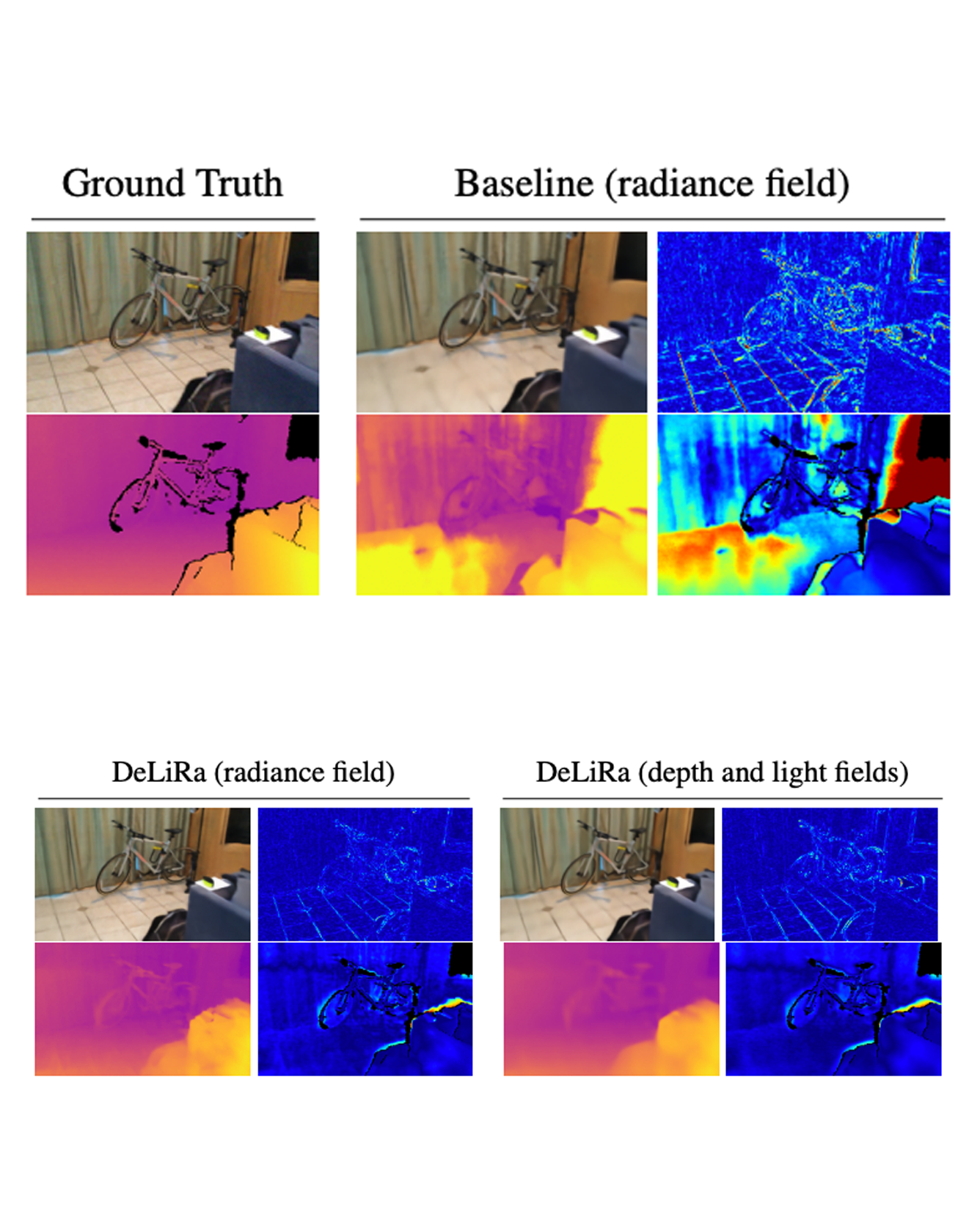
Differentiable volumetric rendering is a powerful paradigm for 3D reconstruction and novel view synthesis. However, standard volume rendering approaches struggle with degenerate geometries in the case of limited viewpoint diversity, a common scenario in robotics applications. In this work, we propose to use the multi-view photometric objective from the self-supervised depth estimation literature as a geometric regularizer for volumetric rendering, significantly improving novel view synthesis without requiring additional information. Building upon this insight, we explore the explicit modeling of scene geometry using a generalist Transformer, jointly learning a radiance field as well as depth and light fields with a set of shared latent codes. We demonstrate that sharing geometric information across tasks is mutually beneficial, leading to improvements over single-task learning without an increase in network complexity. Our DeLiRa architecture achieves state-of-the-art results on the ScanNet benchmark, enabling high quality volumetric rendering as well as real-time novel view and depth synthesis in the limited viewpoint diversity setting. READ MORE
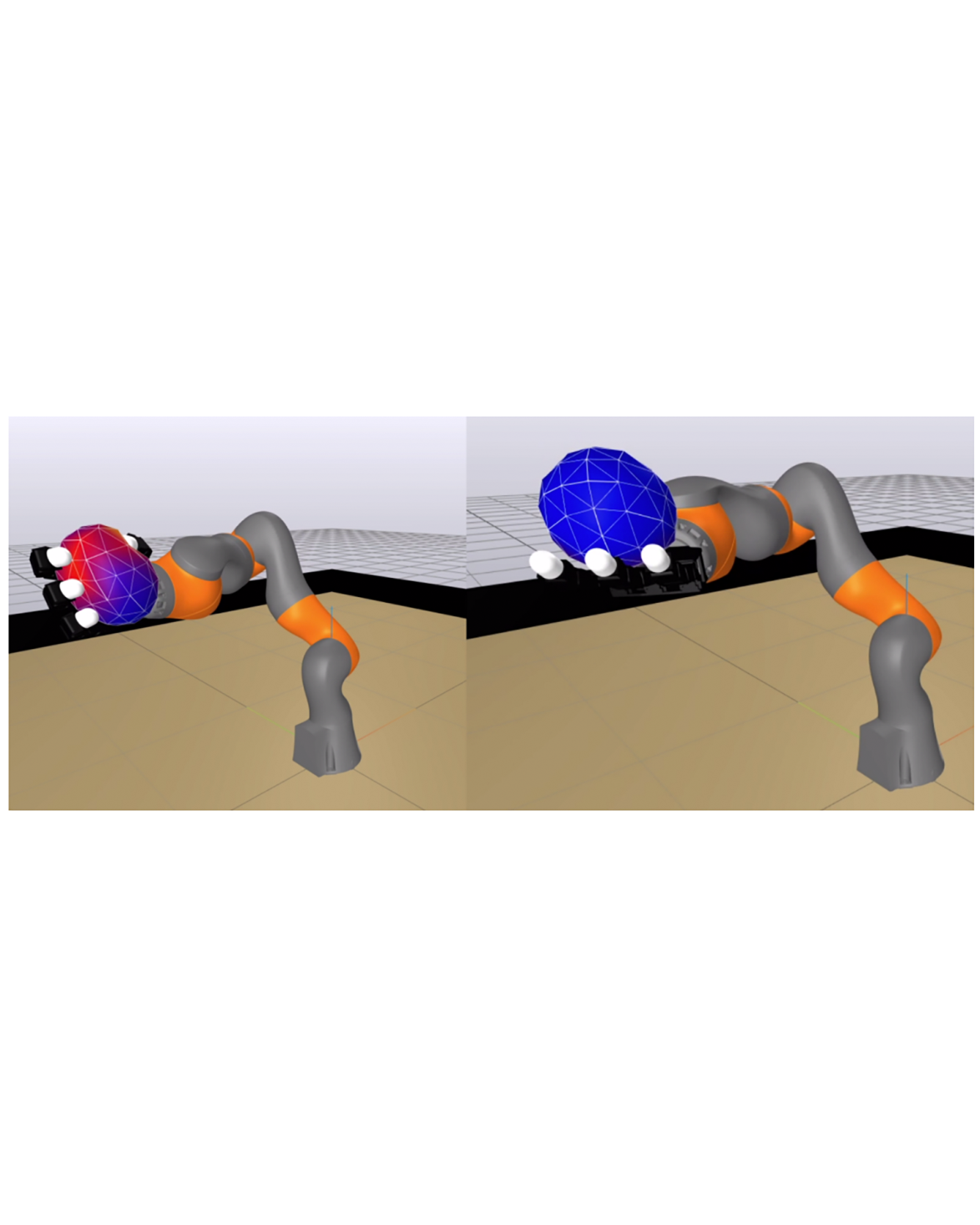
We present a novel convex formulation that models rigid and deformable bodies coupled through frictional contact. The formulation incorporates a new corotational material model with positive semi-definite Hessian, which allows us to extend our previous work on the convex formulation of compliant contact to model large body deformations. We rigorously characterize our approximations and present implementation details. With proven global convergence, effective warm-start, the ability to take large time steps, and specialized sparse algebra, our method runs robustly at interactive rates. We provide validation results and performance metrics on challenging simulations relevant to robotics applications. Our method is made available in the opensource robotics toolkit Drake. READ MORE
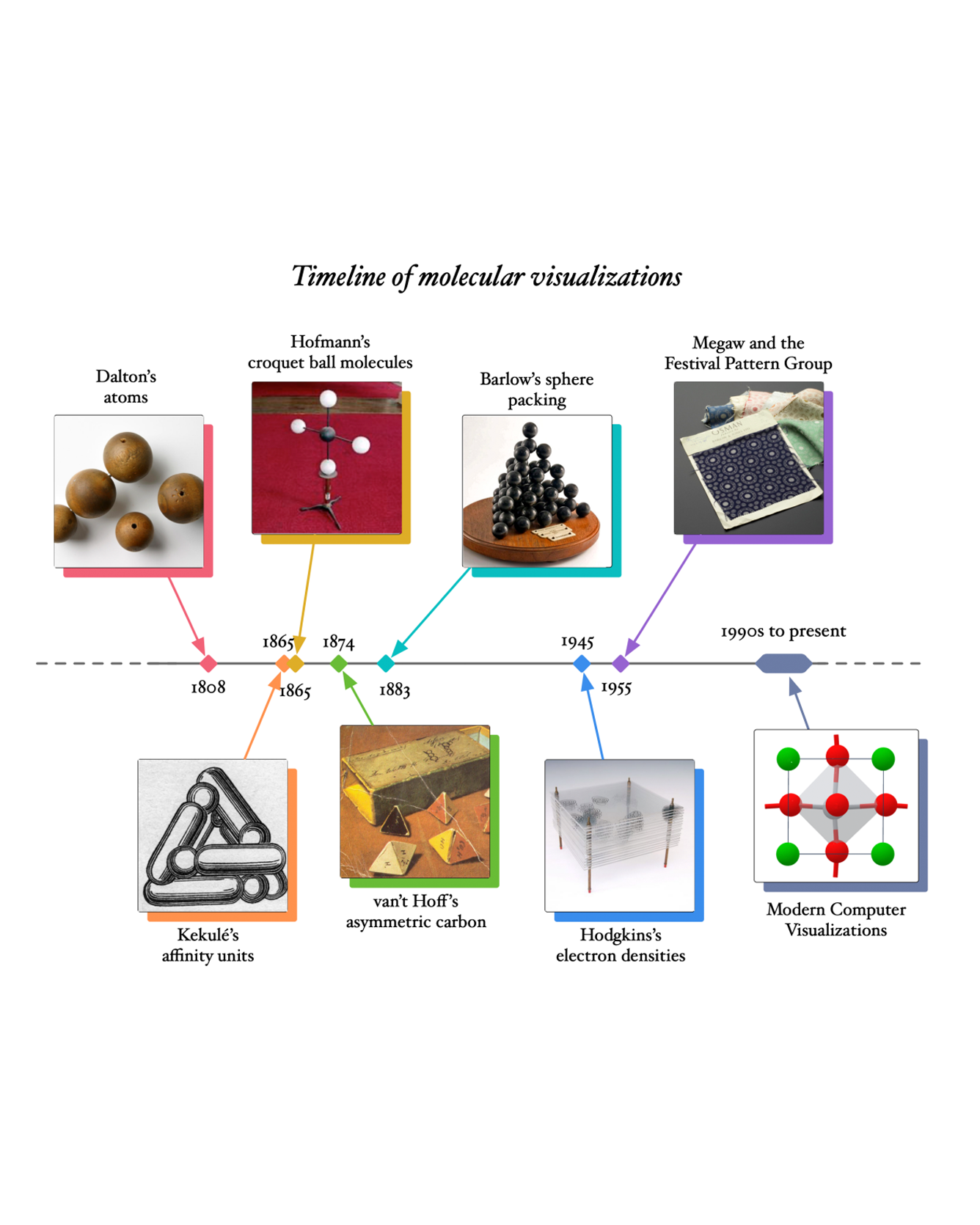
Crystal Toolkit is an open source tool for viewing, analyzing and transforming crystal structures, molecules and other common forms of materials science data in an interactive way. It is intended to help beginners rapidly develop web-based apps to explore their own data or to help developers make their research algorithms accessible to a broader audience of scientists who might not have any training in computer programming and who would benefit from graphical interfaces. Crystal Toolkit comes with a library of ready-made components that can be assembled to make complex web apps: simulation of powder and single crystalline diffraction patterns, convex hull phase diagrams, Pourbaix diagrams, electronic band structures, analysis of local chemical environments and symmetry, and more. Crystal Toolkit is now powering the Materials Project website frontend, providing user-friendly access to its database of computed materials properties. In the future, it is hoped that new visualizations might be prototyped using Crystal Toolkit to help explore new forms of data being generated by the materials science community, and that this in turn can help new materials scientists develop intuition for how their data behaves and the insights that might be found within. Crystal Toolkit will remain a work-in-progress and is open to contributions from the community. READ MORE
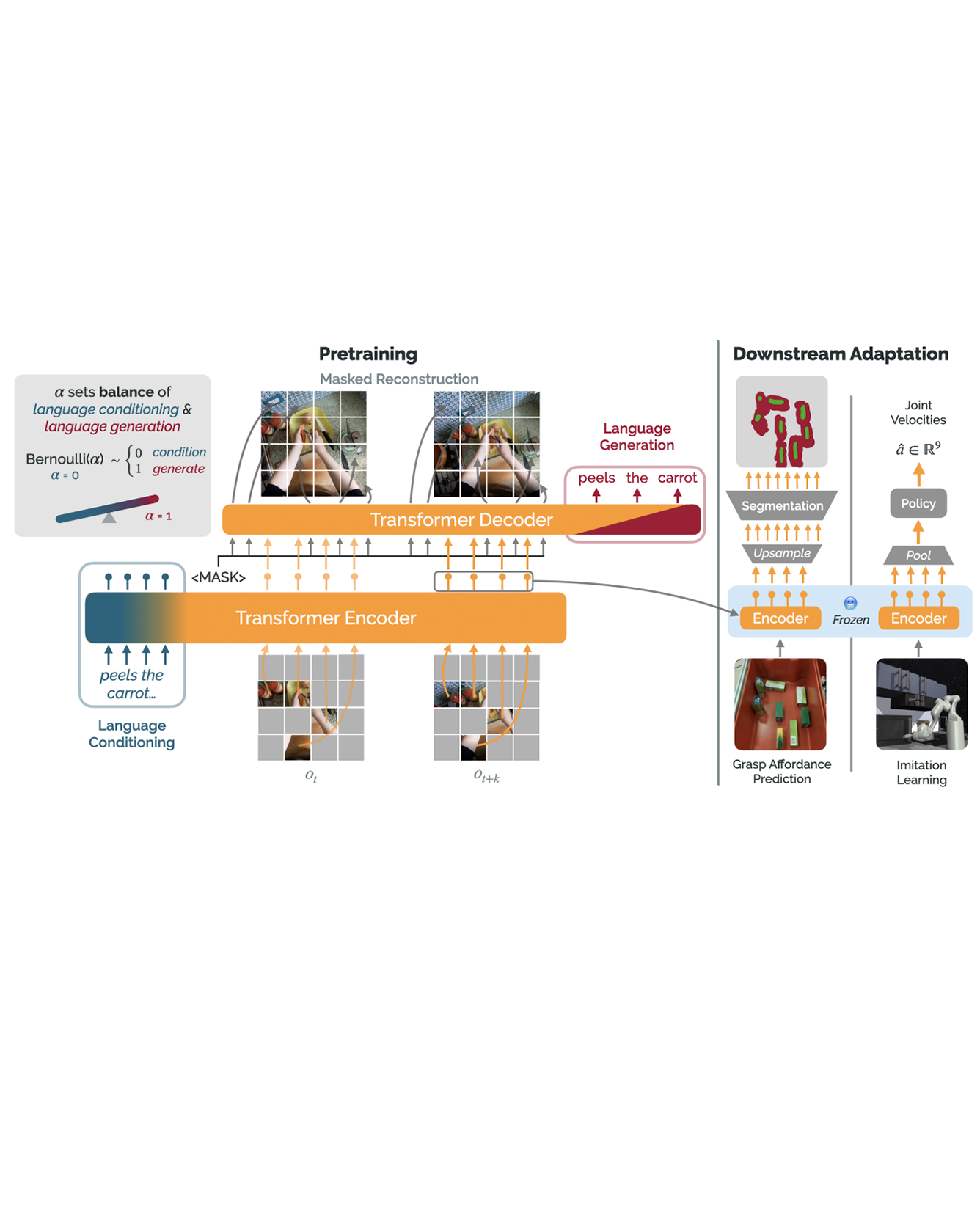
Recent work in visual representation learning for robotics demonstrates the viability of learning from large video datasets of humans performing everyday tasks. Leveraging methods such as masked autoencoding and contrastive learning, these representations exhibit strong transfer to policy learning for visuomotor control. But, robot learning encompasses a diverse set of problems beyond control including grasp affordance prediction, language-conditioned imitation learning, and intent scoring for human-robot collaboration, amongst others. First, we demonstrate that existing representations yield inconsistent results across these tasks: masked autoencoding approaches pick up on low-level spatial features at the cost of high-level semantics, while contrastive learning approaches capture the opposite. We then introduce Voltron, a framework for language-driven representation learning from human videos and associated captions. Voltron trades off language-conditioned visual reconstruction to learn low-level visual patterns, and visually-grounded language generation to encode high-level semantics. We also construct a new evaluation suite spanning five distinct robot learning problems – a unified platform for holistically evaluating visual representations for robotics. Through comprehensive, controlled experiments across all five problems, we find that Voltron’s language-driven representations outperform the prior state-of-the-art, especially on targeted problems requiring higher-level features. READ MORE
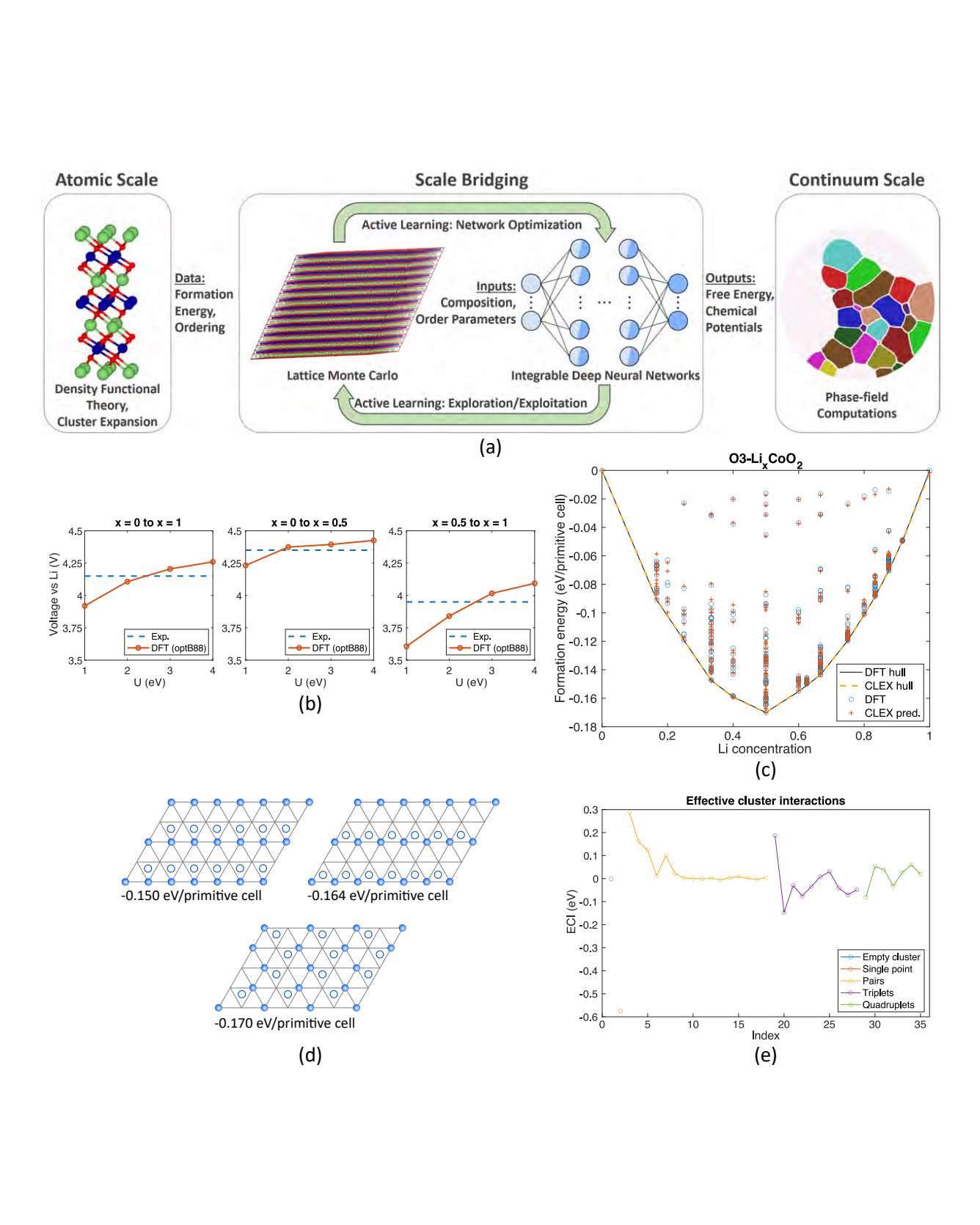
LixTMO2 (TM=Ni, Co, Mn) forms an important family of cathode materials for Li-ion batteries, whose performance is strongly governed by Li composition-dependent crystal structure and phase stability. Here, we use LixCoO2 (LCO) as a model system to benchmark a machine learning-enabled framework for bridging scales in materials physics. We focus on two scales: (a) assemblies of thousands of atoms described by density functional theory-informed statistical mechanics, and (b) continuum phase field models to study the dynamics of order-disorder transitions in LCO. Central to the scale bridging is the rigorous, quantitatively accurate, representation of the free energy density and chemical potentials of this material system by coarsegraining formation energies for specific atomic configurations. We develop active learning workflows to train recently developed integrable deep neural networks for such high-dimensional free energy density and chemical potential functions. The resulting, first principles-informed, machine learning-enabled, phase-field computations allow us to study LCO cathodes' phase evolution in terms of temperature, morphology, charge cycling and particle size. READ MORE