Featured Publications
All Publications

Diffusion models have made substantial progress in facilitating image generation and editing. As the technology matures, we see its potential in the context of driving simulations to enhance the simulated experience. In this paper, we explore this potential through the introduction of a novel system designed to boost visual fidelity. Our system, DRIVE (Diffusion-based Realism Improvement for Virtual Environments), leverages a diffusion model pipeline to give a simulated environment a photorealistic view, with the flexibility to be adapted for other applications. We conducted a preliminary user study to assess the system’s effectiveness in rendering realistic visuals and supporting participants in performing driving tasks. Our work lays the groundwork for future research on the integration of diffusion models in driving simulations, and provides practical guidelines and best practices for their application in this context.

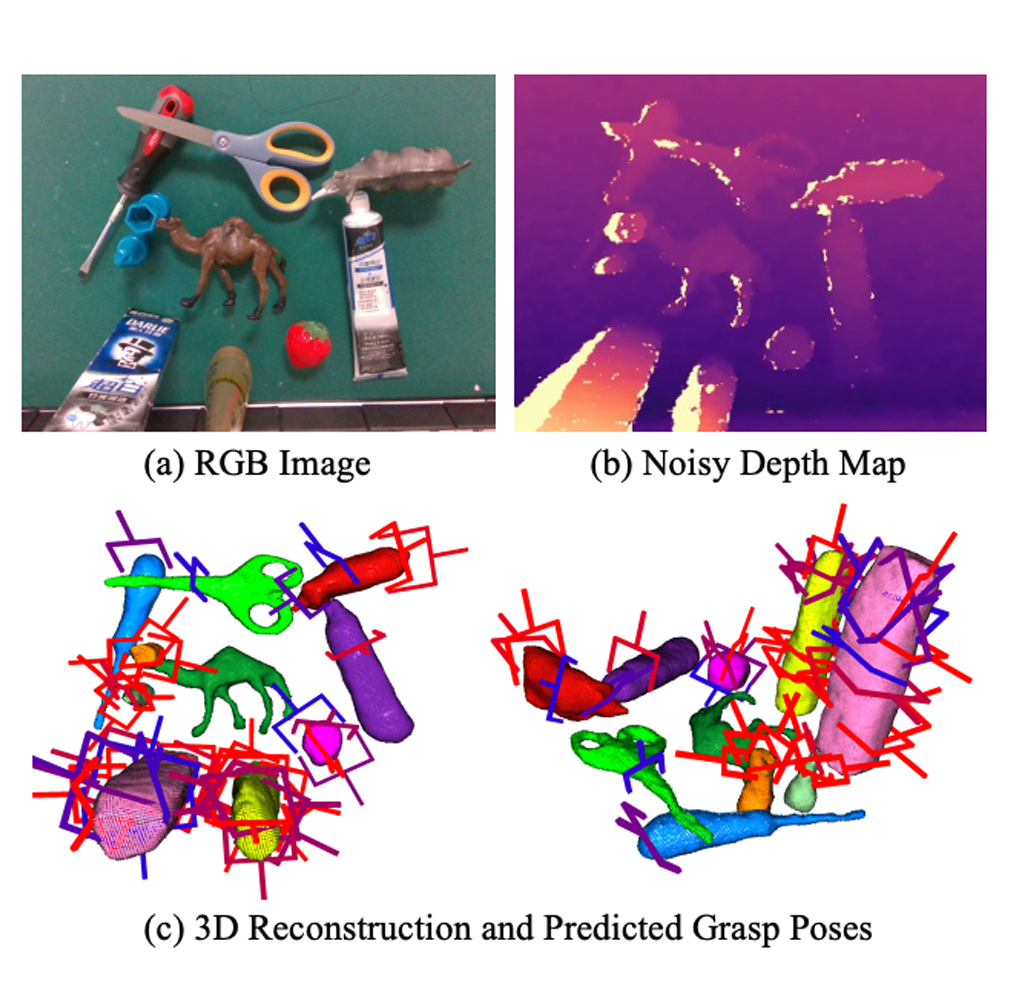
Robotic grasping is a cornerstone capability of embodied systems. Many methods directly output grasps from partial information without modeling the geometry of the scene, leading to suboptimal motion and even collisions. To address these issues, we introduce ZeroGrasp, a novel framework that simultaneously performs 3D reconstruction and grasp pose prediction in near real-time. A key insight of our method is that occlusion reasoning and modeling the spatial relationships between objects is beneficial for both accurate reconstruction and grasping. We couple our method with a novel large-scale synthetic dataset, which comprises 1M photo-realistic images, high-resolution 3D reconstructions and 11.3B physically-valid grasp pose annotations for 12K objects from the Objaverse-LVIS dataset. We evaluate ZeroGrasp on the GraspNet-1B benchmark as well as through real-world robot experiments. ZeroGrasp achieves state-of-the-art performance and generalizes to novel real-world objects by leveraging synthetic data. READ MORE
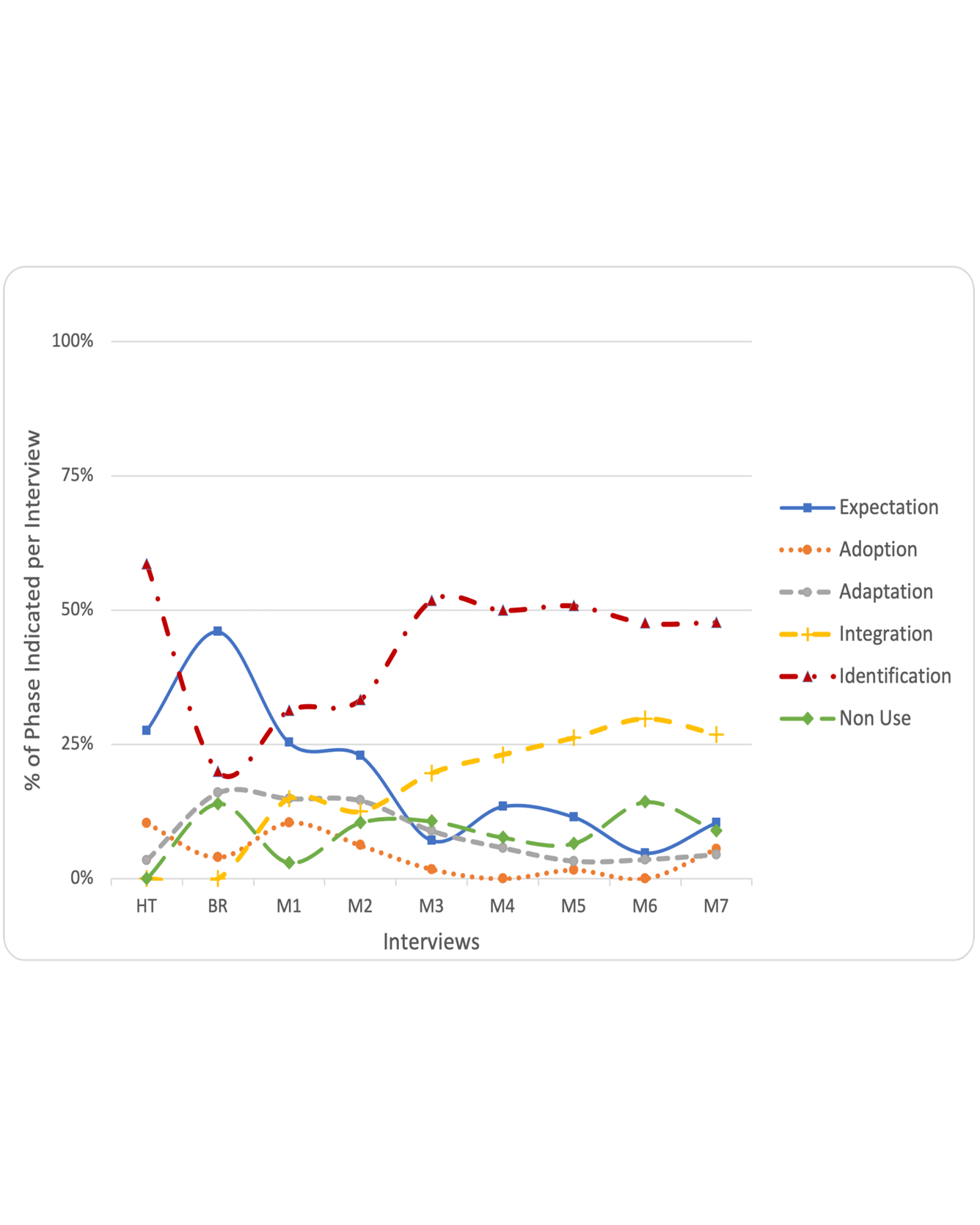
Loneliness has a direct impact on mental and physical health. This is especially relevant to older adults. In prior studies, socially isolated older adults wanted technology that would help them feel more physically present even across distances, such as telepresence robots. However, how useful this technology can be directly depends on whether people accept it over the long term. In this paper, we describe a case study in which we introduced telepresence robots into homes of older adults for seven months. We investigate how older adults’ progression through acceptance phases ebbed and flowed. We describe primary factors that affected speed of progression through acceptance phases: solving problems with technology, life situations (business vs. routines), and personality. We introduce example personas based on this case study. We also propose changes to the longitudinal technology-acceptance framework to take this more nuanced view into account. These outcomes will help future researchers and practitioners to better understand and influence longitudinal technology acceptance.
Motion serves as a powerful cue for scene perception and understanding by separating independently moving surfaces and organizing the physical world into distinct entities. We introduce SIRE, a self-supervised method for motion discovery of objects and dynamic scene reconstruction from casual scenes by learning intrinsic rigidity embeddings from videos. Our method trains an image encoder to estimate scene rigidity and geometry, supervised by a simple 4D reconstruction loss: a least-squares solver uses the estimated geometry and rigidity to lift 2D point track trajectories into SE(3) tracks, which are simply re-projected back to 2D and compared against the original 2D trajectories for supervision. Crucially, our framework is fully end-to-end differentiable and can be optimized either on video datasets to learn generalizable image priors, or even on a single video to capture scene-specific structure — highlighting strong data efficiency. We demonstrate the effectiveness of our rigidity embeddings and geometry across multiple settings, including downstream object segmentation, SE(3) rigid motion estimation, and self-supervised depth estimation. Our findings suggest that SIRE can learn strong geometry and motion rigidity priors from video data, with minimal supervision.

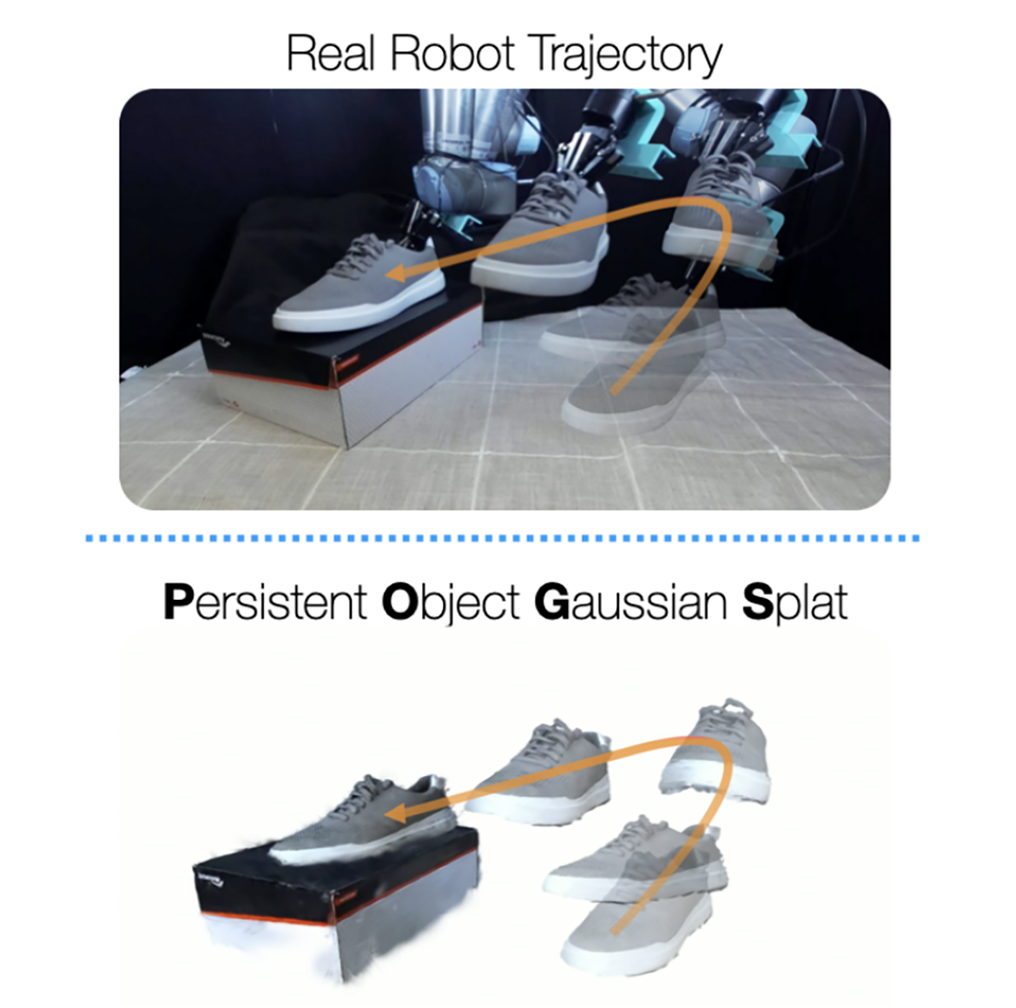
Tracking and manipulating irregularly-shaped, previously unseen objects in dynamic environments is important for robotic applications in manufacturing, assembly, and logistics. Recently introduced Gaussian Splats efficiently model object geometry, but lack persistent state estimation for task-oriented manipulation. We present Persistent Object Gaussian Splat (POGS), a system that embeds semantics, self-supervised visual features, and object grouping features into a compact representation that can be continuously updated to estimate the pose of scanned objects. POGS updates object states without requiring expensive rescanning or prior CAD models of objects. After an initial multi-view scene capture and training phase, POGS uses a single stereo camera to integrate depth estimates along with self-supervised vision encoder features for object pose estimation. POGS supports grasping, reorientation, and natural language-driven manipulation by refining object pose estimates, facilitating sequential object reset operations with human-induced object perturbations and tool servoing, where robots recover tool pose despite tool perturbations of up to 30°. POGS achieves up to 12 consecutive successful object resets and recovers from 80% of in-grasp tool perturbations. READ MORE
While abstraction is one of the best studied topics in psychology, there is little consensus on its relationship to valence and affect. Some studies have found that abstraction is associated with greater positivity, while other studies have led to the opposite conclusion. In this paper we suggest that a substantial part of this inconsistency can be attributed to the polysemy of the term abstraction. To address this problem, we use a framework developed by Iliev and Axelrod (Journal of psycholinguistic research, 46(3):715–729, 2017), who have proposed that abstraction should not be treated as a unitary construct, but should be split instead in at least two components. Concreteness is based on the proportion of sensory information in a concept, while precision is based on the aggregation of information corresponding to the concept’s position in a semantic taxonomy. While both of these components have been used as operationalizations of abstraction, they can have opposite effects on cognitive performance. Using this framework, we hypothesize that when abstraction is defined as a reduction of precision, it will be associated with greater positivity, but when it is defined as lack of concreteness, it will be associated with less positivity. We test these predictions in a novel study and we find empirical support for both hypotheses. These findings advance our understanding of the link between abstraction and valence, and further demonstrate the multi-component structure of abstraction.

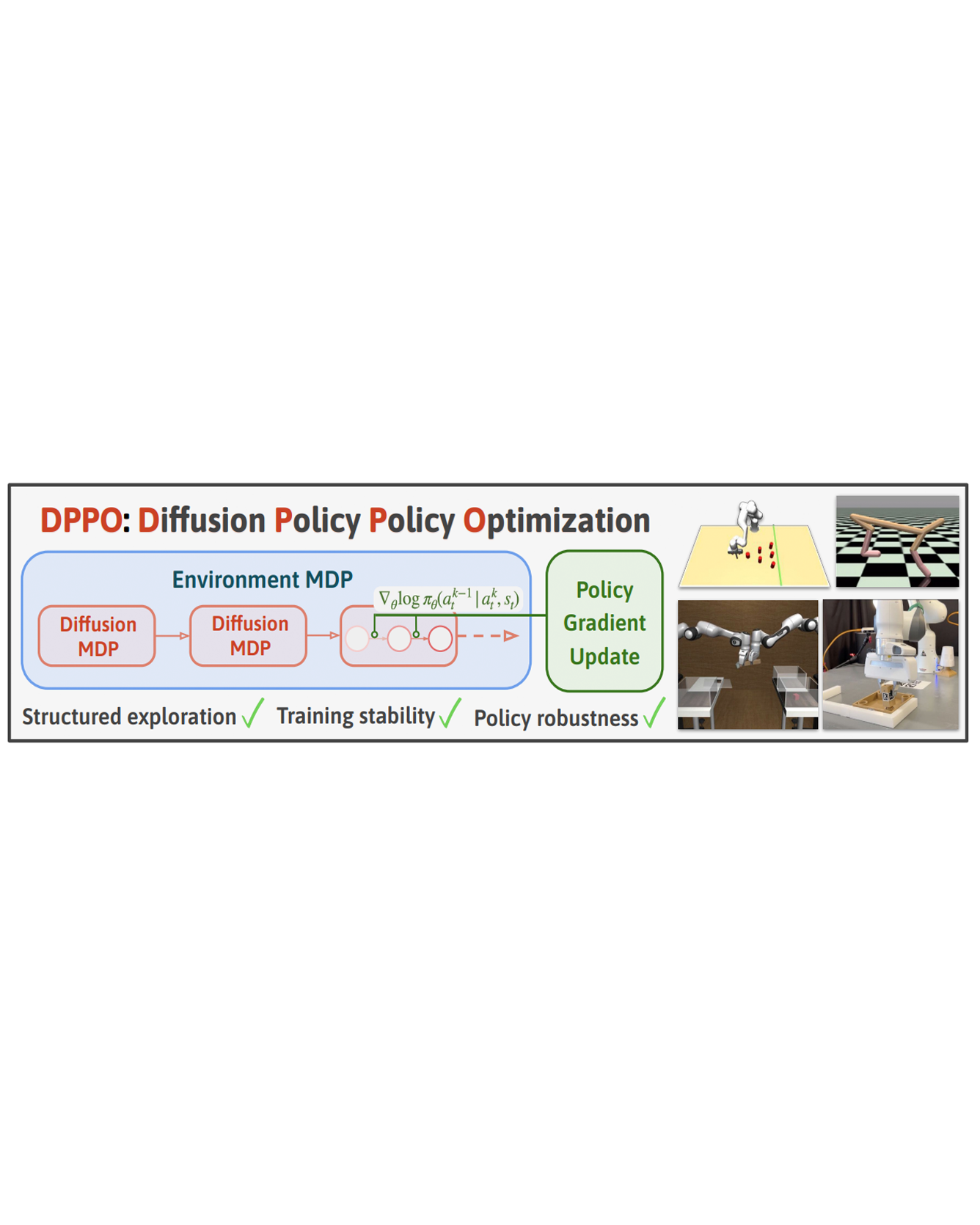
We introduce Diffusion Policy Policy Optimization, DPPO, an algorithmic framework including best practices for fine-tuning diffusion-based policies (e.g. Diffusion Policy) in continuous control and robot learning tasks using the policy gradient (PG) method from reinforcement learning (RL). PG methods are ubiquitous in training RL policies with other policy parameterizations; nevertheless, they had been conjectured to be less efficient for diffusion-based policies. Surprisingly, we show that DPPO achieves the strongest overall performance and efficiency for fine-tuning in common benchmarks compared to other RL methods for diffusion-based policies and also compared to PG fine-tuning of other policy parameterizations. Through experimental investigation, we find that DPPO takes advantage of unique synergies between RL fine-tuning and the diffusion parameterization, leading to structured and on-manifold exploration, stable training, and strong policy robustness. We further demonstrate the strengths of DPPO in a range of realistic settings, including simulated robotic tasks with pixel observations, and via zero-shot deployment of simulation-trained policies on robot hardware in a long-horizon, multi-stage manipulation task. Website with code: this http URL.
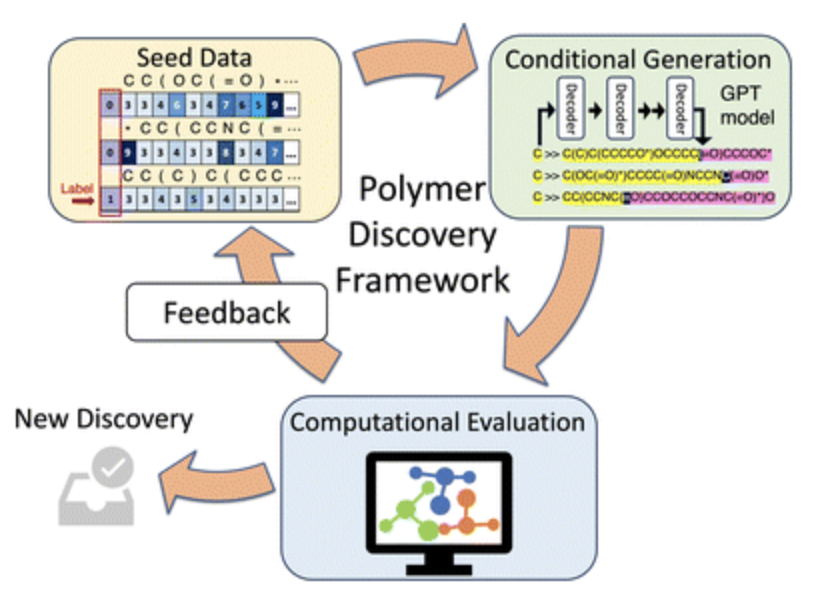
In this work, we introduce a computational polymer discovery framework that efficiently designs polymers with tailored properties. The framework comprises three core components—a conditioned generative model, a computational evaluation module, and a feedback mechanism—all integrated into an iterative framework for material innovation. To demonstrate the efficacy of this framework, we used it to design polymer electrolyte materials with high ionic conductivity. A conditional generative model based on the minGPT architecture can generate candidate polymers that exhibit a mean ionic conductivity that is greater than that of the original training set. This approach, coupled with molecular dynamics (MD) simulations for testing and a specifically planned acquisition mechanism, allows the framework to refine its output iteratively. Notably, we observe an increase in both the mean and the lower bound of the ionic conductivity of the new polymer candidates. The framework's effectiveness is underscored by its identification of 14 distinct polymer repeating units that display a computed ionic conductivity surpassing that of polyethylene oxide (PEO).
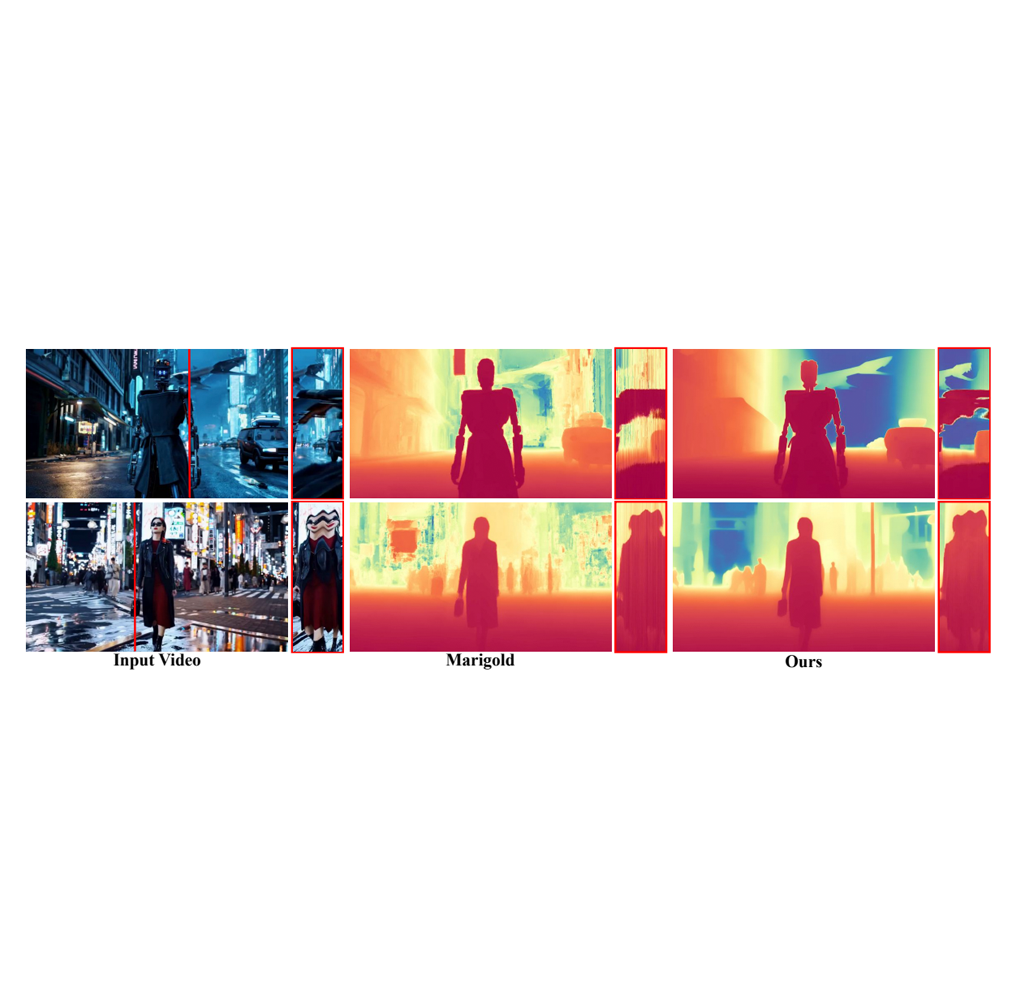
This work addresses the challenge of streamed video depth estimation, which expects not only per-frame accuracy but, more importantly, cross-frame consistency. We argue that sharing contextual information between frames or clips is pivotal in fostering temporal consistency. Thus, instead of directly developing a depth estimator from scratch, we reformulate this predictive task into a conditional generation problem to provide contextual information within a clip and across clips. Specifically, we propose a consistent context-aware training and inference strategy for arbitrarily long videos to provide cross-clip context. We sample independent noise levels for each frame within a clip during training while using a sliding window strategy and initializing overlapping frames with previously predicted frames without adding noise. Moreover, we design an effective training strategy to provide context within a clip. Extensive experimental results validate our design choices and demonstrate the superiority of our approach, dubbed ChronoDepth. Project page: this https URL. READ MORE
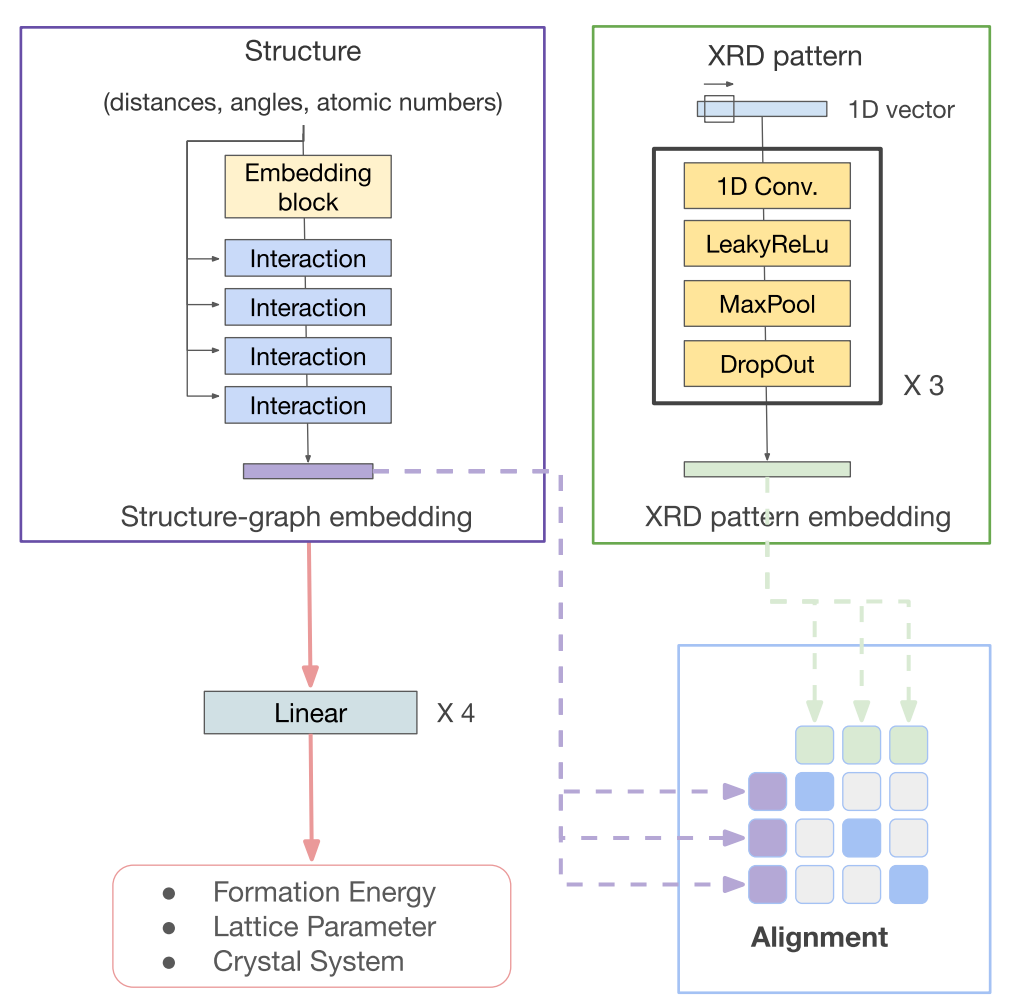
Materials science datasets are inherently heterogeneous and are available in different modalities such as characterization spectra, atomic structures, microscopic images, and text-based synthesis conditions. The advancements in multi-modal learning, particularly in vision and language models, have opened new avenues for integrating data in different forms. In this work, we evaluate common techniques in multi-modal learning (alignment and fusion) in unifying some of the most important modalities in materials science: atomic structure, X-ray diffraction patterns (XRD), and composition. We show that structure graph modality can be enhanced by aligning with XRD patterns. Additionally, we show that aligning and fusing more experimentally accessible data formats, such as XRD patterns and compositions, can create more robust joint embeddings than individual modalities across various tasks. This lays the groundwork for future studies aiming to exploit the full potential of multi-modal data in materials science, facilitating more informed decision-making in materials design and discovery. READ MORE