Featured Publications
All Publications

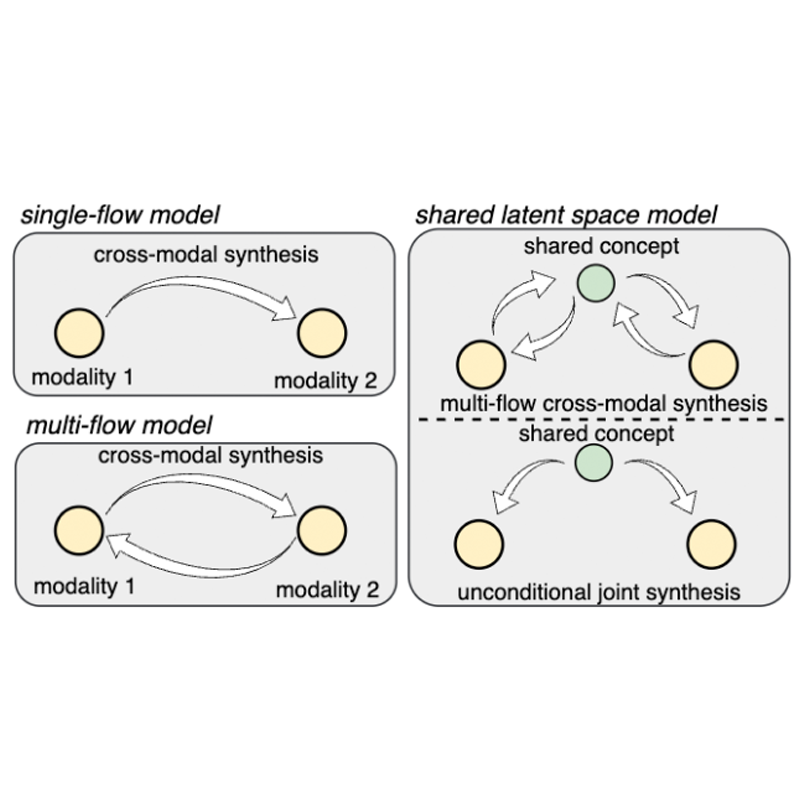
This paper presents a novel generative framework for learning shared latent representations across multimodal data. Many advanced multimodal methods focus on capturing all combinations of modality-specific details across inputs, which can inadvertently obscure the high-level semantic concepts that are shared across modalities. Notably, Multimodal VAEs with low-dimensional latent variables are designed to capture shared representations, enabling various tasks such as joint multimodal synthesis and cross-modal inference. However, multimodal VAEs often struggle to design expressive joint variational posteriors and suffer from low-quality synthesis. In this work, ShaLa addresses these challenges by integrating a novel architectural inference model and a second-stage expressive diffusion prior, which not only facilitates effective inference of shared latent representation but also significantly improves the quality of downstream multimodal synthesis. We validate ShaLa extensively across multiple benchmarks, demonstrating superior coherence and synthesis quality compared to state-of-the-art multimodal VAEs. Furthermore, ShaLa scales to many more modalities while prior multimodal VAEs have fallen short in capturing the increasing complexity of the shared latent space.
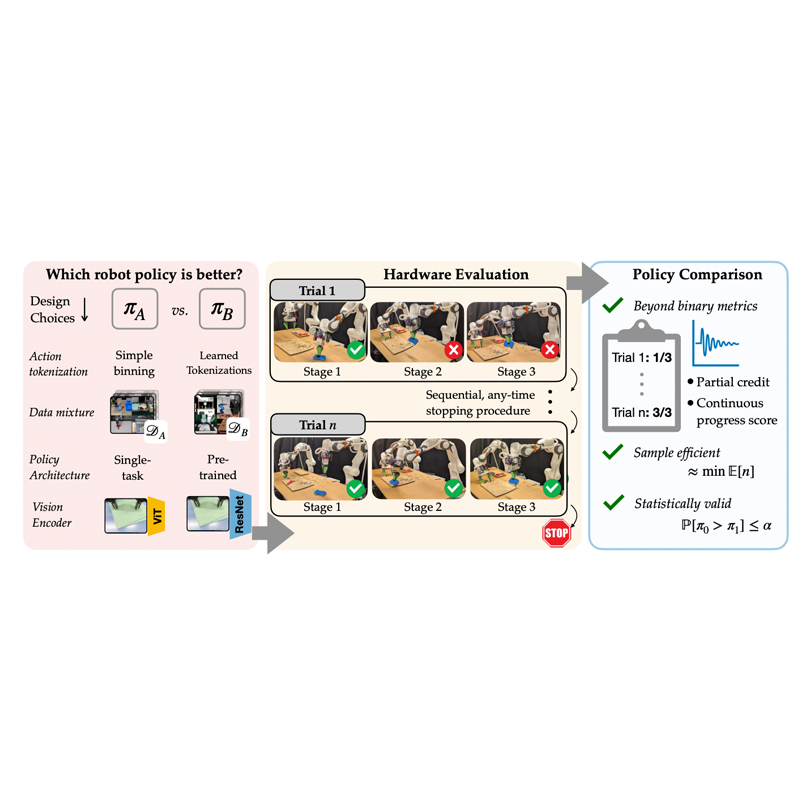
Generalist robot manipulation policies are becoming increasingly capable, but are limited in evaluation to a small number of hardware rollouts. This strong resource constraint in real-world testing necessitates both more informative performance measures and reliable and efficient evaluation procedures to properly assess model capabilities and benchmark progress in the field. This work presents a novel framework for robot policy comparison that is sample-efficient, statistically rigorous, and applicable to a broad set of evaluation metrics used in practice. Based on safe, anytime-valid inference (SAVI), our test procedure is sequential, allowing the evaluator to stop early when sufficient statistical evidence has accumulated to reach a decision at a pre-specified level of confidence. Unlike previous work developed for binary success, our unified approach addresses a wide range of informative metrics: from discrete partial credit task progress to continuous measures of episodic reward or trajectory smoothness, spanning both parametric and nonparametric comparison problems. Through extensive validation on simulated and real-world evaluation data, we demonstrate up to 70% reduction in evaluation burden compared to standard batch methods and up to 50% reduction compared to state-of-the-art sequential procedures designed for binary outcomes, with no loss of statistical rigor. Notably, our empirical results show that competing policies can be separated more quickly when using fine-grained task progress than binary success metrics.
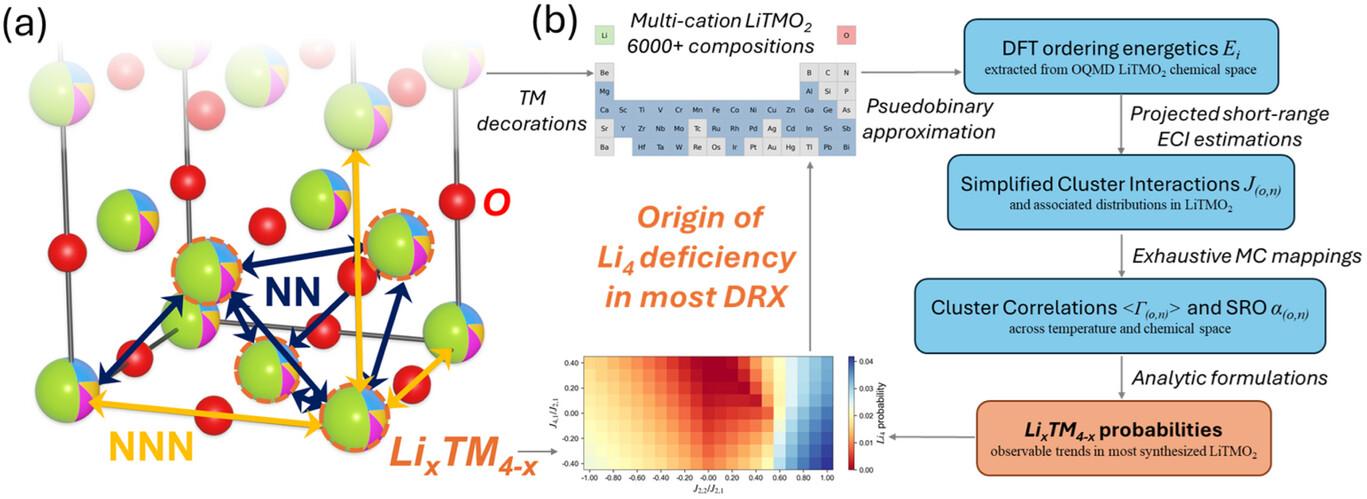
Short-range order (SRO) in the cation-disordered state is a controlling factor influencing the probability of finding tetrahedron clusters in disordered rocksalt (DRX) cathode materials. However, the prevalent probability below the random limit across reported DRX compositions has not been systematically investigated, active strategies to surpass the random limit of probability are lacking, and the fundamental ordering behavior on the face-centered cubic (FCC) lattice remains insufficiently explored. This research quantitatively examines pair SRO parameters and probabilities via exhaustive Monte Carlo mapping across a simplified subset of the parameter space. The results indicate that, in the disordered state, the probability is governed by the nearest neighbor (NN) pairwise SRO parameter, and that these quantities do not necessarily represent a simple attenuation of their corresponding low-temperature long-range order, particularly for the important cases of Layered and Spinel-like orderings. Strategies are proposed to mitigate or even reverse the lithium and transition metals mixing tendency of NN pair SRO to achieve probabilities that exceed the random limit. This study advances the fundamental thermodynamic understanding of ordering behaviors, which can be generalized to any FCC system.
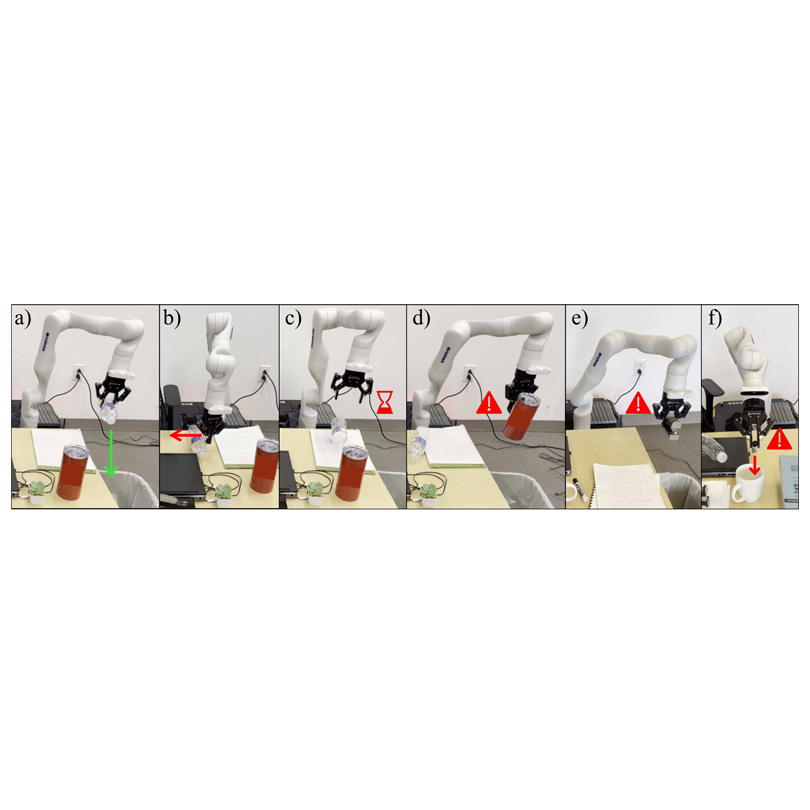
Robots fail, potentially leading to a loss in the robot's perceived reliability (PR), a measure correlated with trustworthiness. In this study we examine how various kinds of failures affect the PR of the robot differently, and how this measure recovers without explicit social repair actions by the robot. In a preregistered and controlled online video study, participants were asked to predict a robot's success in a pick-and-place task. We examined manipulation failures (slips), freezing (lapses), and three types of incorrect picked objects or place goals (mistakes). Participants were shown one of 11 videos — one of five types of failure, one of five types of failure followed by a successful execution in the same video, or a successful execution video. This was followed by two additional successful execution videos. Participants bet money either on the robot or on a coin toss after each video. People's betting patterns along with a qualitative analysis of their survey responses highlight that mistakes are less damaging to PR than slips or lapses, and some mistakes are even perceived as successes. We also see that successes immediately following a failure have the same effect on PR as successes without a preceding failure. Finally, we show that successful executions recover PR after a failure. Our findings highlight which robot failures are in higher need of repair in a human-robot interaction, and how trust could be recovered by robot successes.
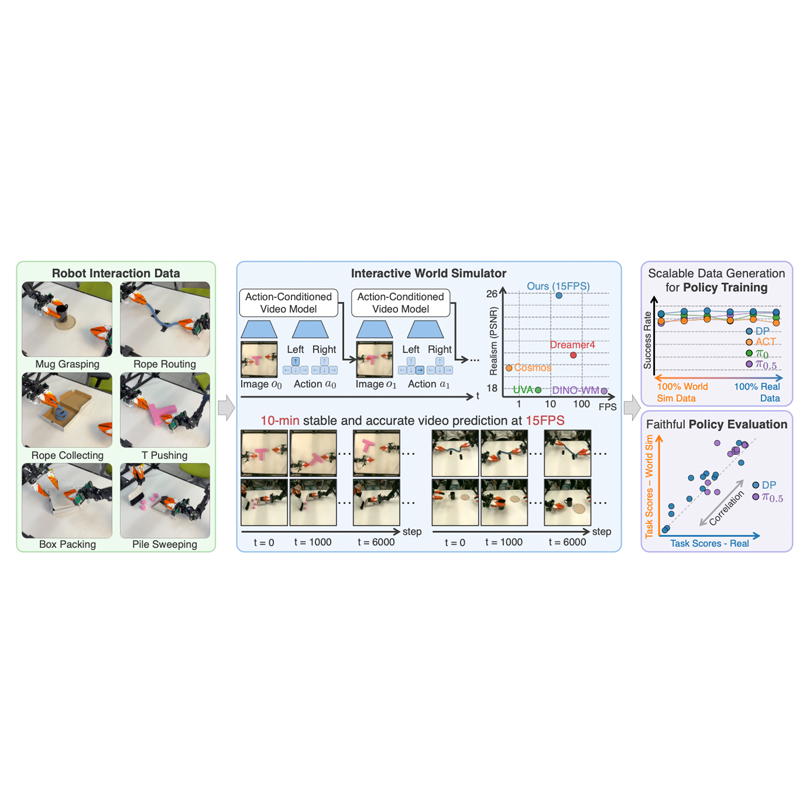
Action-conditioned video prediction models (often referred to as world models) have shown strong potential for robotics applications, but existing approaches are often slow and struggle to capture physically consistent interactions over long horizons, limiting their usefulness for scalable robot policy training and evaluation. We present Interactive World Simulator, a framework for building interactive world models from a moderate-sized robot interaction dataset. Our approach leverages consistency models for both image decoding and latent-space dynamics prediction, enabling fast and stable simulation of physical interactions. In our experiments, the learned world models produce interaction-consistent pixel-level predictions and support stable long-horizon interactions for more than 10 minutes at 15 FPS on a single RTX 4090 GPU. Our framework enables scalable demonstration collection solely within the world models to train state-of-the-art imitation policies. Through extensive real-world evaluation across diverse tasks involving rigid objects, deformable objects, object piles, and their interactions, we find that policies trained on world-model-generated data perform comparably to those trained on the same amount of real-world data. Additionally, we evaluate policies both within the world models and in the real world across diverse tasks, and observe a strong correlation between simulated and real-world performance. Together, these results establish the Interactive World Simulator as a stable and physically consistent surrogate for scalable robotic data generation and faithful, reproducible policy evaluation.
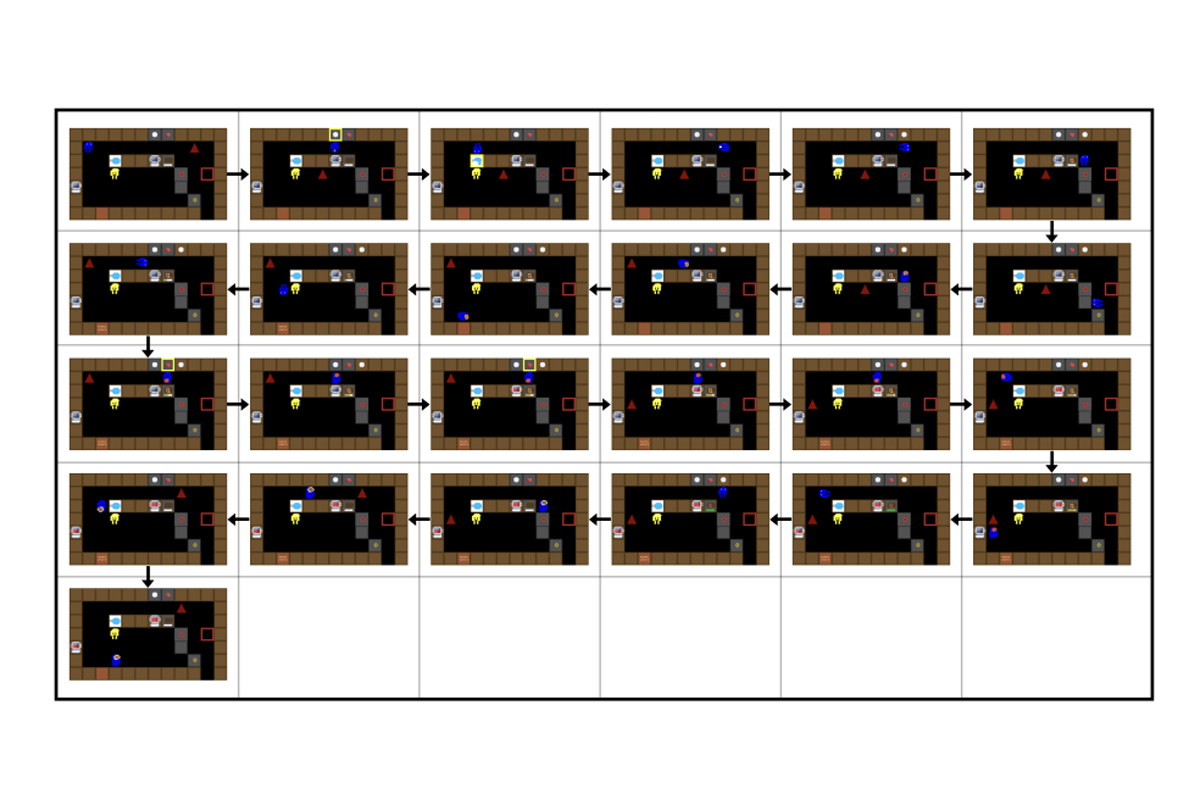
Embodied foundation models are increasingly performant in real-world domains such as robotics or autonomous driving. These models are often deployed in interactive or assistive settings, where it is important that these assistive models generalize to new users and new tasks. Diverse interactive data generation offers a promising avenue for providing data-efficient generalization capabilities for interactive embodied foundation models. In this paper, we investigate the generalization capabilities of a multimodal foundation model fine-tuned on diverse interactive assistance data in a synthetic domain. We explore generalization along two axes: a) assistance with unseen categories of user behavior and b) providing guidance in new configurations not encountered during training. We study a broad capability called Open-Set Corrective Assistance, in which the model needs to inspect lengthy user behavior and provide assistance through either corrective actions or language-based feedback. This task remains unsolved in prior work, which typically assumes closed corrective categories or relies on external planners, making it a challenging testbed for evaluating the limits of assistive data. To support this task, we generate synthetic assistive datasets in Overcooked and fine-tune a LLaMA-based model to evaluate generalization to novel tasks and user behaviors. Our approach provides key insights into the nature of assistive datasets required to enable open-set assistive intelligence. In particular, we show that performant models benefit from datasets that cover different aspects of assistance, including multimodal grounding, defect inference, and exposure to diverse scenarios.
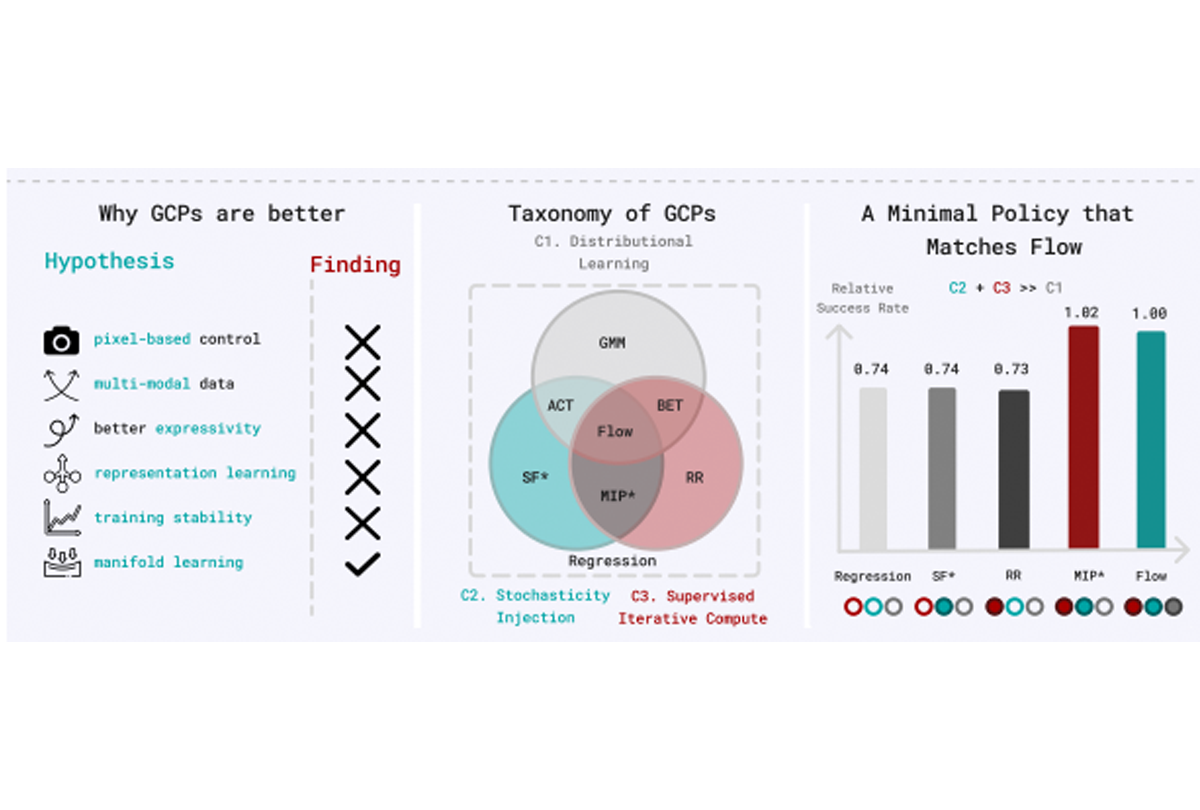
Generative models, like flows and diffusions, have recently emerged as popular and efficacious policy parameterizations in robotics. There has been much speculation as to the factors underlying their successes, ranging from capturing multi-modal action distribution to expressing more complex behaviors. In this work, we perform a comprehensive evaluation of popular generative control policies (GCPs) on common behavior cloning (BC) benchmarks. We find that GCPs do not owe their success to their ability to capture multi-modality or to express more complex observation-to-action mappings. Instead, we find that their advantage stems from iterative computation, as long as intermediate steps are supervised during training and this supervision is paired with a suitable level of stochasticity. As a validation of our findings, we show that a minimum iterative policy (MIP), a lightweight two-step regression-based policy, essentially matches the performance of flow GCPs, and often outperforms distilled shortcut models. Our results suggest that the distribution-fitting component of GCPs is less salient than commonly believed, and point toward new design spaces focusing solely on control performance.
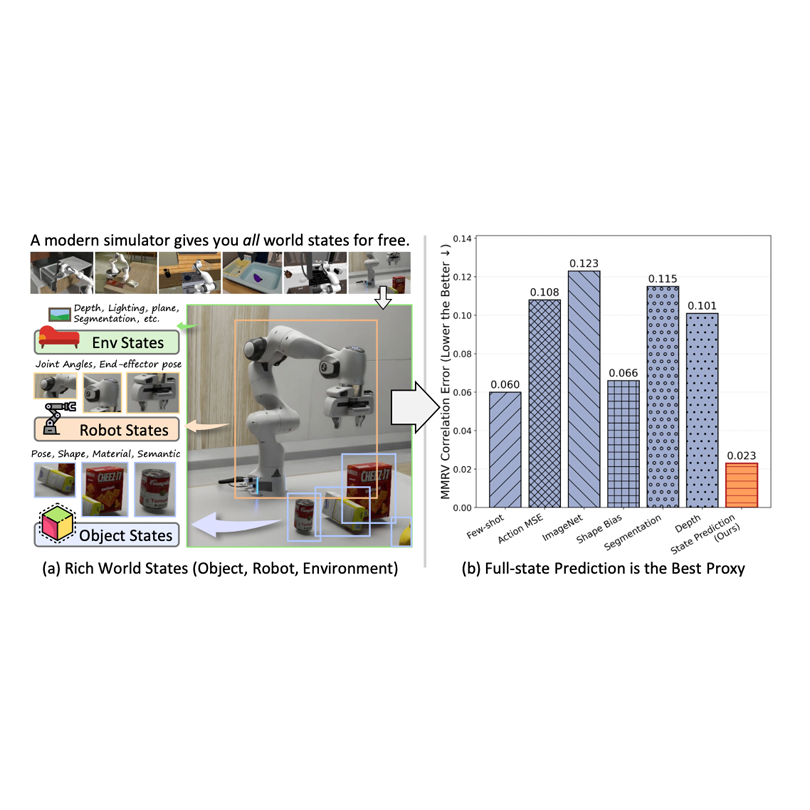
The choice of visual representation is key to scaling generalist robot policies. However, direct evaluation via policy rollouts is expensive, even in simulation. Existing proxy metrics focus on the representation's capacity to capture narrow aspects of the visual world, like object shape, limiting generalization across environments. In this paper, we take an analytical perspective: we probe pretrained visual encoders by measuring how well they support decoding of environment state — including geometry, object structure, and physical attributes — from images. Leveraging simulation environments with access to ground-truth state, we show that this probing accuracy strongly correlates with downstream policy performance across diverse environments and learning settings, significantly outperforming prior metrics and enabling efficient representation selection. More broadly, our study provides insight into the representational properties that support generalizable manipulation, suggesting that learning to encode the latent physical state of the environment is a promising objective for control.
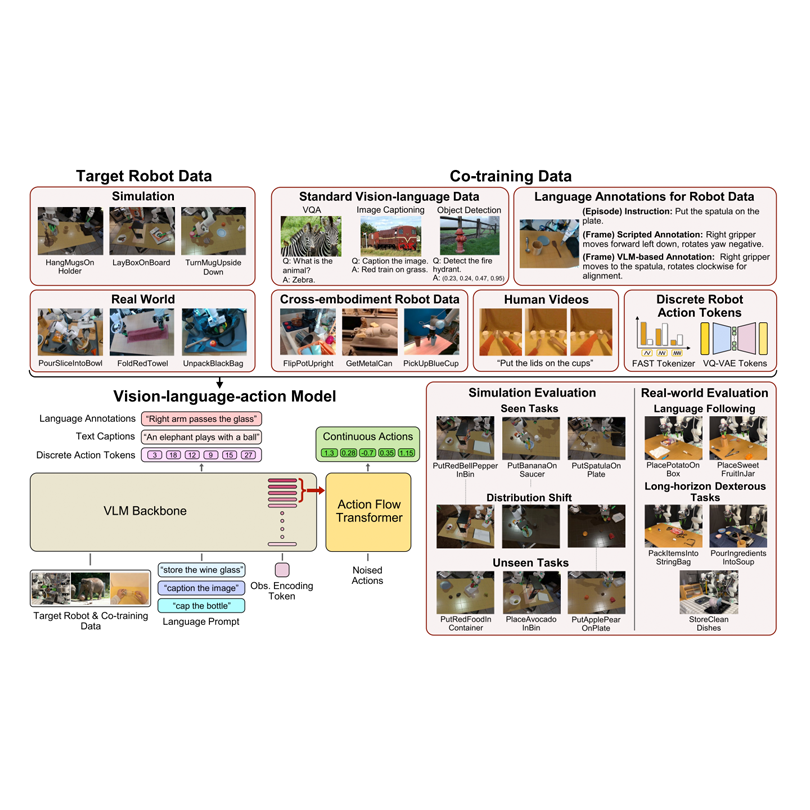
Large behavior models have shown strong dexterous manipulation capabilities by extending imitation learning to large-scale training on multi-task robot data, yet their generalization remains limited by the insufficient robot data coverage. To expand this coverage without costly additional data collection, recent work relies on co-training: jointly learning from target robot data and heterogeneous data modalities. However, how different co-training data modalities and strategies affect policy performance remains poorly understood. We present a large-scale empirical study examining five co-training data modalities: standard vision-language data, dense language annotations for robot trajectories, cross-embodiment robot data, human videos, and discrete robot action tokens across single- and multi-phase training strategies. Our study leverages 4,000 hours of robot and human manipulation data and 50M vision-language samples to train vision-language-action policies. We evaluate 89 policies over 58,000 simulation rollouts and 2,835 real-world rollouts. Our results show that co-training with forms of vision-language and cross-embodiment robot data substantially improves generalization to distribution shifts, unseen tasks, and language following, while discrete action token variants yield no significant benefits. Combining effective modalities produces cumulative gains and enables rapid adaptation to unseen long-horizon dexterous tasks via fine-tuning. Training exclusively on robot data degrades the visiolinguistic understanding of the vision-language model backbone, while co-training with effective modalities restores these capabilities. Explicitly conditioning action generation on chain-of-thought traces learned from co-training data does not improve performance in our simulation benchmark. Together, these results provide practical guidance for building scalable generalist robot policies.
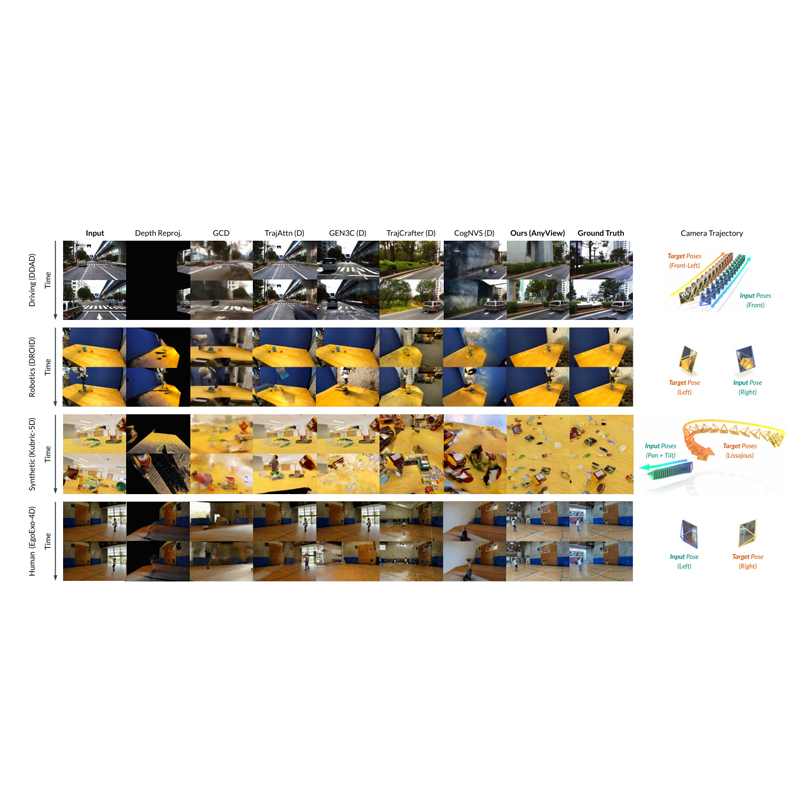
Modern generative video models excel at producing convincing, high-quality outputs, but struggle to maintain multi-view and spatiotemporal consistency in highly dynamic real-world environments. In this work, we introduce AnyView, a diffusion-based video generation framework for dynamic view synthesis with minimal inductive biases or geometric assumptions. We leverage multiple data sources with various levels of supervision, including monocular (2D), multi-view static (3D) and multi-view dynamic (4D) datasets, to train a generalist spatiotemporal implicit representation capable of producing zero-shot novel videos from arbitrary camera locations and trajectories. We evaluate AnyView on standard benchmarks, showing competitive results with the current state of the art, and propose AnyViewBench, a challenging new benchmark tailored towards extreme dynamic view synthesis in diverse real-world scenarios. In this more dramatic setting, we find that most baselines drastically degrade in performance, as they require significant overlap between viewpoints, while AnyView maintains the ability to produce realistic, plausible, and spatiotemporally consistent videos when prompted from any viewpoint.