Featured Publications
All Publications

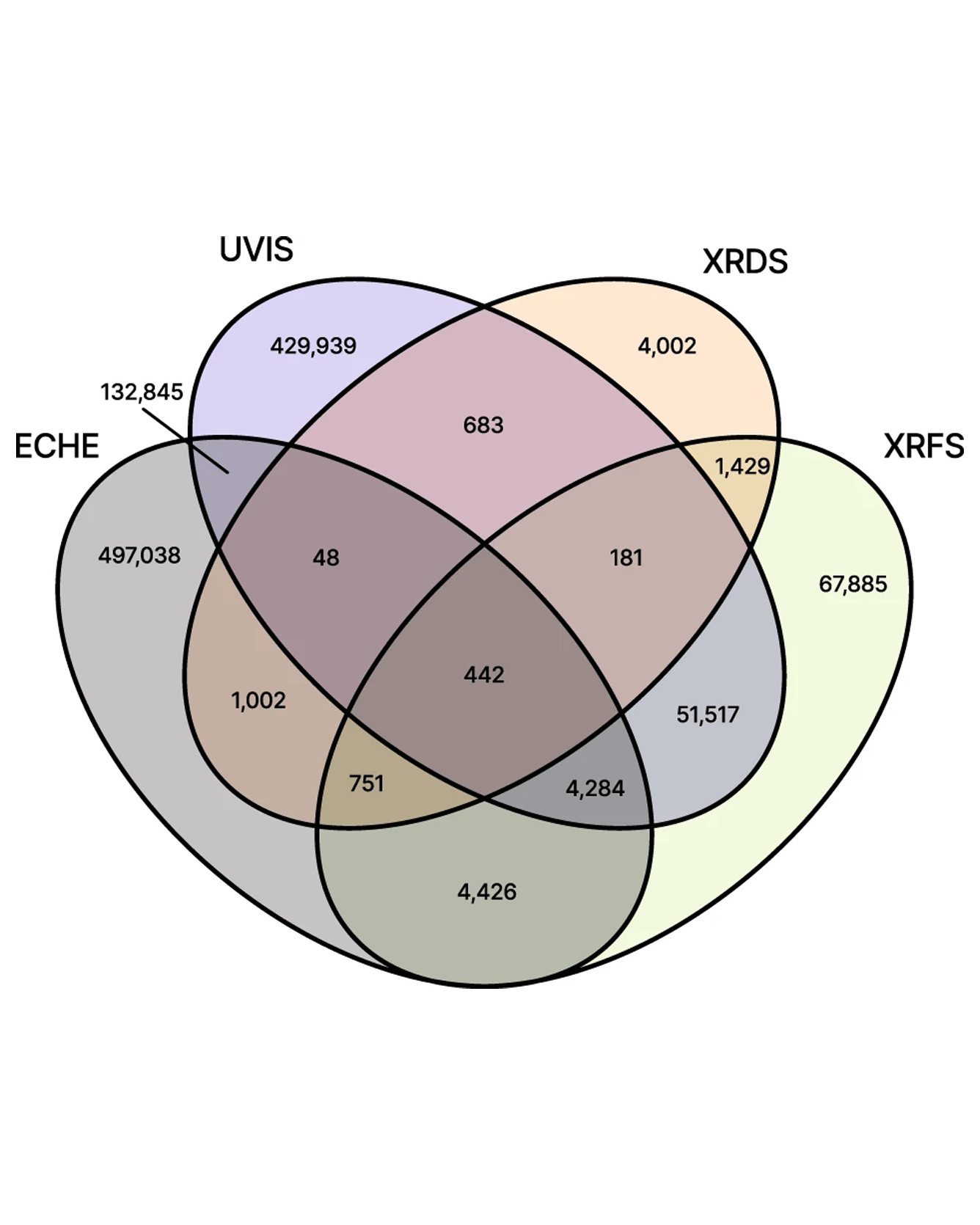
We present a database resulting from high throughput experimentation, primarily on metal oxide solid state materials. The central relational database, the Materials Provenance Store (MPS), manages the metadata and experimental provenance from acquisition of raw materials, through synthesis, to a broad range of materials characterization techniques. Given the primary research goal of materials discovery of solar fuels materials, many of the characterization experiments involve electrochemistry, along with optical, structural, and compositional characterizations. The MPS is populated with all information required for executing common data queries, which typically do not involve direct query of raw data. The result is a database file that can be distributed to users so that they can independently execute queries and subsequently download the data of interest. We propose this strategy as an approach to manage the highly heterogeneous and distributed data that arises from materials science experiments, as demonstrated by the management of over 30 million experiments run on over 12 million samples in the present MPS release. READ MORE
Crystal Toolkit is an open source tool for viewing, analyzing and transforming crystal structures, molecules and other common forms of materials science data in an interactive way. It is intended to help beginners rapidly develop web-based apps to explore their own data or to help developers make their research algorithms accessible to a broader audience of scientists who might not have any training in computer programming and who would benefit from graphical interfaces. Crystal Toolkit comes with a library of ready-made components that can be assembled to make complex web apps: simulation of powder and single crystalline diffraction patterns, convex hull phase diagrams, Pourbaix diagrams, electronic band structures, analysis of local chemical environments and symmetry, and more. Crystal Toolkit is now powering the Materials Project website frontend, providing user-friendly access to its database of computed materials properties. In the future, it is hoped that new visualizations might be prototyped using Crystal Toolkit to help explore new forms of data being generated by the materials science community, and that this in turn can help new materials scientists develop intuition for how their data behaves and the insights that might be found within. Crystal Toolkit will remain a work-in-progress and is open to contributions from the community. READ MORE
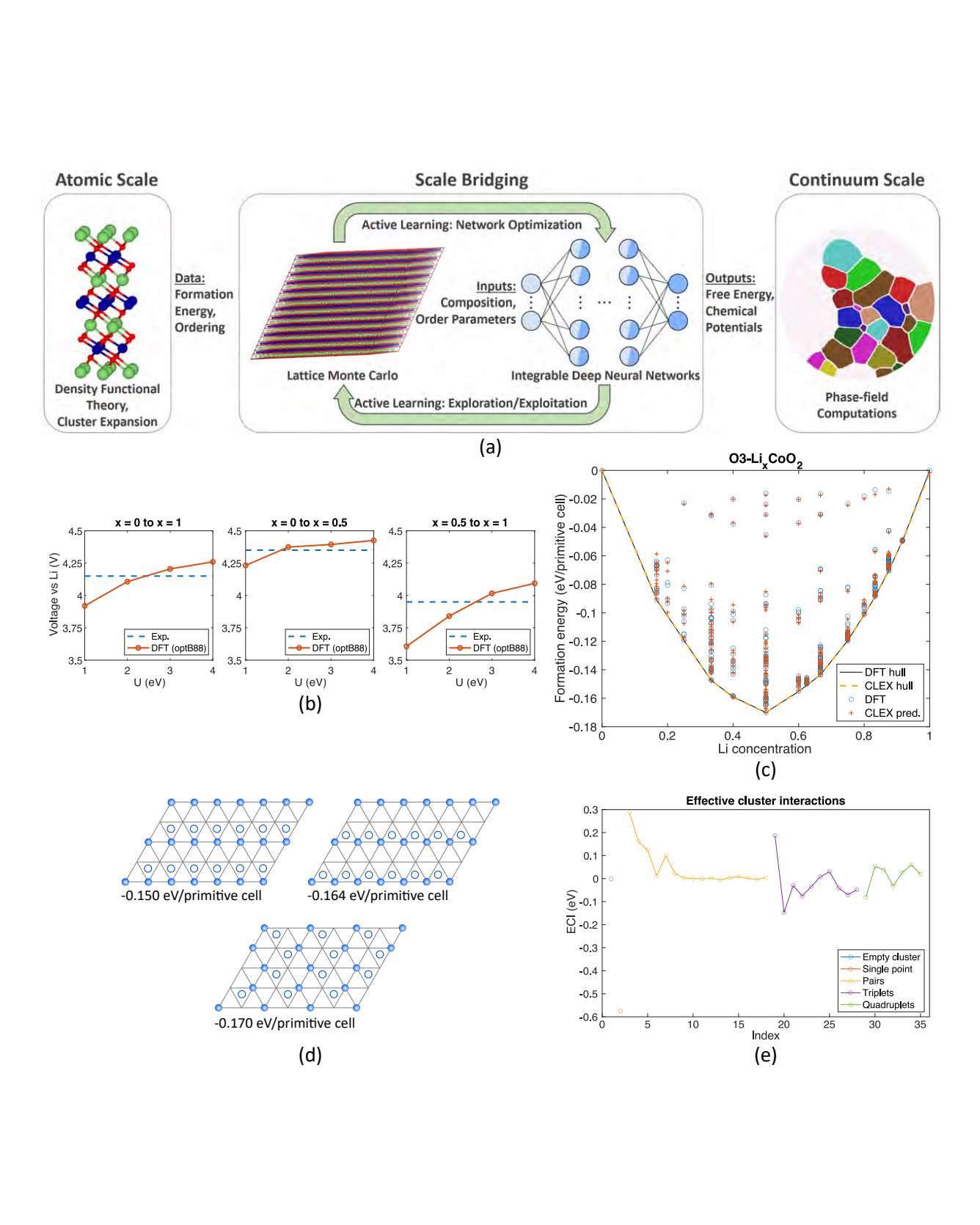
LixTMO2 (TM=Ni, Co, Mn) forms an important family of cathode materials for Li-ion batteries, whose performance is strongly governed by Li composition-dependent crystal structure and phase stability. Here, we use LixCoO2 (LCO) as a model system to benchmark a machine learning-enabled framework for bridging scales in materials physics. We focus on two scales: (a) assemblies of thousands of atoms described by density functional theory-informed statistical mechanics, and (b) continuum phase field models to study the dynamics of order-disorder transitions in LCO. Central to the scale bridging is the rigorous, quantitatively accurate, representation of the free energy density and chemical potentials of this material system by coarsegraining formation energies for specific atomic configurations. We develop active learning workflows to train recently developed integrable deep neural networks for such high-dimensional free energy density and chemical potential functions. The resulting, first principles-informed, machine learning-enabled, phase-field computations allow us to study LCO cathodes' phase evolution in terms of temperature, morphology, charge cycling and particle size. READ MORE
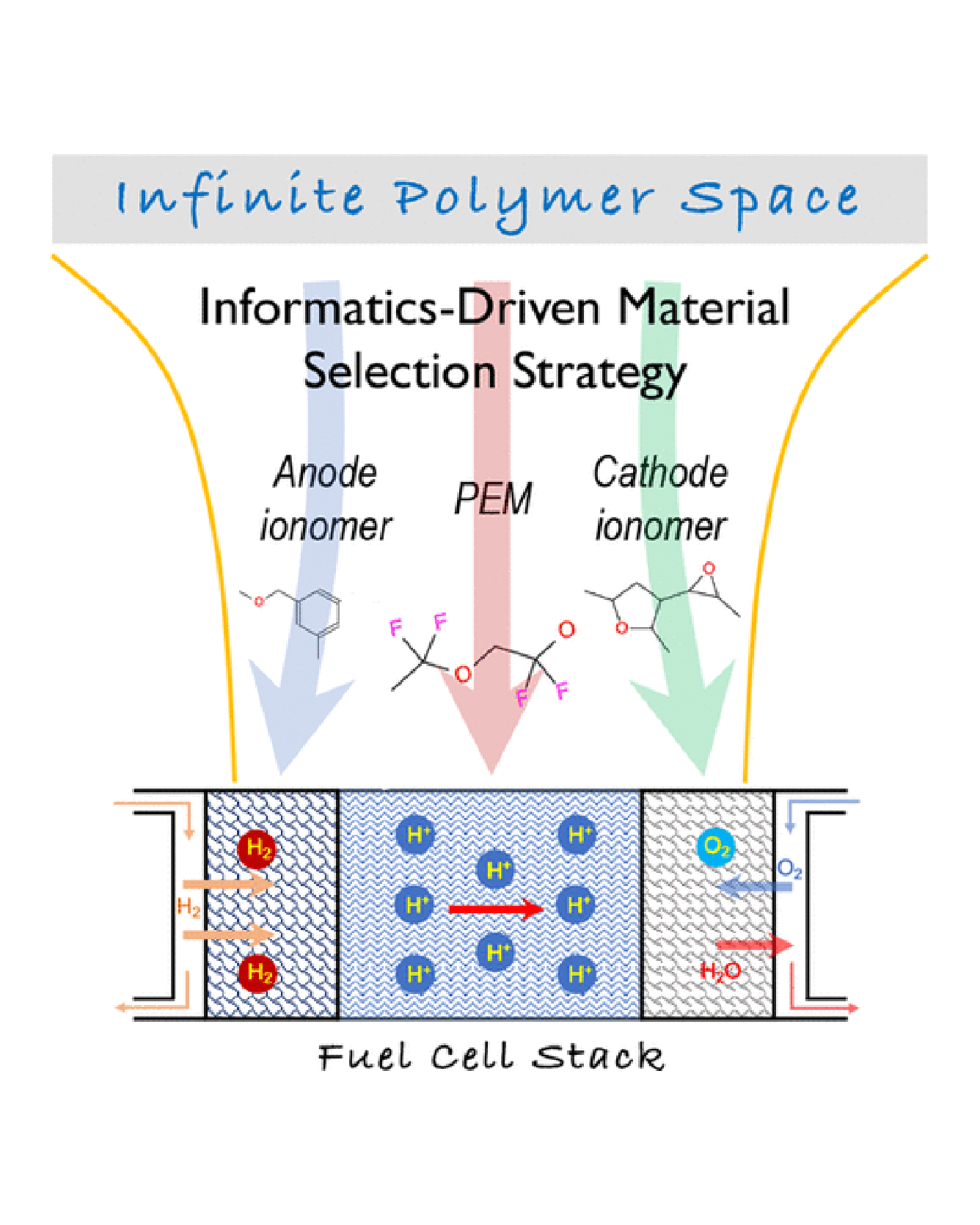
Modern fuel cell technologies use Nafion as the material of choice for the proton exchange membrane (PEM) and as the binding material (ionomer) used to assemble the catalyst layers of the anode and cathode. These applications demand high proton conductivity as well as other requirements. For example, PEM is expected to block electrons, oxygen, and hydrogen from penetrating and diffusing while the anode/cathode ionomer should allow hydrogen/oxygen to move easily, so that they can reach the catalyst nanoparticles. Given some of the well-known limits of Nafion, such as low glass-transition temperature, the community is in the midst of an active search for Nafion replacements. In this work, we present an informatics-based scheme to search large polymer chemical spaces, which includes establishing a list of properties needed for the targeted applications, developing predictive machine-learning models for these properties, defining a search space, and using the developed models to screen the search space. Using the scheme, we have identified 60 new polymer candidates for PEM, anode ionomer, and cathode ionomer that we hope will be advanced to the next step, i.e., validating the designs through synthesis and testing. The proposed informatics scheme is generic, and it can be used to select polymers for multiple applications in the future. READ MORE
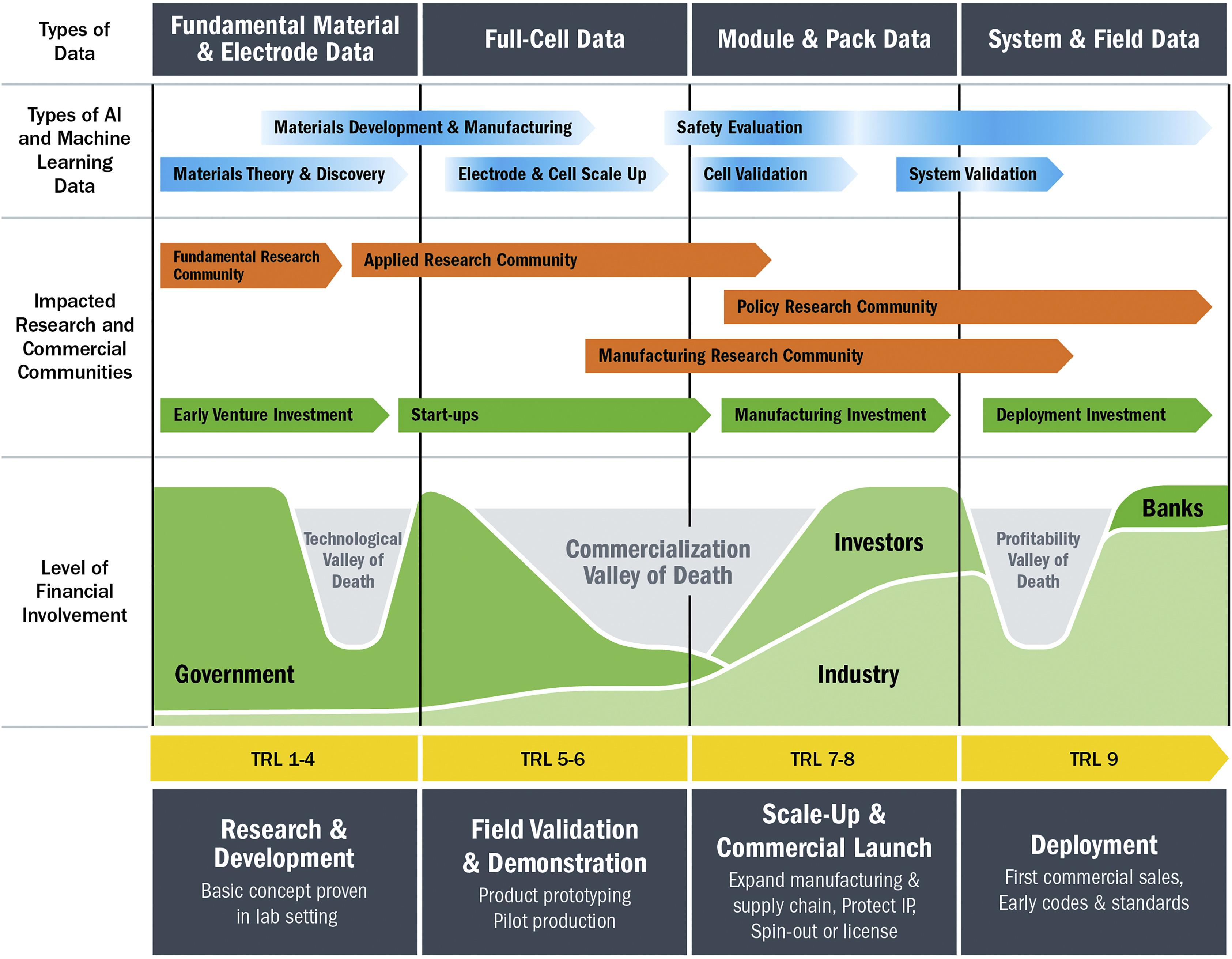
Batteries are central to modern society. They are no longer just a convenience but a critical enabler of the transition to a resilient, low-carbon economy. Battery development capabilities are provided by communities spanning materials discovery, battery chemistry and electrochemistry, cell and pack design, scale-up, manufacturing, and deployments. Despite their relative maturity, data-science practices among these diverse groups are far behind the state of the art in other fields, which have demonstrated an ability to significantly improve innovation and economic impact. The negative consequences of the present paradigm include incremental improvements but few breakthroughs, significant manufacturing uncertainties, and cascading investment risks that collectively slow deployments. The primary roadblock to a battery-data-science renaissance is the requirement for large amounts of high-quality data, which are not available in the current fragmented ecosystem. Here, we identify gaps and propose principles that enable the solution by building a robust community of data hubs with standardized practices and flexible sharing options that will seed advanced tools spanning innovation to deployment. Precedents are offered that demonstrate that both public good and immense economic gains will arise from sharing valuable battery data. The proposed Battery Data Genome looks to broadly transform innovations and revolutionize their translation from research to societal impact. READ MORE
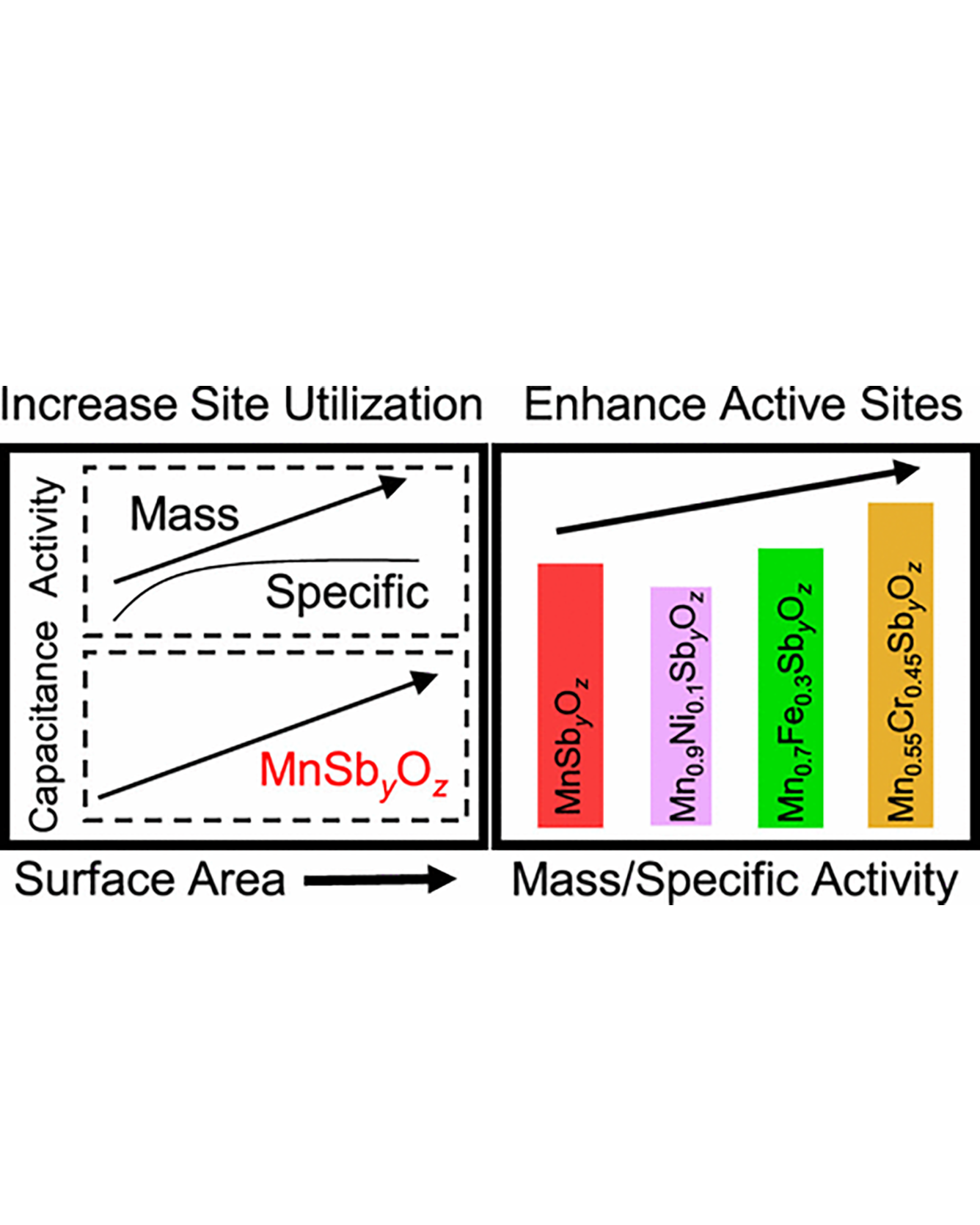
Strategies for improving the performance of nonprecious metal catalysts for the oxygen reduction reaction (ORR) can facilitate the cost-effective deployment of fuel cell devices. Electrocatalyst performance is typically improved via two approaches: increasing the number of active sites and increasing the intrinsic activity of the active site. Herein, we utilize these two methods of improving performance for MnSb2O6, which we have recently shown to be a promising ORR catalyst due to improvements in per-metal-site activity in the antimonate framework. First, electrode engineering is used to investigate the role of mass and conductive support loading in the observed ORR performance and selectivity. The apparent 2-electron selectivity is found to decrease with increases in mass and/or conductive support loading, indicating that rotating ring disk electrode studies do not necessarily measure the intrinsic selectivity of the catalyst. Second, theoretical calculations are used to identify Cr, Fe, and Ni as promising first-row transition metals for improving the intrinsic activity of MnSb2O6. Experimentally, the addition of Cr results in 3-fold and 2-fold increases in the mass and specific activities at 0.7 V vs the reversible hydrogen electrode, respectively. This enhancement is attributed to the modulation of the active site structure and Mn oxidation state with the addition of Cr. Through these studies, we gain insight into the intrinsic and extrinsic factors that govern ORR performance. READ MORE
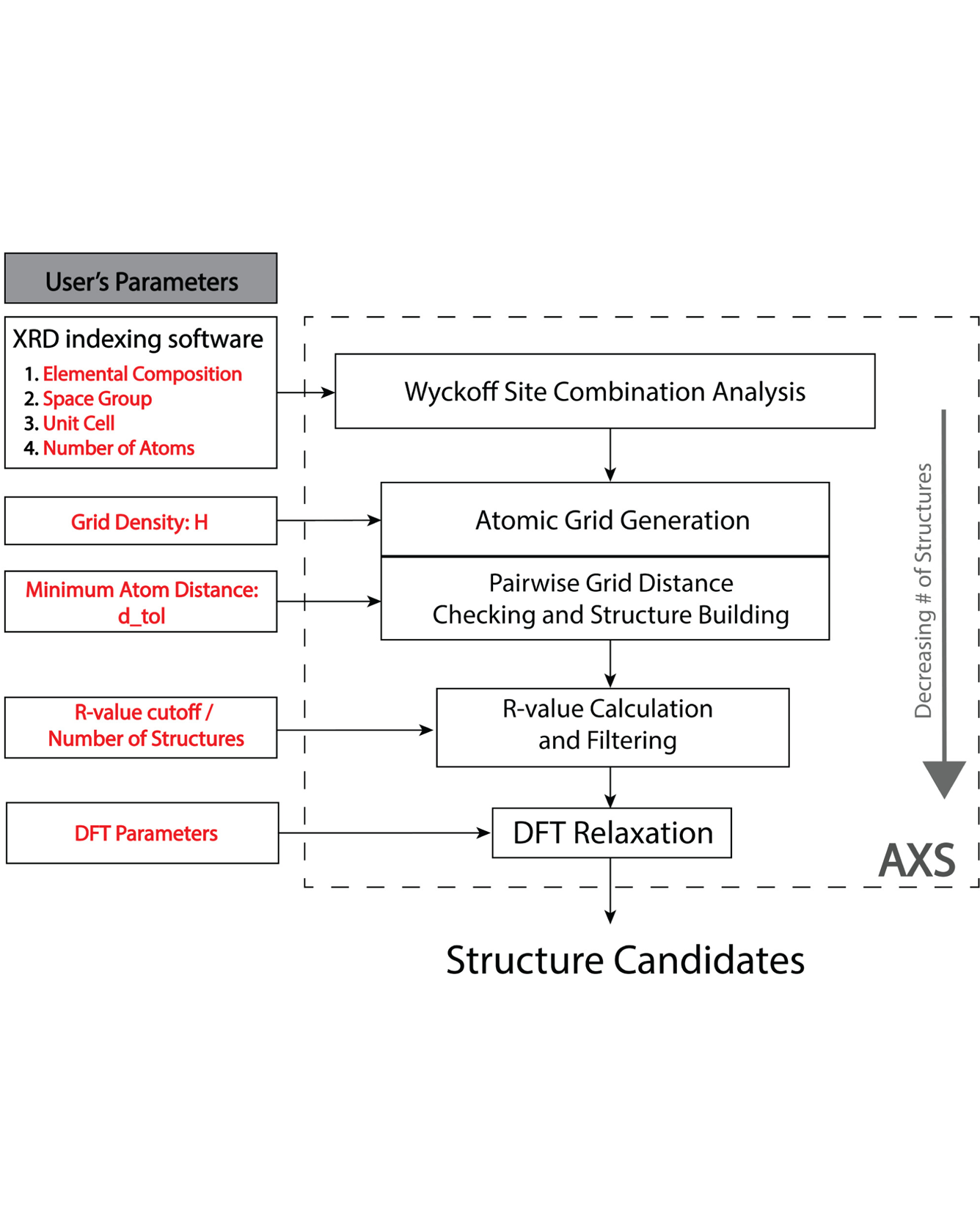
X-ray powder diffraction (XRD) is a powerful structure characterization technique, but solving unknown inorganic crystal structures from powder diffraction patterns can often be labor-intensive or speculative. We introduce an Automated XRD to Structure (AXS) solution method based on the crystal symmetry obtained from XRD patterns, an efficient search of candidate structures spanning the available degrees of freedom, and density functional theory (DFT). This methodology is completely agnostic to structural prototypes and robust in solving inorganic structures of various chemistries, crystal systems, and unit cell sizes; 92% of all crystal structures were accurately determined from the simulated XRD patterns in our benchmark set. In addition, we demonstrate the efficacy of this methodology on experimental XRD patterns by solving the crystal structures of Li8Hf6O8, Li3CrO4, and LiFeO2. READ MORE
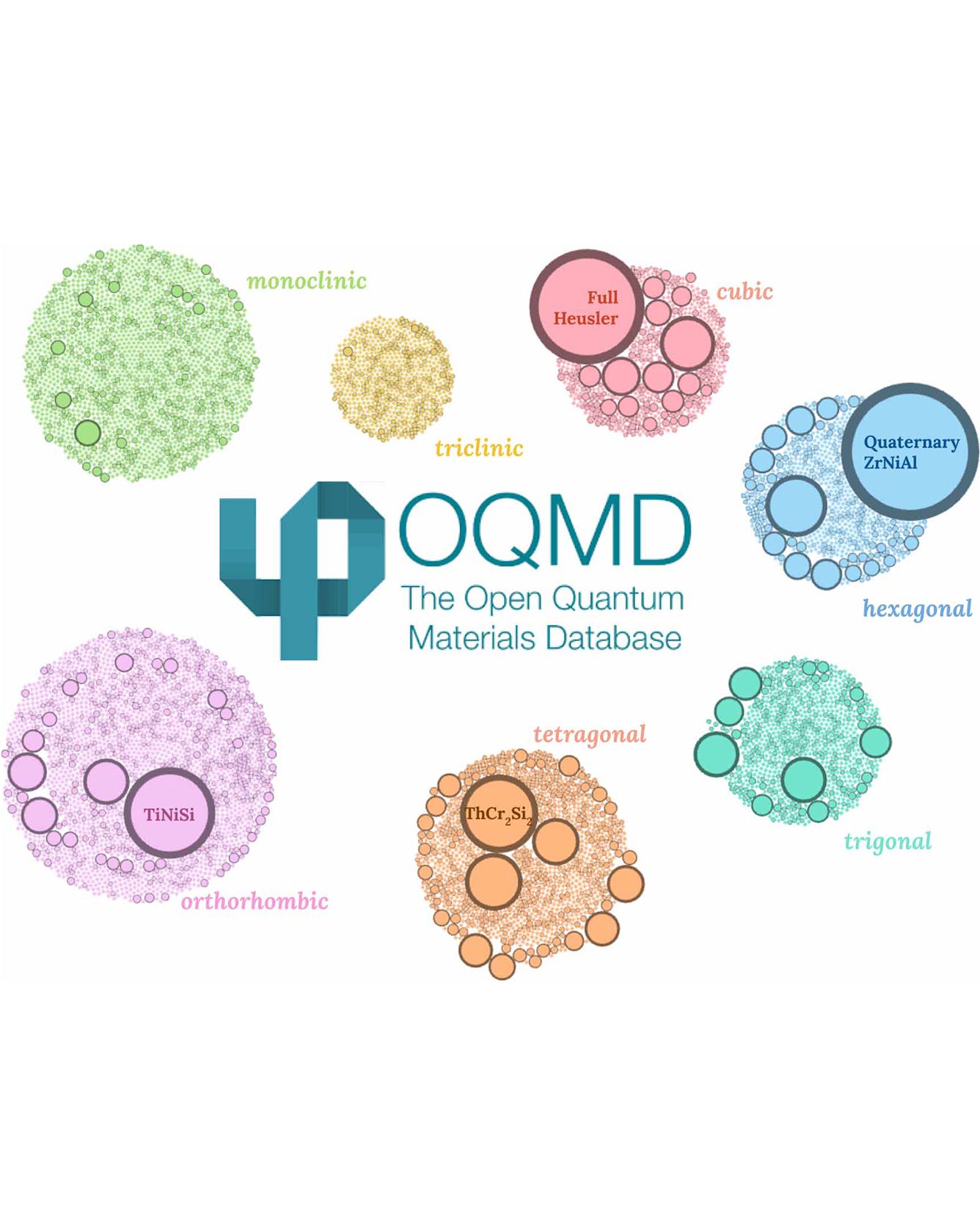
Density functional theory (DFT) has been widely applied in modern materials discovery and many materials databases, including the open quantum materials database (OQMD), contain large collections of calculated DFT properties of experimentally known crystal structures and hypothetical predicted compounds. Since the beginning of the OQMD in late 2010, over one million compounds have now been calculated and stored in the database, which is constantly used by worldwide researchers in advancing materials studies. The growth of the OQMD depends on project-based high-throughput DFT calculations, including structure-based projects, property-based projects, and most recently, machine-learning-based projects. Another major goal of the OQMD is to ensure the openness of its materials data to the public and the OQMD developers are constantly working with other materials databases to reach a universal querying protocol in support of the FAIR data principles. READ MORE
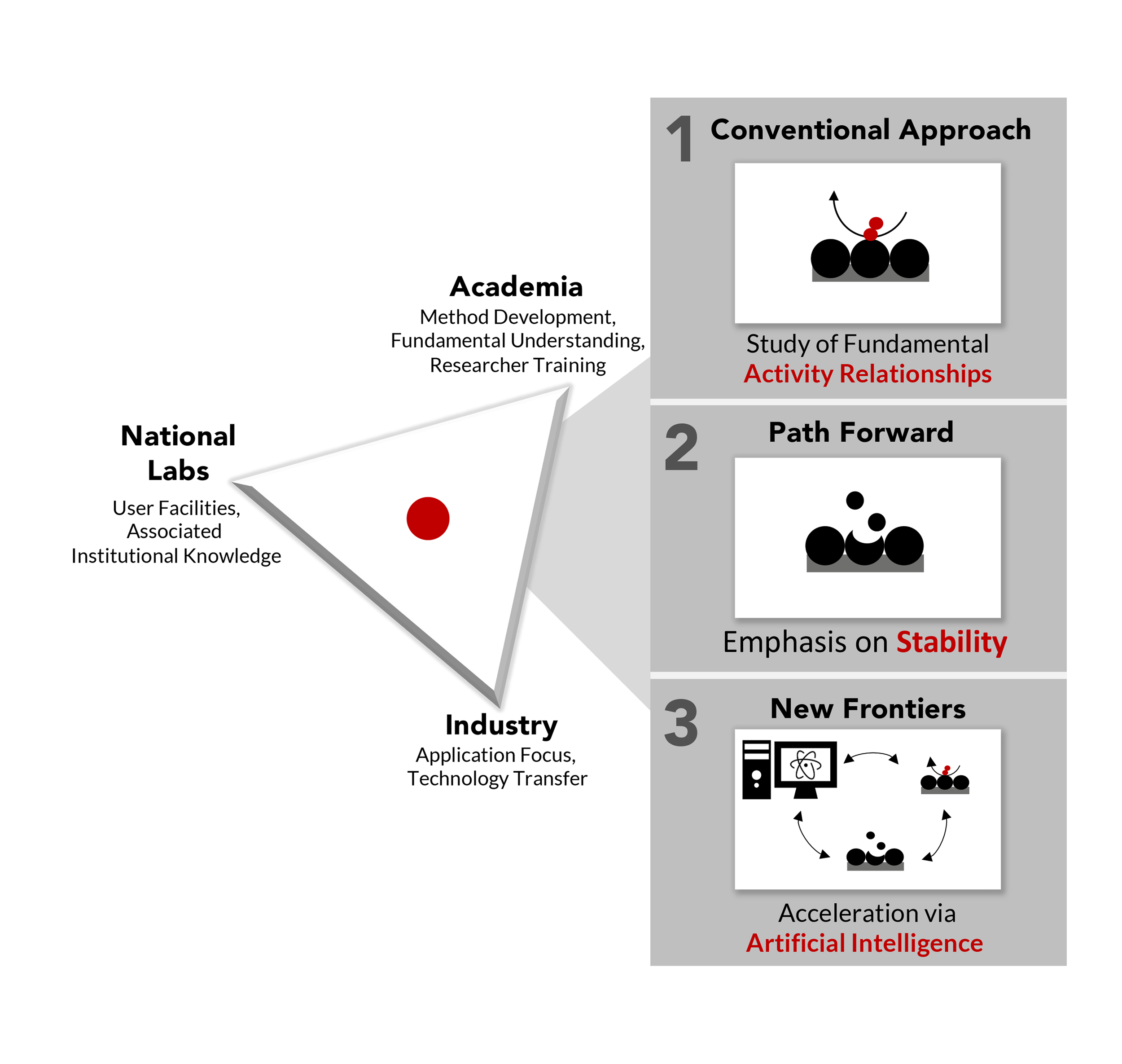
In this perspective, we highlight results of a research consortium devoted to advancing understanding of oxygen reduction reaction (ORR) catalysis as a means to inform fuel cell science. We demonstrate how targeted collaborations between different institutions from academic, national lab, and industry backgrounds and different scientific disciplines like theory, experiment, and characterization can yield unique insights into fuel cell catalysts. We comment on such insights into material designs for platinum-group-metal alloys, transition metal oxides, and non-traditional materials including metal-organic frameworks; systems that have served as the foundational building blocks for our consortium. We also motivate a renewed focus on catalyst durability in light of emerging technological requirements and paths forward in understanding in situ and operando electrochemical stability. Finally, we describe new frontiers ORR research can take and how emerging artificial intelligence tools can assist researchers in capturing data, selecting new experiments, and guiding characterization to accelerate the design and discovery of fuel cell catalysts. A main goal of sharing this perspective is to discuss the rationale for our future research plans based on our consortium work. However, we also hope to illustrate both the potential impact of a collaborative strategy with the hopes of inspiring a higher degree of Industry-Academia-National Laboratory collaboration and encourage other centers and consortiums to distill and share their findings in a similar perspective-type article. Together we hope to enable the fuel cell research community to engage in a discussion of strategies for research and accelerated development of catalysts with improved activity and stability. READ MORE
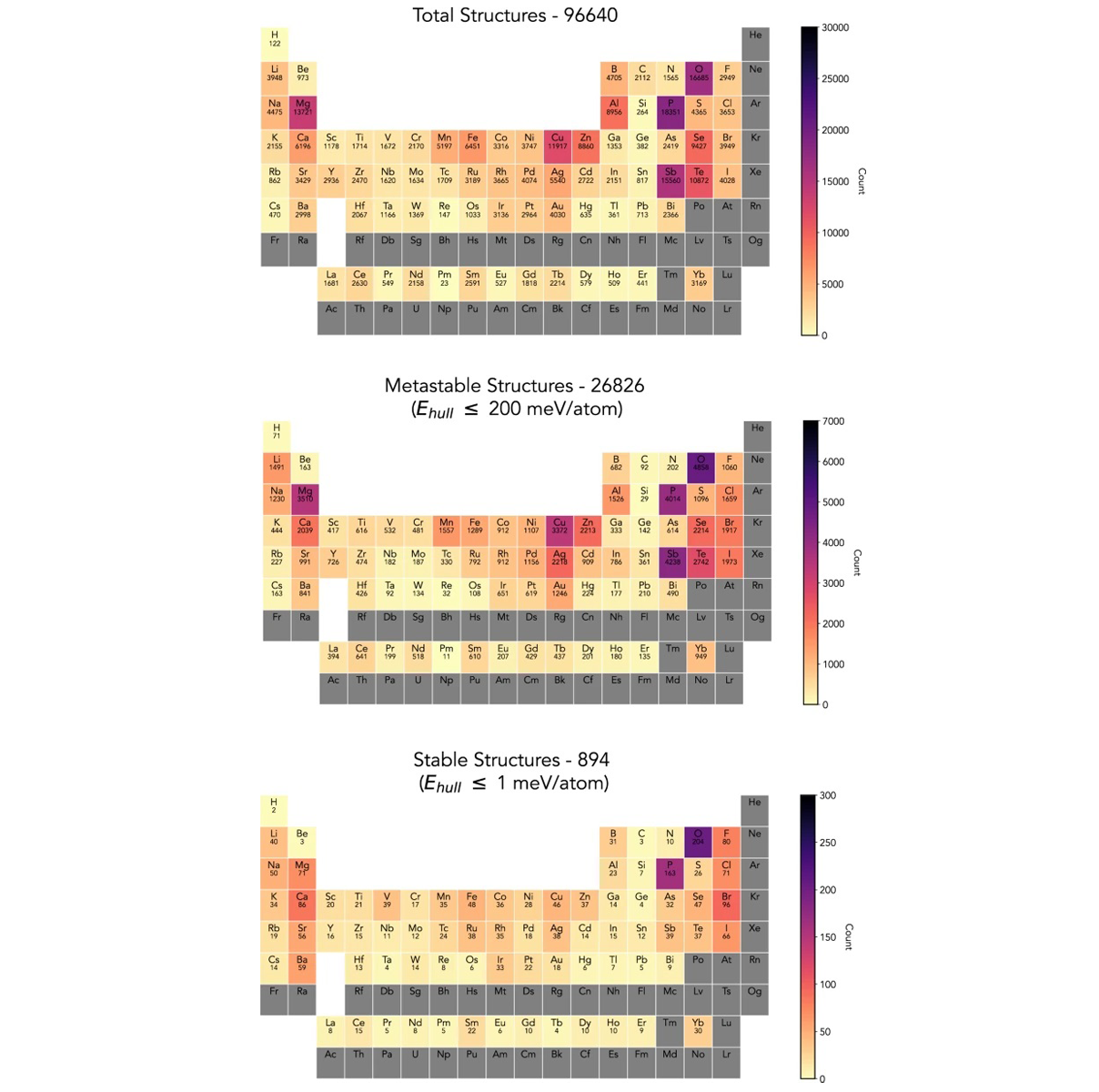
We report a dataset of 96640 crystal structures discovered and computed using our previously published autonomous, density functional theory (DFT) based, active-learning workflow named CAMD (Computational Autonomy for Materials Discovery). Of these, 894 are within 1 meV/atom of the convex hull and 26826 are within 200 meV/atom of the convex hull. The dataset contains DFT-optimized pymatgen crystal structure objects, DFT-computed formation energies and phase stability calculations from the convex hull. It contains a variety of spacegroups and symmetries derived from crystal prototypes derived from known experimental compounds, and was generated from active learning campaigns of various chemical systems. This dataset can be used to benchmark future active-learning or generative efforts for structure prediction, to seed new efforts of experimental crystal structure discovery, or to construct new models of structure-property relationships. READ MORE