Featured Publications
All Publications

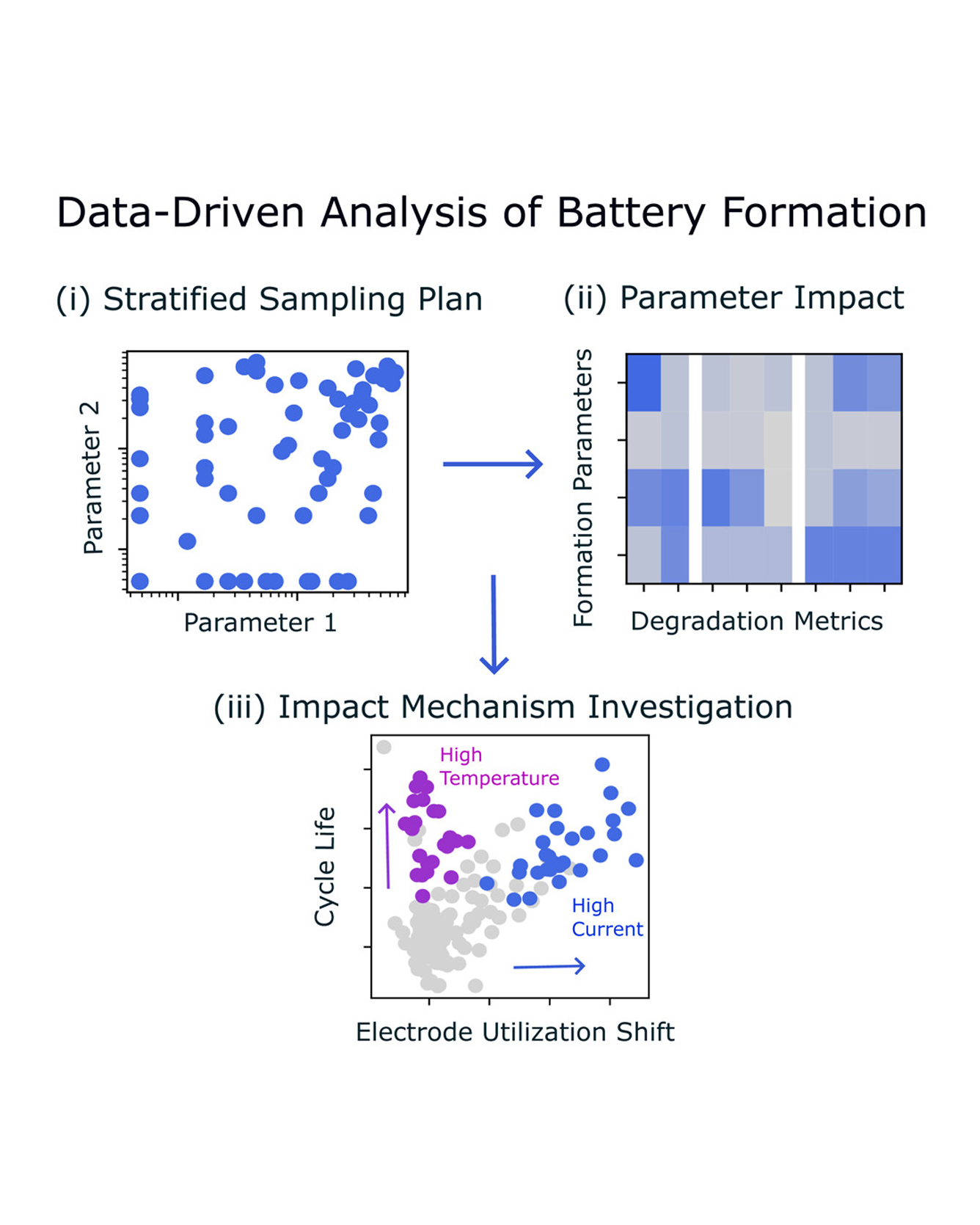
Formation is a critical step in battery manufacturing. During this process, lithium inventory is consumed to form the solid electrolyte interphase (SEI), which in turn determines the battery lifetime. To tackle the vast parameter space and complexity of formation, we employ a data-driven workflow on 186 lithium-ion battery cells across 62 formation protocols. We identify two key parameters, formation charge current and temperature, that control battery longevity via distinct mechanisms. Surprisingly, high-formation charge current on the first cycle extends battery cycle life by an average of 50%. Unlike elevated formation temperature, which boosts battery performance by forming a robust SEI, the cycle life improvement for fast-formed cells arises from a shifted electrode-specific utilization after formation. Apart from the widely acknowledged role of formation in governing SEI properties, we demonstrate how formation protocols determine the stoichiometry range over which the positive and negative electrodes are cycled. READ MORE
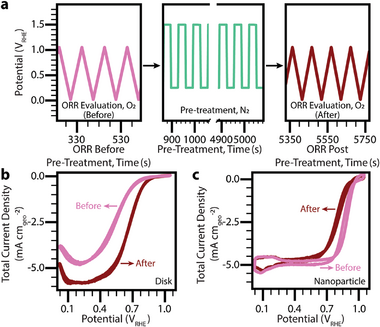
Activation, break-in, and/or pre-treatment protocols are generally applied to energy conversion devices before regular operation to reach stable performance. There remains much to understand about the relationships among physical properties, performance, and electrochemical pre-treatments. Here, a design-of-experiments (DoE) strategy is employed to address this gap by demonstrating the influence of five pre-treatment parameters for carbon-supported Pt-nanoparticle catalysts on the electrocatalytic oxygen reduction reaction (ORR). A subset of pre-treatments, developed using a central composite design, are tested in a flow cell combined with an inductively-coupled plasma mass spectrometer (on-line ICP-MS). The DoE-based approach facilitates comprehensive insights from two orders of magnitude fewer experiments than a conventional grid search. The coupled on-line ICP-MS setup enables effective catalysis and real-time catalyst dissolution data. Leveraging insights from DoE for on-line ICP-MS and additional characterization, a model is built between the degradation of a multi-dimensional supported Pt surface, its performance, and applied electrochemical parameters. These investigations identify surface modifications, such as oxidation, and subsequent restructuring of Pt during pre-treatment as a primary cause of performance deterioration during ORR. By combining DoE with advanced characterization techniques, a powerful approach is demonstrated to gain a mechanistic understanding of pre-treatment protocols that can be broadly adapted to various reaction chemistries.
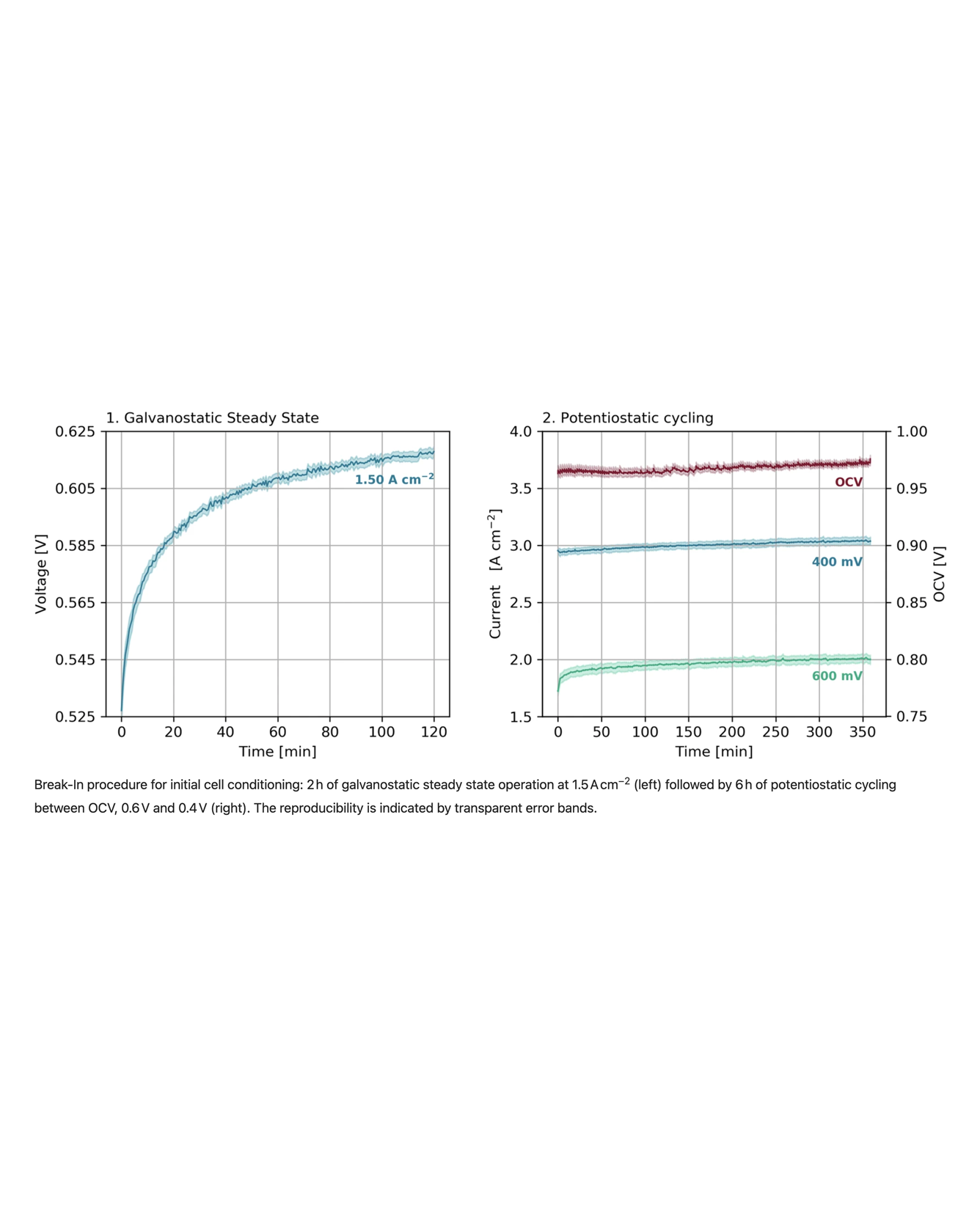
The composition and morphology of the cathode catalyst layer (CCL) have a significant impact on the performance and stability of polymer electrolyte membrane fuel cells (PEMFC). Understanding the primary degradation mechanism of the CCL and its influencing factors is crucial for optimizing PEMFC performance and durability. Within this work, we present comprehensive in-situ characterization data focused on cathode catalyst degradation. The dataset consists of 36 unique durability tests with over 4000 testing hours, including variations in the cathode ionomer to carbon ratio, platinum on carbon ratio, ionomer equivalent weight, and carbon support type. The applied accelerated stress tests were conducted with different upper potential limits and relative humidities. Characterization techniques including IV-curves, limiting current measurements, electrochemical impedance spectroscopy, and cyclic voltammetry were employed to analyse changes in performance, charge and mass transfer, and electrochemically active surface area of the catalyst. The aim of the dataset is to improve the understanding of catalyst degradation by allowing comparisons across material variations and provide practical information for other researchers in the field. READ MORE
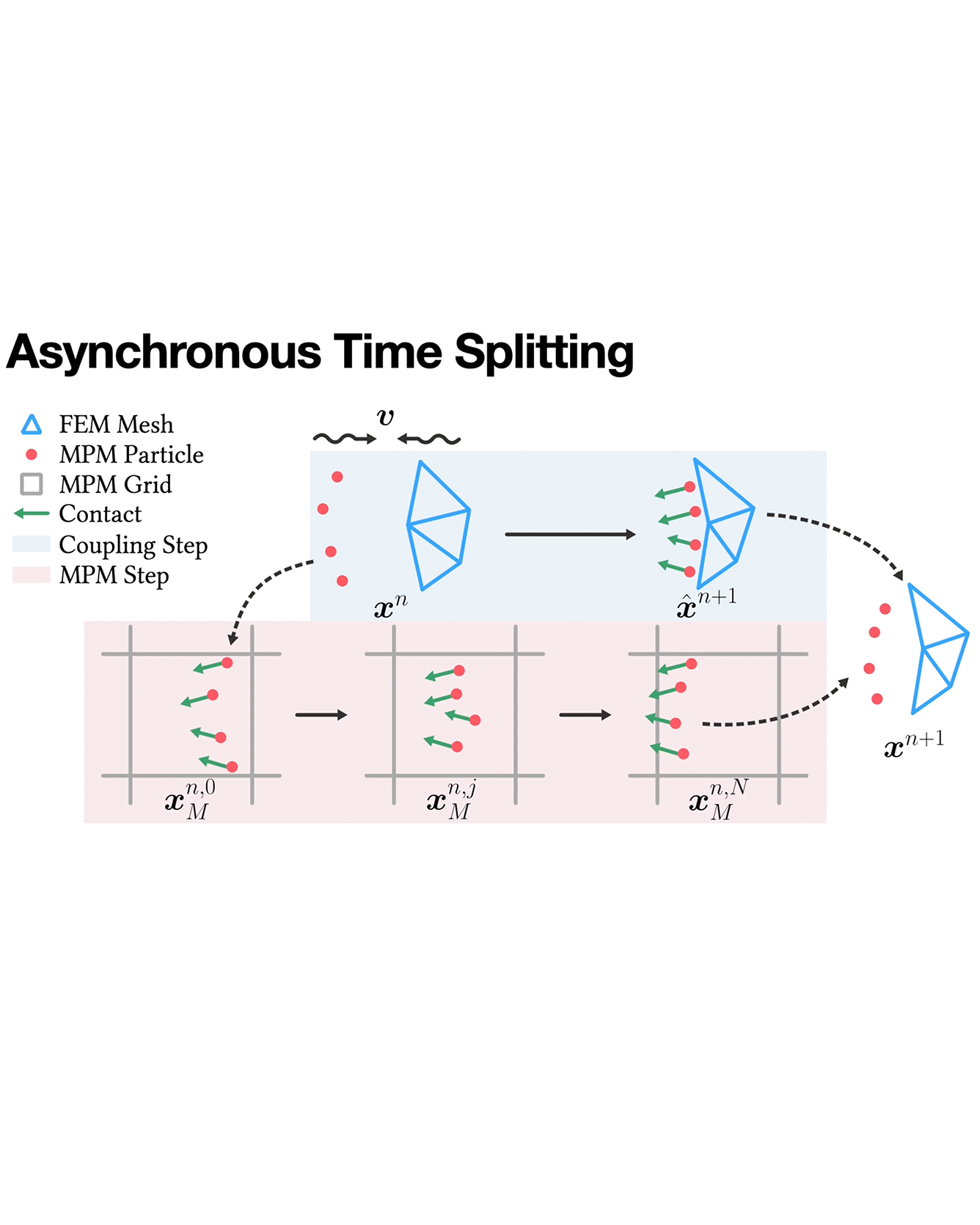
This paper presents a novel method to couple Finite Element Methods (FEM), typically employed for modeling Lagrangian solids such as flesh, cloth, hair, and rigid bodies, with Material Point Methods (MPM), which are well-suited for simulating materials undergoing substantial deformation and topology change, including Newtonian/non-Newtonian fluid, granular materials, and fracturing materials. The challenge of coupling these diverse methods arises from their contrasting computational needs: implicit FEM integration is often favored to enjoy stability and large timesteps, while explicit MPM integration benefits from its allowance for efficient GPU optimization and flexibility of applying different plasticity models, which only allows for moderate timesteps. To bridge this gap, a mixed implicit-explicit time integration (IMEX) approach is proposed, utilizing principles from time splitting for partial differential equations and optimization-based time integrators. This method adopts incremental potential contact (IPC) to define a variational frictional contact model between the two materials, serving as the primary coupling mechanism. Our method enables implicit FEM and explicit MPM to coexist with significantly different timestep sizes while preserving two-way coupling. Experimental results demonstrate the potential of our method as a strong foundation for future exploration and enhancement in the field of multi-material simulation. READ MORE
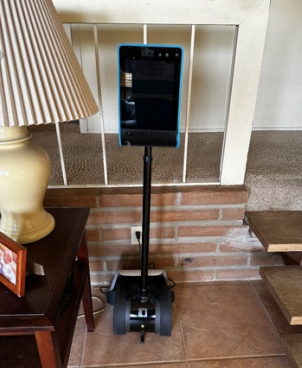
Mobile telepresence robots can help reduce loneliness by facilitating people to visit each other and have more social presence than visiting via video or audio calls. However, using new technology can be challenging for many older adults. In this paper, we examine how older adults use and want to use mobile telepresence robots, how these robots affect their social connection, and how they can be improved for older adults’ use. We placed a mobile telepresence robot in the home of older adult primary participants (N = 7; age 60+) for 7 months and facilitated monthly activities between them and a secondary participant (N = 8; age 18+) of their choice. Participants used the robots as they liked between monthly activities. We collected diary entries and monthly interviews from primary participants and a final interview from secondary participants. Results indicate that older adults found many creative uses for the robots, including conversations, board games, and hide ‘n’ seek. Several participants felt more socially connected with others and a few had improved their comfort with technology because of their use of the robot. They also suggested design recommendations and updates for the robots related to size, mobility, and more, which can help practitioners improve robots for older adults’ use. READ MORE
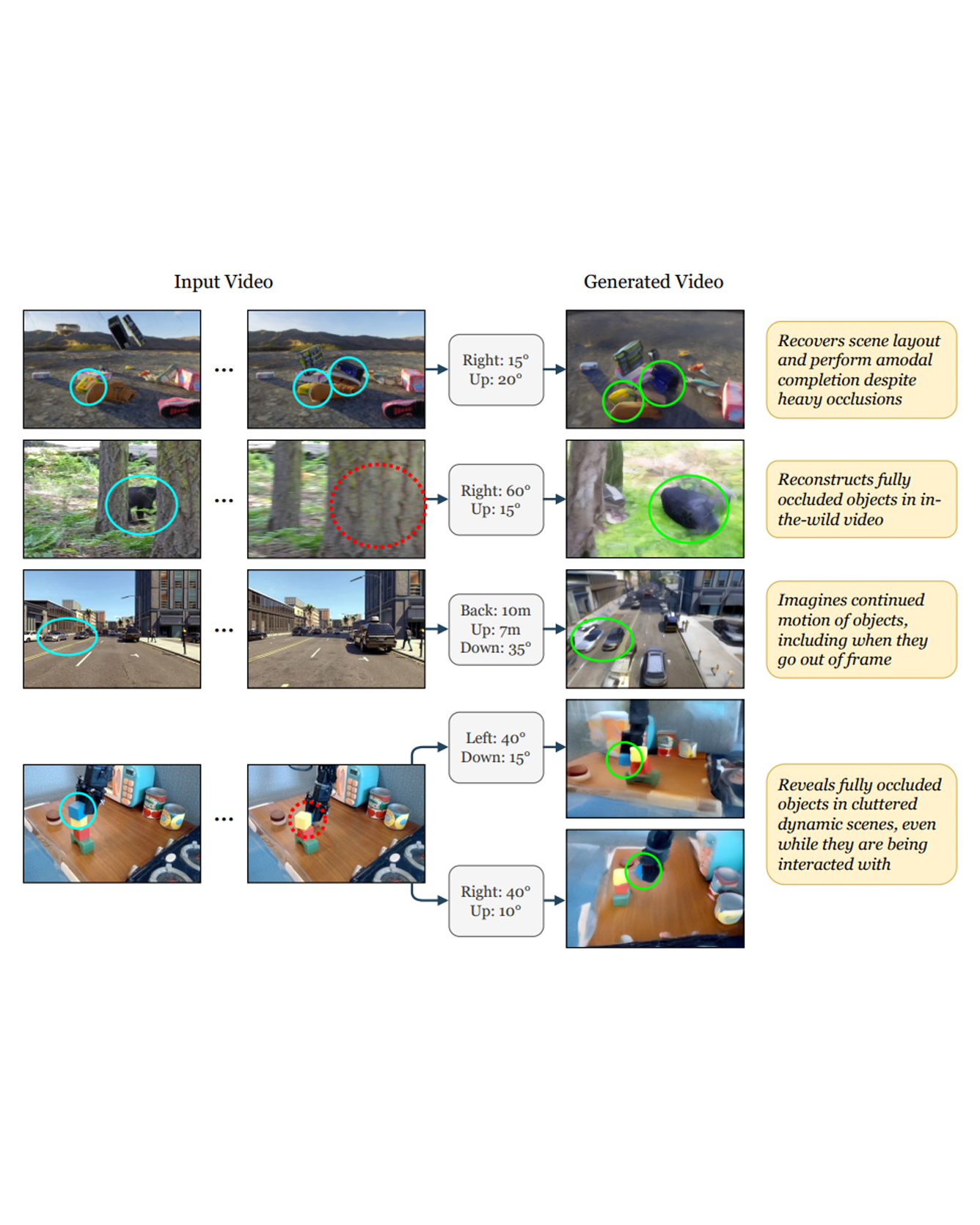
Accurate reconstruction of complex dynamic scenes from just a single viewpoint continues to be a challenging task in computer vision. Current dynamic novel view synthesis methods typically require videos from many different camera viewpoints, necessitating careful recording setups, and significantly restricting their utility in the wild as well as in terms of embodied AI applications. In this paper, we propose GCD, a controllable monocular dynamic view synthesis pipeline that leverages large-scale diffusion priors to, given a video of any scene, generate a synchronous video from any other chosen perspective, conditioned on a set of relative camera pose parameters. Our model does not require depth as input, and does not explicitly model 3D scene geometry, instead performing end-to-end video-to-video translation in order to achieve its goal efficiently. Despite being trained on synthetic multi-view video data only, zero-shot real-world generalization experiments show promising results in multiple domains, including robotics, object permanence, and driving environments. We believe our framework can potentially unlock powerful applications in rich dynamic scene understanding, perception for robotics, and interactive 3D video viewing experiences for virtual reality. READ MORE
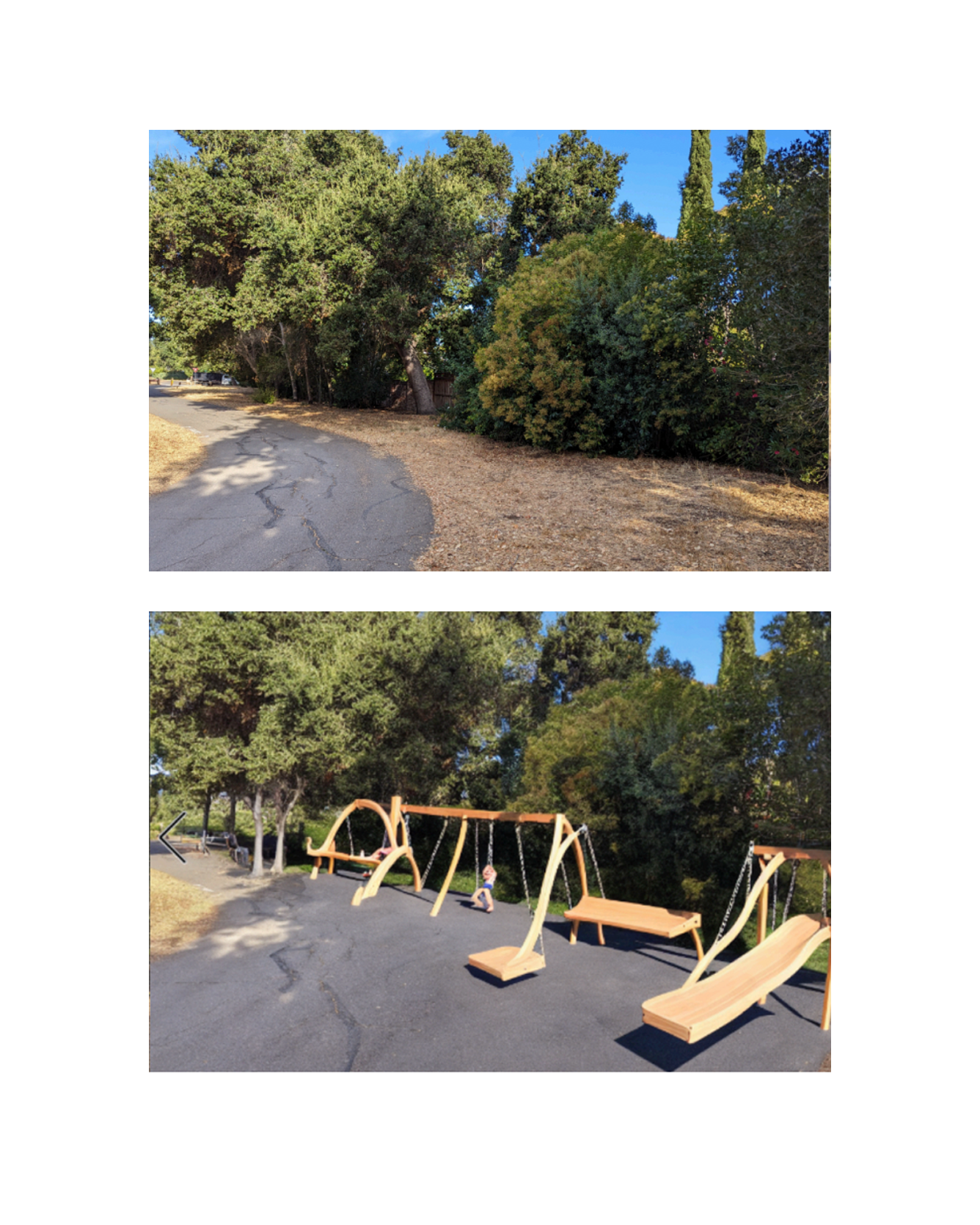
Conversations around public spaces are fractured and often circle around designs and their implications for the space. Contributing to this problem is the fact that people often talk past one another. Recent advances in generative AI may help to democratize this process of designing for public spaces and enable people to meaningfully converse with one another. Here, we develop a platform that asks users to submit a photo and story about a place in their community that they cherish. The system then pairs each user with a target person whose preferences conflict with their own preferences. Users read the target person’s account and use our generative AI system to redesign a space to accommodate the target person. Preliminary studies demonstrate that the act of redesigning the space may lead to greater empathy for the target person, which may help advance conversations around public spaces. READ MORE
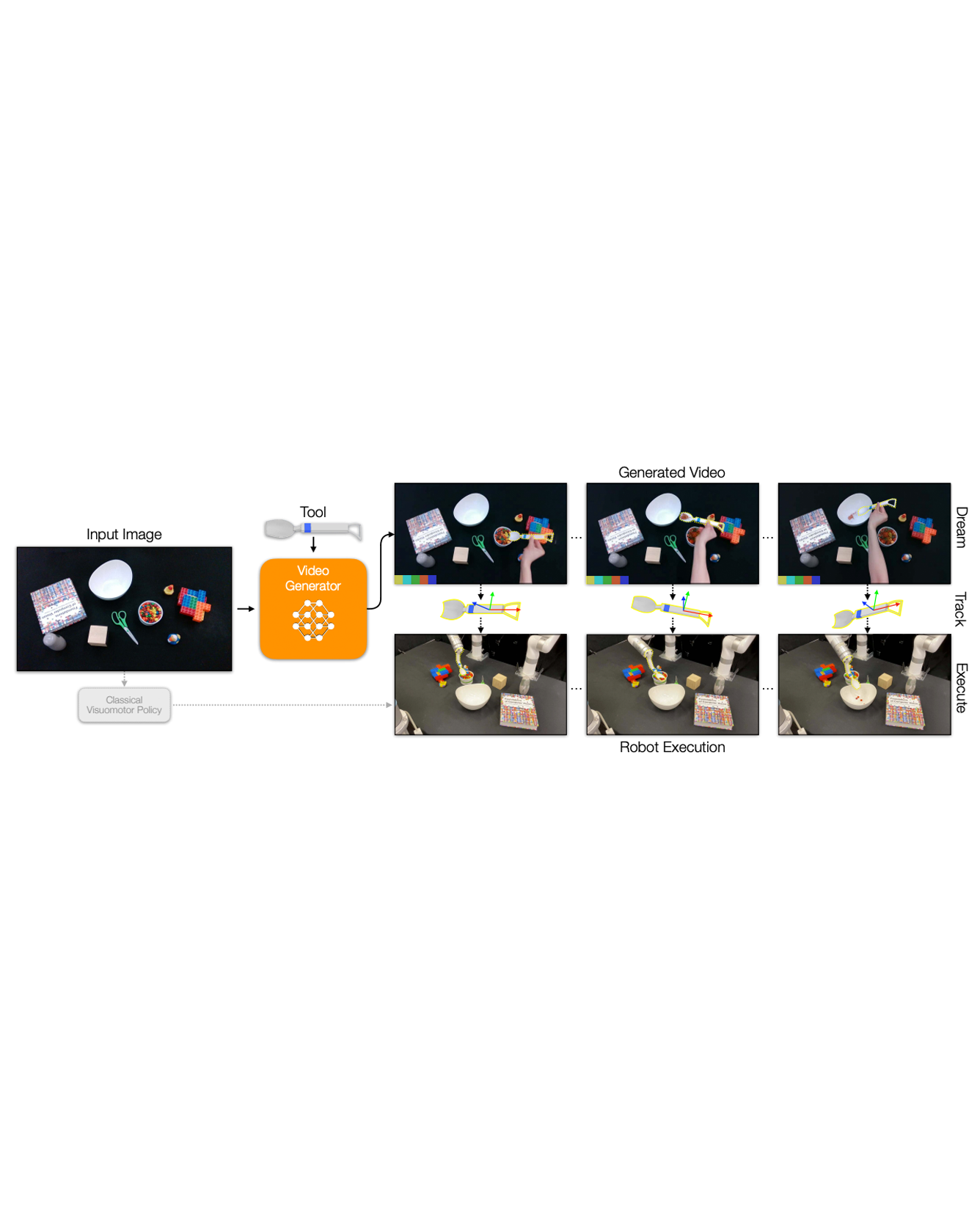
A key challenge in manipulation is learning a policy that can robustly generalize to diverse visual environments. A promising mechanism for learning robust policies is to leverage video generative models that are pretrained on largescale datasets of internet videos. In this paper, we propose a visuomotor policy learning framework that fine-tunes a video diffusion model on human demonstrations of a given task. At test time, we generate a video showing an execution of the task conditioned on images of a novel scene, and use this synthesized video to directly control the robot. Our key insight is that using common tools allows us to effortlessly bridge the embodiment gap between the human hand and the robot manipulator. We evaluate our approach on four tasks of increasing complexity and demonstrate that harnessing internet-scale generative models allows the learned policy to achieve a significantly higher degree of generalization than existing behavior cloning approaches. READ MORE
A Space Resonating with Being is a visual-audio interactive artwork where the visual art on a 55-inch display changes in response to external intervention, focusing on experiencing the space as a living organism. The real-time visual effects that appear on the display reflect the local natural environment when there is no viewer interaction, symbolically integrating the natural environment into a space. When the viewer interacts with the artwork, it is transformed by an algorithm based on physiological signals from the viewer. The artwork changes based on their biorhythms, such as their breathing and heart rate, and they enjoy a unique experience where the art space responds to them, providing a dynamic and colorful visual-audio experience. The artwork draws attention to the impact of the viewer on space and how artwork affects the viewer’s internal world perception through the experience of the artwork gradually morphing to resonate with them. READ MORE

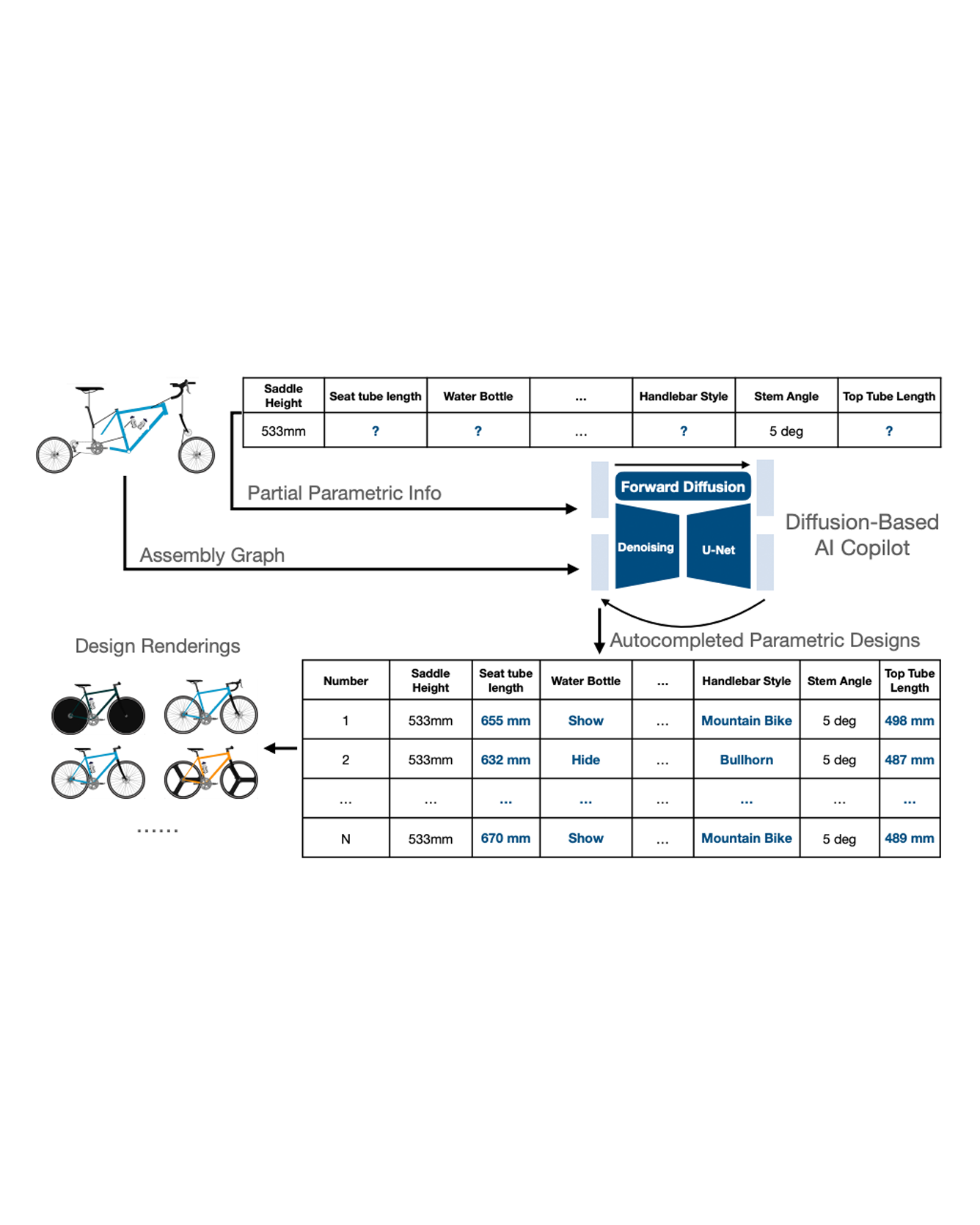
This study introduces a generative imputation model leveraging graph attention networks and tabular diffusion models for completing missing parametric data in engineering designs. This model functions as an AI design co-pilot, providing multiple design options for incomplete designs, which we demonstrate using the bicycle design CAD dataset. Through comparative evaluations, we demonstrate that our model significantly outperforms existing classical methods, such as MissForest, hotDeck, PPCA, and tabular generative method TabCSDI in both the accuracy and diversity of imputation options. Generative modeling also enables a broader exploration of design possibilities, thereby enhancing design decision-making by allowing engineers to explore a variety of design completions. The graph model combines GNNs with the structural information contained in assembly graphs, enabling the model to understand and predict the complex interdependencies between different design parameters. The graph model helps accurately capture and impute complex parametric interdependencies from an assembly graph, which is key for design problems. By learning from an existing dataset of designs, the imputation capability allows the model to act as an intelligent assistant that autocompletes CAD designs based on user-defined partial parametric design, effectively bridging the gap between ideation and realization. The proposed work provides a pathway to not only facilitate informed design decisions but also promote creative exploration in design. READ MORE